Sandeep N. Uttarkar,
K. B. Ramesh,
- Student, Department of Electronics and Instrumentation Engineering, R.V. College of Engineering (An Autonomous Institution, affiliated to VTU Belagavi), Banglore, Karnataka, India
- Associate professor, Department of Electronics and Instrumentation Engineering, R.V. College of Engineering (An Autonomous Institution, affiliated to VTU Belagavi), Banglore, Karnataka, India
Abstract
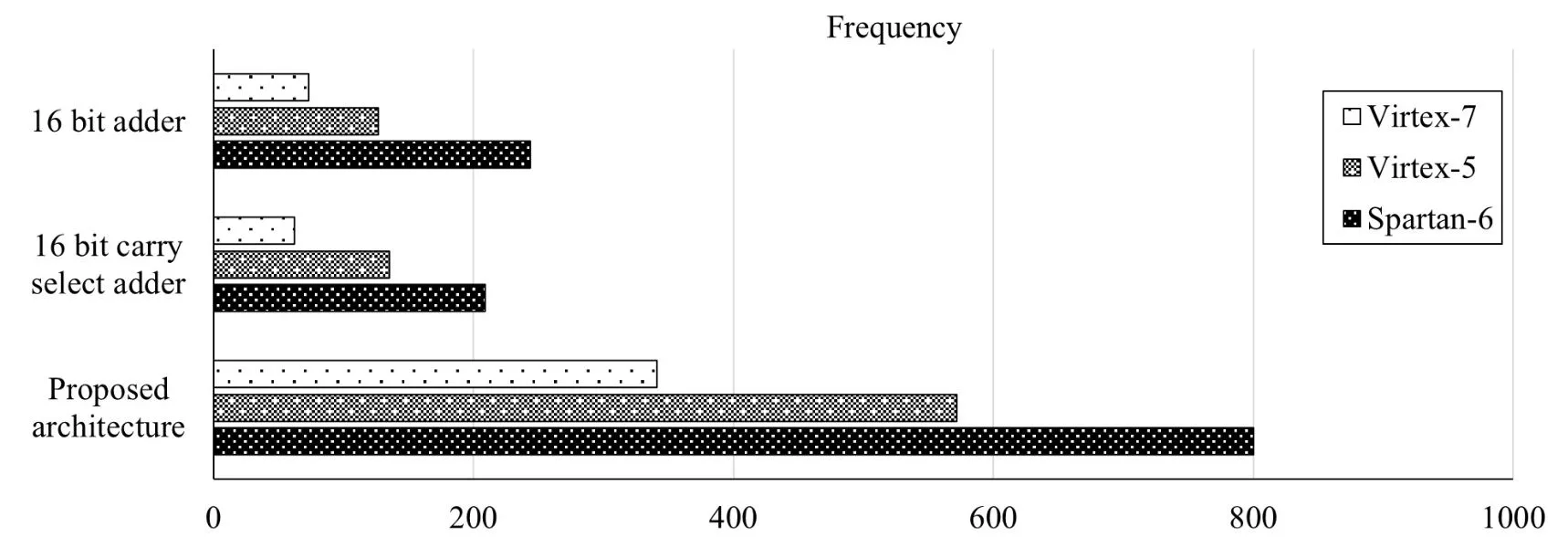
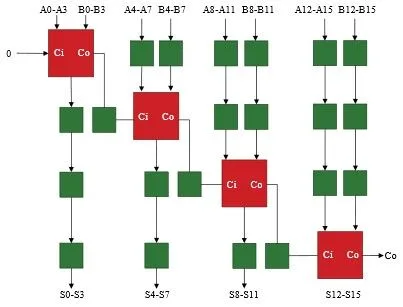
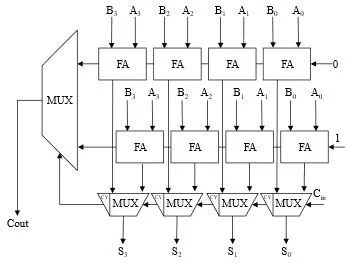
In the new age world, modern technology has vast applications in various fields of engineering, medicine, and others. Digital electronics processing and systems play a vital role in the analysis and computation of data representation. Electronic systems have gradually become faster and smaller scale. The primary structural element of any modern ALU-based processor is an adder. Addition is a well-known extremely basic function that is employed in nearly all computing processes. The performance of the adder circuit will therefore greatly affect the performance of the CPU. In terms of frequency, general adders like half adders, full adders, ripple-carry adders, carry skip adders, and carry look-ahead adders don’t meet the demands of high-performance processors. To fulfill the required specifications, we suggest in this work a high-frequency 16-bit full-adder architecture. This architecture was simulated using Verilog on the Xilinx ISE 14.7 tool, and it was then built on the field-programmable gate array (FPGA) families.
Keywords: Half adder (HA), full adder (FA), carry-select adder (CSA), carry look-ahead adder (CLA), input-output blocks (IOB), configurable logic blocks (CLB), field-programmable gate array (FPGA)
[This article belongs to Journal of VLSI Design Tools and Technology ]
References
- Puneeth P, Raghuvanshi AS, Yadav S. Design and Implementation of High Frequency 16-bit full adder on FPGA Families. 4th Int Conf Emerg Technol INCET. 2023;1–7. DOI: 10.1109/INCET57972.2023.10170506.
- Zadiraka VK, Tereshchenko AM. Parallel methods of representing multidigit numbers in numeral systems for testing multidigit arithmetic operations. Cybern Syst Anal. 2022;58:991–1007. DOI: 10.1007/s10559-023-00534-w.
- Sonal Y. Interconnect paradigm shift towards networks-on-chip in manycore processors: A review on challenges. Soft Comput Theor Appl. 2022;425:685–95. DOI: 10.1007/978-981-19-0707-4_62.
- Chouhan M, Raghuvanshi AS, Muchahary D. FPGA Implementation of High Performance and Energy Efficient Radix-4 based FFT. 2nd Asian Conf Innov Technol ASIANCON. 2022;1–5. DOI: 10.1109/ASIANCON55314.2022.9908613.
- Kandpal J, Tomar A, Agarwal M, Sharma KK. High-speed hybrid-logic full adder using high-performance 10-T XOR–XNOR cell. IEEE Trans VLSI Syst. 2020;28:1413–22. DOI: 10.1109/TVLSI.2020.2983850.
- Cong H, Li M, Pedram M. An 8-b Multiplier Using Single-Stage Full Adder Cell in Single-Flux-Quantum Circuit Technology. IEEE Trans Appl Supercond. 2021;31(1):1303110. DOI: 10.1109/TASC.2021.3091963.
- Rafiee M, Shiri N, Sadeghi A. High-performance 1-bit full adder with excellent driving capability for multistage structures. IEEE Embed Syst Lett. 2022;14:47–50. DOI: 10.1109/LES.2021.3108474.
- Boutros A, Betz V. FPGA architecture: Principles and progression. IEEE Circuits Syst Mag. 2021;21(2):4–29. DOI: 10.1109/MCAS.2021.3071607.
- Babu P, Parthasarathy E. Reconfigurable FPGA architectures: A survey and applications. J Inst Eng India Ser B. 2021;102:143–56. DOI: 10.1007/s40031-020-00508-y.
- Kanojia A, Agrawal S, Lorenzo R. Comprehensive analysis of a power-efficient 1-bit hybrid full adder cell. Wirel Pers Commun. 2023;129:1097–1111. DOI: 10.1007/s11277-023-10177-x.

Journal of VLSI Design Tools and Technology
| Volume | 14 | |
| Issue | 03 | |
| Received | 13/08/2024 | |
| Accepted | 21/08/2024 | |
| Published | 30/09/2024 | |
| Publication Time | Days |