
Anushka Sahu,
- Student, School of biotechnology, Devi Ahilya Vishwavidyalaya, University in indore, Madhya Pradesh, India
Abstract
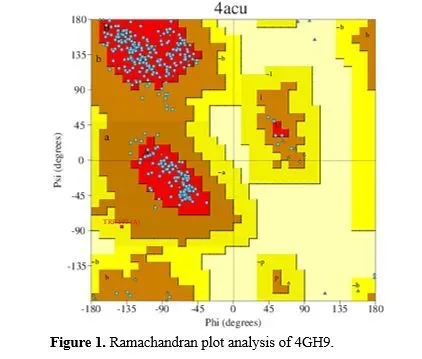
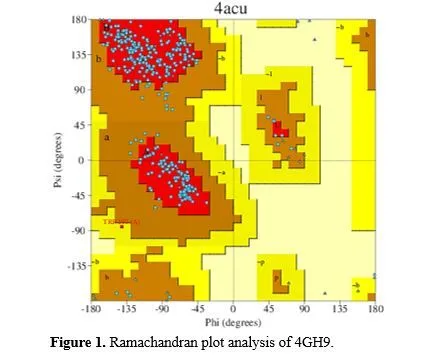
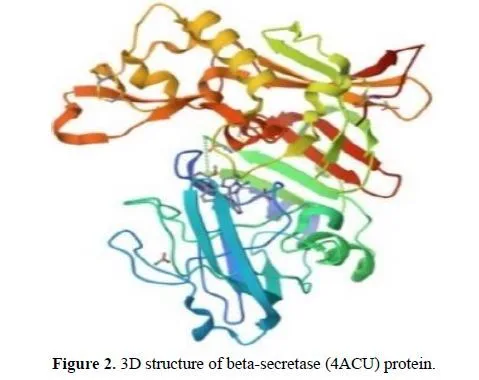
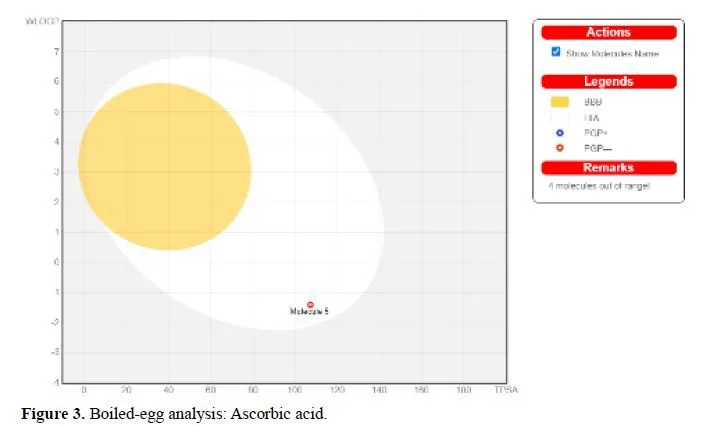
Objective: Alzheimer’s is a neurodegenerative disease and is the cause of 60–70% of cases of dementia. It infected a million people worldwide. An effort was undertaken to explore the potential of natural compounds found in Bacopa monnieri, a plant renowned for its extensive medicinal properties in Indian Ayurveda, to combat the disease. This was achieved through molecular docking studies, evaluation of drug-likeness, and comprehensive ADME (absorption, distribution, metabolism, and excretion) analysis, along with toxicity predictions. Methods: The primary β-secretase protein was obtained from the PDB database. Ligands with weak binding affinity and molecules that could interfere with the docking process were excluded. Docking was then performed using the PyRx tool. The pharmacokinetic properties, including absorption, distribution, metabolism, and excretion (ADME), as well as the drug-likeness of the compounds, were assessed utilizing the Swiss-ADME and ChemAGG platforms. Results: Ramachandran plot analysis illustrates the statistical distribution of the backbone dihedral angles ϕ (phi) and ψ (psi), providing insights into the conformational preferences of the protein structure. Molecular docking studies identified that only one compound from Bacopa monnieri exhibits significant binding affinity, potentially inhibiting the β-secretase enzyme by preventing plaque formation. The ADMET analysis, along with drug-likeness and toxicity predictions, confirmed that ascorbic acid is both safe and possesses favorable drug-like characteristics. Conclusion: This study indicates that ascorbic acid demonstrates a specific binding affinity with the potential to inhibit the β-secretase enzyme. This suggests its potential role in therapeutic strategies for managing Alzheimer’s disease.
Keywords: Alzheimer’s disease (AD), β-secretase (BACE), Bacopa monnieri (BM), docking, 4ACU, amyloid
[This article belongs to Research and Reviews : Journal of Computational Biology ]
References
- Trevisan K,Pereira Theories of aging and the prevalence of Alzheimer’s disease. Biomed Res Int. 2019;2019:9171424. doi:10.1155/2019/9171424.
- Zvěřová Clinical aspects of Alzheimer’s disease. Clin Biochem. 2019;72:3–6. doi:10.1016/j.
clinbiochem.2019.04.015. - Castellani RJ, Rolston RK, Smith MA. Alzheimer Dis Mon. 2010;56(9):484–546. doi:10.1016/j.disamonth.2010.06.001.
- Rossi (2022). Alzheimer’s disease: Facts & figures [Online]. BrightFocus Foundation.Available at https://www.brightfocus.org/alzheimers/article/alzheimers-disease-facts-figures.
- Yan R,Vassar Targeting the β secretase BACE1 for Alzheimer’s disease therapy. Lancet Neurol. 2014;13(3):319–329. doi:10.1016/S1474-4422(13)70276-X.
- Cole SL, Vassar The Alzheimer’s disease β-secretase enzyme, BACE1.Mol Neurodegener. 2007;2:22. doi:10.1186/1750-1326-2-22.
- Verdile G, Fuller S, Atwood CS, Laws SM, Gandy SE, Martins The role of beta amyloid in Alzheimer’s disease: Still a cause of everything or the only one who got caught?. Pharmacol Res. 2004;50(4):397–409. doi:10.1016/j.phrs.2003.12.028.
- Rossner S, Lange-Dohna C, Zeitschel U, Perez-Polo JR. Alzheimer’s disease β-secretase BACE1 is not a neuron-specific enzyme.J Neurochem. 2005;92(2):226–2 doi:10.1111/j.1471-4159.
2004.02857.x. - Kowalska A. The beta-amyloid cascade hypothesis: A sequence of events leading to neurodegeneration in Alzheimer’s disease. Neurol Neurochir Pol. 2004;38(5):405–
- Walsh DM, Teplow Chapter 4 – Alzheimer’s disease and the amyloid β-Protein. In: Progress in Molecular Biology and Translational Science. San Diego, CA: Elsevier; 2012. 107. doi:10.1016/B978-0-12-385883-2.00012-6.
- Sathya M, Premkumar P, Karthick C, Moorthi P, Jayachandran KS, Anusuyadevi M. BACE1 in Alzheimer’s disease. Clin Chim Acta. 2012:414:171–178. doi:1016/j.cca.2012.08.013.
- Estrada LD, Soto C. Disrupting β-Amyloid aggregation for Alzheimer disease Curr Top Med Chem. 2007;7(1):115–126. doi:10.2174/156802607779318262.
- Ho CY, Troncoso JC, Knox D, Stark W, Eberhart CG. Beta-amyloid, phospho-tau and alpha-synuclein deposits similar to those in the brain are not identified in the eyes of Alzheimer’s and Parkinson’s disease patients. Brain Pathol. 2014;24(1):25–32. doi:1111/bpa.12070.
- Narayanaswamy V.Origin and development of Ayurveda: (A brief history).Anc Sci Life. 1981;1(1):1–7.
- Mishra L, Singh BB, Dagenais Ayurveda: A historical perspective and principles of the traditional healthcare system in India. Altern Ther Health Med. 2001;7(2):36–42.
- Jaiswal YS, Williams LL, A glimpse of Ayurveda – The forgotten history and principles of Indian traditional medicine. J Tradit Complement Med. 2016;7(1):50–53. doi:1016/j.jtcme.
2016.02.002. - Nemetchek MD, Stierle AA, Stierle DB, Lurie DI. The Ayurvedic plant Bacopa monnieri inhibits inflammatory pathways in the brain. J Ethnopharmacol. 2017;197:92-100. doi:1016/j.jep.2016.
07.073. - Dubey T, Chinnathambi S. Brahmi (Bacopa monnieri): An ayurvedic herb against the Alzheimer’s disease. Arch Biochem Biophys. 2019;676:108153. doi:1016/j.abb.2019.108153.
- Russo A, Borrelli Bacopa monniera, a reputed nootropic plant: An overview. Phytomedicine. 2005;12(4):305–317. doi:10.1016/j.phymed.2003.12.008.
- Banerjee S, Anand U, Ghosh S, Ray D, Ray P, Nandy S, et al. Bacosides from Bacopa monnieri extract: An overview of the effects on neurological disorders. Phytother Res. 2021;35(10):5668–5679. doi:1002/ptr.7203.
- Roodenrys S, Booth D, Bulzomi S, Phipps A, Micallef C, Smoker J. Chronic Effects of Brahmi (Bacopa monnieri) on human memory. 2002;27(2):279–281. doi:10.1016/S0893-133X(01)00419-5.
- Goswami S, Saoji A, Kumar N, Thawani V, Tiwari M, Thawani M. Effect of Bacopa monnieri on cognitive functions in Alzheimer’s.2011;3(4):10.
- Chaudhari KS, Tiwari NR, Tiwari RR,Sharma R Neurocognitive effect of nootropic drugBrahmi (Bacopa monnieri) in Alzheimer’s disease.Annal Neurosci. 2017;27(2):111–122. doi:10.1159/
000475900. - Berman HM, Westbrook J, Feng Z, Gilliland G, Bhat TN, Weissig H, et al. The protein data Nucleic Acids Res. 2000;28(1):235–242. doi:10.1093/nar/28.1.235.
- Laskowski RA, Macarthur MW, Moss DS, Thornton J. PROCHECK – A program to check the stereochemical quality of protein structures.JAppl Crystallogr. 1993;26(2):283– doi:10.1107/S0021889892009944.
- Kim S, Chen J, Cheng T, Gindulyte A, He J, He S, et al. PubChem 2023 update.Nucleic Acids Res. 2023;51(D1):D1373– doi10.1093/nar/gkac956.
- O’Boyle NM, Banck M, James CA, Morley C, Vandermeersch T, Hutchison GR. Open babel: An open chemical toolbox J Cheminform. 2011;3:33. doi:1186/1758-2946-3-33..
- Vassar β-Secretase (BACE) as a drug target for Alzheimer’s disease. Adv Drug Deliv Rev. 2002;54(12):1589–1602. doi:10.1016/s0169-409x(02)00157-6..
- Wisniewski T, Ghiso G, Frangione Biology of Aβ amyloid in Alzheimer’s disease. Neurobiol Dis. 1997;4(5):313–328. doi: 10.1006/nbdi.1997.0147.

Research and Reviews : A Journal of Biotechnology
| Volume | 13 | |
| Issue | 02 | |
| Received | 09/05/2024 | |
| Accepted | 08/10/2024 | |
| Published | 04/11/2024 | |
| Publication Time | Days |