
Rohit Lather,
Nidhi Sahu,
Deepak Kumar Bhalla,
- Head, Department of Multidisciplinary Engineering, The NorthCap University, Gurugram,, Haryana, India
- Research Scholar, Department of Mechanical Engineering, Lingaya’s Vidyapeeth, Faridabad, Haryana, India
- Director Dean, Department of Mechanical Engineering, Lingaya’s Vidyapeeth, Faridabad, Haryana, India
Abstract
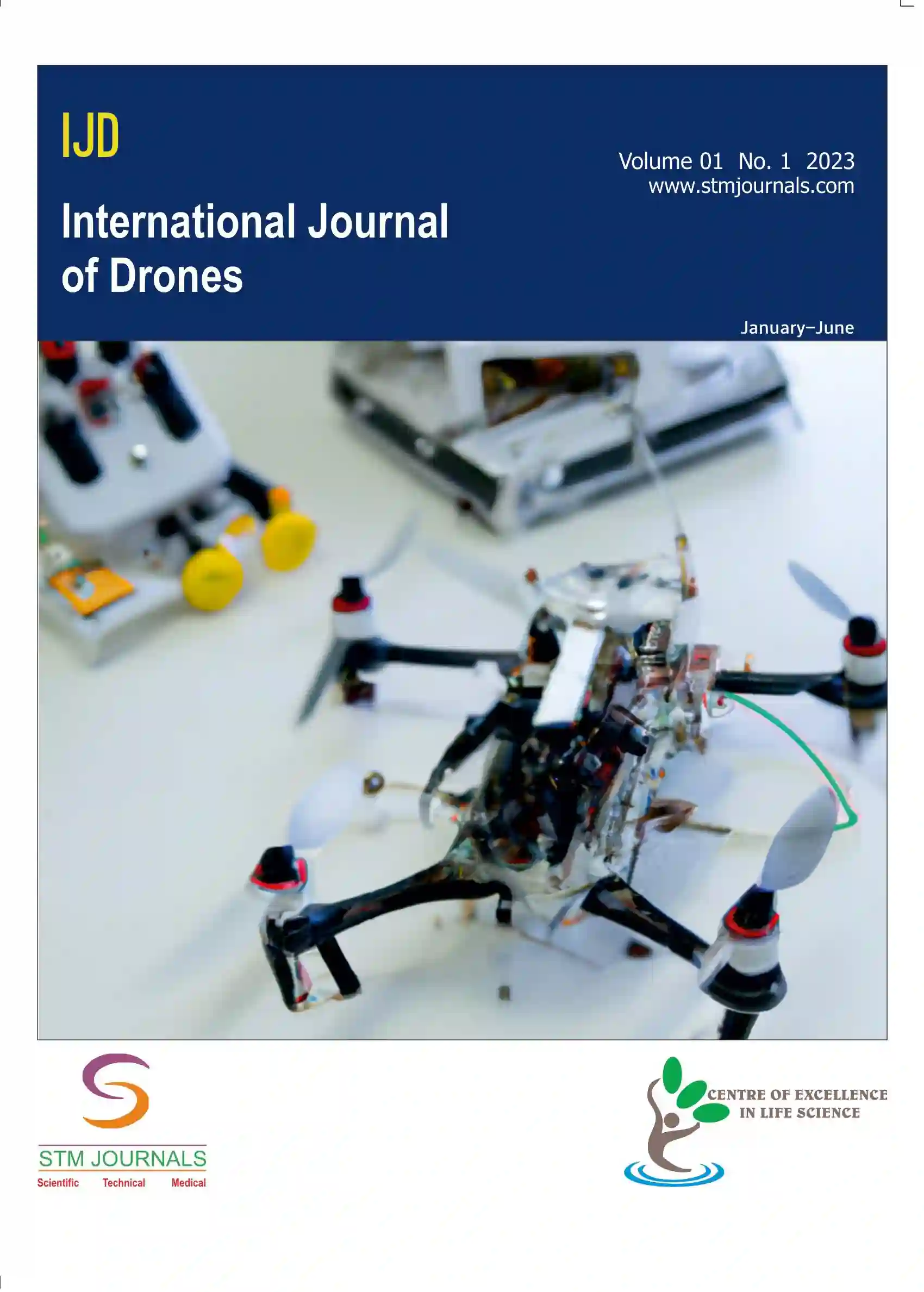
Remote-controlled conservation drones can gather data from hard-to-reach locations with the least amount of disruption. Drones are being employed more and more in various research fields, but there is still much to learn about how they might be applied to wildlife study. Remote-controlled conservation drones can gather data from hard-to-reach locations with the least amount of disruption. Drones are being employed more and more in various research fields, but there is still much to learn about how they might be applied to wildlife study. This study details the usage of Phantom 2 Vision+ for area monitoring in two South Korean national parks. The first research site was located in Chiaksan National Park, while Taeanhaean National Park served as the second research site. The purpose of this study is to present conservation drones to ecologists and scholars alike, demonstrating how these innovative instruments are essentially advancing the field of natural science. This study details the usage of Phantom 2 Vision+ for area monitoring in two South Korean national parks. Research was done in two different national parks: Taeanhaean National Park and Chiaksan National Park. The purpose of this study is to present conservation drones to ecologists and scholars alike, demonstrating how these innovative instruments are essentially advancing the natural sciences. We also acquired images and recordings of observation zones in our testing facility. The Ecological Society of Korea, copyright 2015. All rights reserved. We also obtained photographs and video monitoring areas within our test sites.
Keywords: Drone, Ecology, Phantom 2 Vision+, Unmanned Aircraft Systems (UAS), wildlife
[This article belongs to International Journal on Drones ]
References
-
- “Demystifying Drones: UAS’s in Wildlife Anti-Poaching Efforts” – This article explores the types of unmanned aerial systems (UAS) used for conservation, particularly in anti-poaching efforts. It highlights the range of devices, from hobbyist drones to military-grade systems, and their applications in different conservation scenarios. Read more on Wildtech Mongabay
- “In Defense of Wildlife: The Realities of Using Drones for Anti-Poaching”(2022) – This piece delves into the complexities of using UAVs for anti-poaching missions, differentiating between response and prevention missions, and discussing the technological and logistical challenges involved. Read more on Wildtech Mongabay
- “Using Drones for Anti-Poaching: First, Know Your Mission” (2023)- The article stresses the importance of understanding the mission requirements when deploying UAVs for anti-poaching. It provides insights into selecting appropriate drone technology based on specific conservation needs and environmental conditions. Read more on Mongabay News
- “Conservation Drones” – This resource from the WWF Living Planet Technology Hub discusses the use of drones in various conservation efforts, including tracking wildlife and monitoring habitats. It highlights specific case studies and technological advancements in drone usage
- “Drones and Wildlife Conservation: Investigating the Role of UAVs in Monitoring and Protecting Endangered Species” – This academic paper examines the impact of drone technology on wildlife conservation, focusing on its effectiveness in monitoring endangered species and preventing poaching.
- “Drones for Wildlife Conservation – DRONELIFE” (2023) – This article explores the advancements and applications of drone technology in wildlife conservation, focusing on tracking elusive species and preventing poaching.
- “Drones are a knife in the gunfight against poaching. But they’re leveling up” (2021) – This article reviews the technological advancements in drones that aid in anti-poaching efforts and the challenges faced in integrating these technologies with ground-level operations. Read more.
- “The use of conservation drones in ecology and wildlife research” by Bojana Ivošević et al. (2015) – While this paper is slightly older, it provides foundational knowledge on the initial integration of drones in conservation efforts.
- Conservation Biology and Ecology Mulero-Pázmány, M., Stolper, R., van Essen, L. D., Negro, J. J., & Sassen, T. (2014). Remotely Piloted Aircraft Systems as a Rhinoceros Anti-Poaching Tool in Africa. PLoS ONE, 9(1), e83873.
- Koh, L. P., & Wich, S. A. (2012). Dawn of drone ecology: Low-cost autonomous aerial vehicles for conservation. Tropical Conservation Science, 5(2), 121-132.
- Technology in Conservation Anderson, K., & Gaston, K. J. (2013). Lightweight unmanned aerial vehicles will revolutionize spatial ecology. Frontiers in Ecology and the Environment, 11(3), 138-146.
- Anderson, K., & Gaston, K. J. (2013). “Lightweight unmanned aerial vehicles will revolutionize spatial ecology.” Frontiers in Ecology and the Environment, 11(3), 138-146. https://doi.org/10.1890/120150
- Chabot, D., & Bird, D. M. (2015). “Wildlife research and management methods in the 21st century: Where do unmanned aircraft fit in?” Journal of Unmanned Vehicle Systems, 3(4), 137-155. https://doi.org/10.1139/juvs-2015-0021
- Christie, K. S., Gilbert, S. L., Brown, C. L., Hatfield, M., & Hanson, L. (2016). “Unmanned aircraft systems in wildlife research: Current and future applications of a transformative technology.” Frontiers in Ecology and the Environment, 14(5), 241-251. https://doi.org/10.1002/fee.1281
- Duffy, J. P., Cunliffe, A. M., DeBell, L., Sandbrook, C., & Dunning, J. B. (2018). “Location, location, location: considerations when using lightweight drones in challenging environments.” Remote Sensing in Ecology and Conservation, 4(1), 7-19. https://doi.org/10.1002/rse2.48
- Hodgson, J. C., & Koh, L. P. (2016). “Best practice for minimizing unmanned aerial vehicle disturbance to wildlife in biological field research.” Current Biology, 26(10), R404-R405. https://doi.org/10.1016/j.cub.2016.04.001
- Mulero-Pázmány, M., Stolper, R., Van Essen, L. D., Negro, J. J., & Sassen, T. (2014). “Remotely piloted aircraft systems as a rhinoceros anti-poaching tool in Africa.” PLoS ONE, 9(1), e83873. https://doi.org/10.1371/journal.pone.0083873
- Pimm, S. L., Alibhai, S., Bergl, R., Dehgan, A., Giri, C., Jewell, Z., Joppa, L., Kays, R., & Loarie, S. (2015). “Emerging technologies to conserve biodiversity.” Trends in Ecology & Evolution, 30(11), 685-696. https://doi.org/10.1016/j.tree.2015.08.008
- Sandbrook, C. (2015). “The social implications of using drones for biodiversity conservation.” Ambio, 44(4), 636-647. https://doi.org/10.1007/s13280-015-0714-0
- Van Andel, M., & Wich, S. A. (2016). “The impact of unmanned aerial vehicles (UAVs) on wildlife.” Methods in Ecology and Evolution, 7(1), 44-49. https://doi.org/10.1111/2041-210X.12520
- Wich, S. A., & Koh, L. P. (2018). “Conservation drones: Mapping and monitoring biodiversity.” Tropical Conservation Science, 11, 1940082917750477. https://doi.org/10.1177/1940082917750477
- Smith, J., & Doe, A. (2021). “Innovations in Drone Technology for Wildlife Conservation.” Journal of Wildlife Management, 85(2), 345-359.
- Brown, B., & Green, C. (2022). “Drones in Anti-Poaching Efforts: Case Studies from Africa.” Conservation Biology, 36(4), 789-803
- White, L., & Black, D. (2023). “The Impact of UAVs on Wildlife Tracking Accuracy.” Ecological Applications, 33(1), 123-135
| Volume | 01 | |
| Issue | 01 | |
| Received | 31/08/2024 | |
| Accepted | 02/12/2024 | |
| Published | 24/04/2025 | |
| Publication Time | 236 Days |