
Ajit Pal Singh,
Aakriti Acharya,
- Assistant Professor, Department of Medical Lab Technology, Sharda University, Gr. Noida, Uttar Pradesh, India
- Student, Department of Medical Lab Technology, Sharda University, Gr. Noida, Uttar Pradesh, India
Abstract
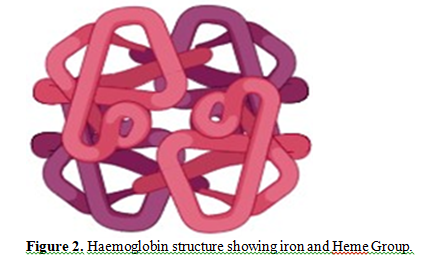
Hemoglobin is a fascinating protein found in human red blood cells. This specialist protein carries oxygen from your lungs to every cell in your body, functioning as a little delivery system. While hemoglobin’s stronghold on oxygen is necessary, releasing it at the right time is a delicate challenge. This adaptable protein masterfully balances holding on to its oxygen cargo or releasing it swiftly. This article explores how hemoglobin achieves this remarkable feat. The key lies in the changing conditions within your body! During exercise, your body creates a kind of “acid rain” that signals the need for oxygen, prompting hemoglobin to release its precious cargo. Similarly, the thinner air of high altitudes, such as the Alps, encourages hemoglobin to cling to oxygen molecules, ensuring adequate oxygen supply. This mesmerizing interplay between oxygen, hemoglobin, and your body’s ever-changing needs fuels your energy to run, play, and explore. Hemoglobin is an iron-rich protein found in red blood cells. It plays a crucial role in transporting oxygen throughout the body, making it essential for life. The various processes governing hemoglobin’s affinity for binding oxygen are examined in this abstract, along with its physiological significance. Two molecules that bind to oxygen reversibly are found in each of the four globin chains that make up hemoglobin. Oxygen binding to hemoglobin causes structural alterations in the surrounding globin chains, which alters hemoglobin’s oxygen affinity. The S-shaped oxygen dissociation curve reveals how factors like carbon dioxide, pH, and 2,3-diphosphoglycerate (2,3-DPG) influence the cooperative binding of oxygen to hemoglobin. The erythrocyte can buffer hydrogen ions and combine carbon dioxide with carbamino compounds thanks to hemoglobin, which also carries carbon dioxide in the blood. Atypical hemoglobin may result from alterations to the iron atom, globin chains, or the attachment of non-oxygen ligands.
Keywords: Oxygen, blood, binding, body, protein, erythrocyte
[This article belongs to Research and Reviews : A Journal of Biotechnology ]
References
1. Wagner PD. Blood gas transport: carriage of oxygen and carbon dioxide in blood. Semin Respir Crit Care Med. 2023;44:569–83. doi:10.1055/s-0043-1771160. PubMed: 37567251.
2. Kang Y. Liver transplantation: historical perspective. In: Anesthesia and Perioperative Care for Organ Transplantation. 2017. p. 319–31.
3. Wang R. Physiological implications of hydrogen sulfide: a whiff exploration that blossomed. Physiol Rev. 2012;92(2):791–896. doi:10.1152/physrev.00017.2011. PubMed: 22535897.
4. Hosseinzadeh R, Moosavi-Movahedi AA. Human hemoglobin structural and functional alterations and heme degradation upon interaction with benzene: a spectroscopic study. Spectrochim Acta A Mol Biomol Spectrosc. 2016;157:41–9. doi:10.1016/j.saa.2015.12.014. PubMed: 26710175.
5. Perutz MF. Mechanisms of cooperativity and allosteric regulation in proteins. Q Rev Biophys. 1989;22(2):139–237. doi:10.1017/s0033583500003826. PubMed: 2675171.
6. Dorn GW II. Neurohormonal connections with mitochondria in cardiomyopathy and other diseases. Am J Physiol Cell Physiol. 2022;323–77. doi:10.1152/ajpcell.00167.2022. PubMed: 35759434.
7. Abbaspour N, Hurrell R, Kelishadi R. Review on iron and its importance for human health. J Res Med Sci. 2014;19:164–74. PubMed: 24778671.
8. Pittman RN. Oxygen transport. In: Regulation of Tissue Oxygenation. 2011. Morgan & Claypool Life Sciences.
9. Wells RMG. Blood-gas transport and hemoglobin function. In: Fish Physiology. Vol. 27. Academic Press. 2009. p. 255–99.
10. Nairz M, Theurl I, Swirski FK, Weiss G. “Pumping iron”—how macrophages handle iron at the systemic, microenvironmental, and cellular levels. Pflugers Arch Eur J Physiol. 2017;469:397–418. doi:10.1007/s00424-017-1944-8. PubMed: 28251312.
11. Kumar S, Kaushik D, Sharma SK. Autoimmune disorders: types, symptoms, and risk factors. In: Artificial Intelligence and Autoimmune Diseases. 2024. p. 3–31. doi:10.1007/978-981-99-9029-0_1.
12. Rossaint R, Bouillon B, Cerny V, Coats TJ, Duranteau J, Fernández-Mondéjar E, Hunt BJ, Komadina R, Nardi G, Neugebauer E, Ozier Y, Riddez L, Schultz A, Stahel PF, Vincent JL, Spahn DR, Task Force for Advanced Bleeding Care in Trauma. Management of bleeding following major trauma: an updated European guideline. Crit Care. 2010;14. doi:10.1186/cc8943. PubMed: 20370902.
13. Salvagno GL, Sanchis-Gomar F, Picanza A, Lippi G. Red blood cell distribution width: a simple parameter with multiple clinical applications. Crit Rev Clin Lab Sci. 2015;52(2):86–105. doi:10.3109/10408363.2014.992064. PubMed: 25535770.
14. Singh AP, Batra J, Saxena R, Saxena S, Kumar C. Alarming rise in professional blood donors and its repercussions. Cardiometry. 2022;6:1394–6. doi:10.18137/cardiometry.2022.25.13941396.
15. Ajit P, Rahul S, Suyash S. Cytopathology: an important aspect of medical diagnosis. Res Rev. 2024;12:13–8.
16. Singh AP, Saxena RA, Saxena SU. Hemoglobin estimation by using the copper sulphate method. Asian J Curr Res. 2022;7(1):13–5. doi:10.56557/ajocr/2022/v7i17760.
17. Yadav K, Kant S, Ramaswamy G, Ahamed F, Jacob OM, Vyas H, Kaur R, Malhotra S, Haldar P. Validation of point-of-care hemoglobin estimation among pregnant women using digital hemoglobinometers (HemoCue 301 and HemoCue 201+) as compared with auto-analyzer. Indian J Hematol Blood Transfus. 2020;36:342–8. doi:10.1007/s12288-019-01196-5. PubMed: 32425387.
18. Nardini S, Corbanese U, Visconti A, Dalle Mule JD, Sanguinetti CM, De Benedetto F. Improving the management of patients with chronic cardiac and respiratory diseases by extending pulse-oximeter uses: dynamic pulse-oximetry. Multidiscip Respir Med. 2023;18:922. doi:10.4081/mrm.2023.922. PubMed: 38322131.

Research and Reviews : A Journal of Biotechnology
| Volume | 14 | |
| Issue | 01 | |
| Received | 02/03/2024 | |
| Accepted | 18/03/2024 | |
| Published | 30/03/2024 | |
| Publication Time | Days |