
Kashif Aqueel Rizvi,
- Student, Department: Warner College of Dairy Technology, Sam Higginbottom University of Agriculture, Technology and Sciences, Allahabad, Uttar Pradesh, India
Abstract
Antimicrobial resistance is a worldwide public health issue that impacts both human and animal populations. The use of antibiotics in veterinary medicine plays a significant role in the development and spread of antimicrobial resistance, contributing to resistant pathogens that impact both animals and humans. Antibiotics are widely utilized in animal husbandry, not only for treating diseases but also for preventing illness and enhancing growth in livestock. While this practice supports animal health and productivity, it has contributed to the rise of antibiotic-resistant bacteria that can spread to humans through direct contact, consumption of contaminated food, and environmental routes. The misuse and excessive use of antibiotics in veterinary medicine speed up the development of resistant bacterial strains, making it harder to treat infections in both animals and humans. This article examines the mechanisms behind resistance development, emphasizing how antibiotic use in animals contributes to antimicrobial resistance in zoonotic pathogens like Salmonella, Campylobacter, and Escherichia coli. It also highlights the one health approach, which acknowledges the interdependence of human, animal, and environmental health in addressing antimicrobial resistance. Case studies of methicillin-resistant Staphylococcus aureus in animals and multidrug-resistant Salmonella in poultry highlight the public health risks associated with veterinary antibiotic use. Strategies for mitigating antimicrobial resistance, including reducing antibiotic usage, adopting better animal husbandry practices, and exploring alternatives, such as vaccines and probiotics, are discussed. The role of veterinary professionals in promoting responsible antibiotic use through stewardship programs and public education is emphasized. In conclusion, addressing antimicrobial resistance requires a collaborative approach that involves both veterinary and human health sectors, underscoring the need for continued research, monitoring, and policy development to combat the antimicrobial resistance crisis effectively.
Keywords: Veterinary medicine, AMR, conjugation, transformation, penicillin
[This article belongs to Research and Reviews : Journal of Veterinary Science and Technology ]
References
- Palma E, Tilocca B, Roncada P. Antimicrobial resistance in veterinary medicine: an overview. Int J Mol Sci. 2020;21(6):1914.
- Caneschi A, Bardhi A, Barbarossa A, Zaghini A. The use of antibiotics and antimicrobial resistance in veterinary medicine, a complex phenomenon: a narrative review. Antibiotics. 2023;12(3):487.
- Garcia-Migura L, Hendriksen RS, Fraile L, Aarestrup FM. Antimicrobial resistance of zoonotic and commensal bacteria in Europe: the missing link between consumption and resistance in veterinary medicine. Vet Microbiol. 2014;170(1–2):1–9.
- McKellar QA. Antimicrobial resistance: a veterinary perspective. BMJ. 1998;317(7159):610–1.
- Schwarz S, Chaslus-Dancla E. Use of antimicrobials in veterinary medicine and mechanisms of resistance. Vet Res. 2001;32(3–4):201–25.
- Tenover FC. Mechanisms of antimicrobial resistance in bacteria. Am J Med. 2006;119(6):S3–10.
- Holmes AH, Moore LS, Sundsfjord A, Steinbakk M, Regmi S, Karkey A, et al. Understanding the mechanisms and drivers of antimicrobial resistance. Lancet. 2016;387(10014):176–87.
- Sefton AM. Mechanisms of antimicrobial resistance: their clinical relevance in the new millennium. Drugs. 2002;62:557–66.
- Levy SB. Active efflux mechanisms for antimicrobial resistance. Antimicrob Agent Chemo. 1992;36(4):695–703.
- Levy SB. Active efflux mechanisms for antimicrobial resistance. Antimicrob Agent Chemo. 1992;36(4):695–703.
- Sowash MG, Uhlemann AC. Community-associated methicillin-resistant Staphylococcus aureus case studies. MRSA Protocol. 2014;25–69.
- Smith RD, Yago M, Millar M, Coast J. A macroeconomic approach to evaluating policies to contain antimicrobial resistance: a case study of methicillin-resistant Staphylococcus aureus (MRSA). Appl Heal Econ Heal Pol. 2006;5:55–65.
- Magalhães RJ, Loeffler A, Lindsay J, Rich M, Roberts L, Smith H, et al. Risk factors for methicillin-resistant Staphylococcus aureus (MRSA) infection in dogs and cats: a case-control study. Vet Res. 2010;41(5).
- Gieraltowski L, Higa J, Peralta VI, Green A, Schwensohn C, Rosen H, et al. National outbreak of multidrug resistant Salmonella Heidelberg infections linked to a single poultry company. PloS one. 2016;11(9):e0162369.
- Karikari AB, Obiri-Danso K, Frimpong EH, Krogfelt KA. Multidrug resistant Campylobacter in faecal and carcasses of commercially produced poultry. Afric J Microbiol Res. 2017;11(7):271–7.
- Varga C, Guerin MT, Brash ML, Slavic D, Boerlin P, Susta L. Antimicrobial resistance in Campylobacter jejuni and Campylobacter coli isolated from small poultry flocks in Ontario, Canada: a two-year surveillance study. PLoS One. 2019;14(8):e0221429.
- Santos-Ferreira N, Ferreira V, Teixeira P. Occurrence and multidrug resistance of Campylobacter in chicken meat from different production systems. Foods. 2022;11(13):1827.
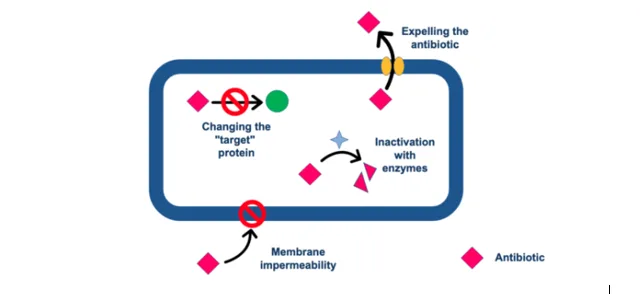
- Advertis Agència. Why do antimicrobial resistances appear? The bacteria strategies for surviving antibiotics [Internet]. Small Ruminants. 2021. Available at https://aboutsmallruminants.com/antimicrobial-resistances-strategies-antibiotics/ [Accessed on 2024 Oct 28].
| Volume | 13 | |
| Issue | 03 | |
| Received | 18/10/2024 | |
| Accepted | 26/10/2024 | |
| Published | 30/10/2024 | |
| Publication Time | Days |