
Asfia Aziz,
Sunil Suman,
- Research Scholar, P.G. Department of Mathematics, Magadh University, BodhGaya, Bihar, India
- HOD, P.G Department of Mathematics, Magadh University, BodhGaya, Bihar, India
Abstract
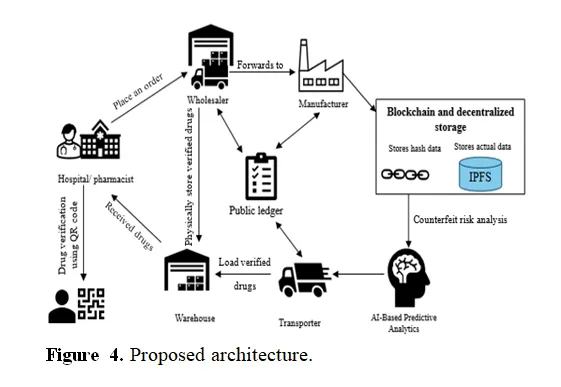
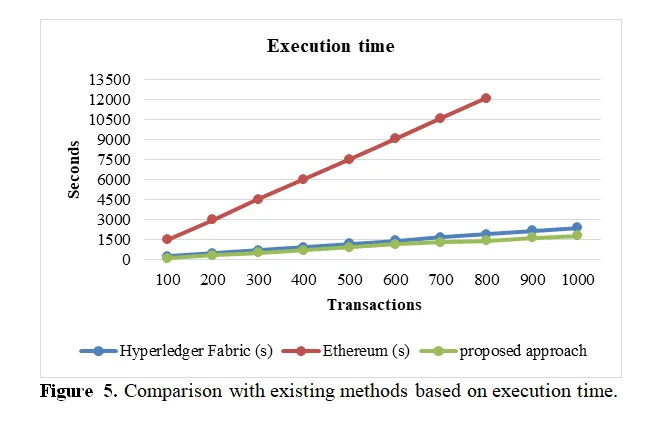
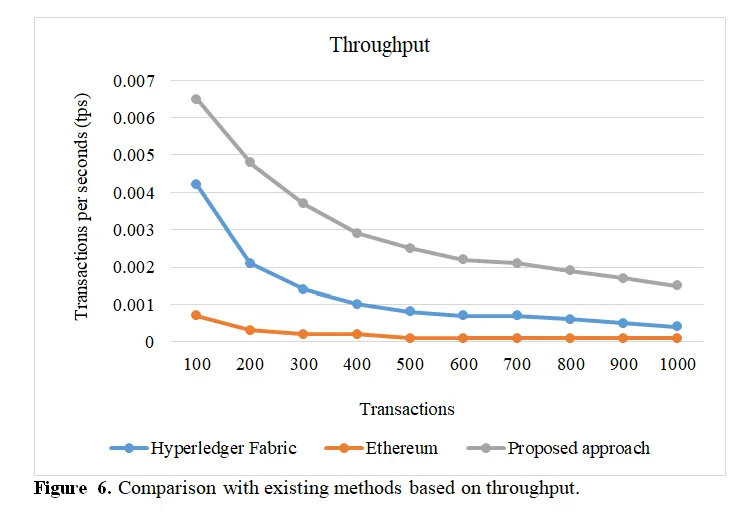
Counterfeit drugs present a major risk to public health and pose a substantial threat to the pharmaceutical industry, leading to severe economic losses and risking patient lives. Ensuring the safety and authenticity of the pharmaceutical supply chain is critical to addressing this issue. This study presents a novel approach for enhancing the security and authenticity of the pharmaceutical supply chain through the integration of blockchain technology, decentralized storage, and artificial intelligence (AI)-based predictive analytics. The proposed system establishes an immutable public ledger and records all transactions within the supply chain, ensuring transparency and traceability and making it nearly impossible for counterfeit drugs to infiltrate the system. This study handles the issue of storing huge quantities of data on the blockchain by employing the inter panetary file system (IPFS). In this approach, the hash of the data is maintained on the blockchain, while the actual data is safely stored over the IPFS network. The performance of the proposed system was evaluated using several metrics, demonstrating significant improvements over existing solutions. The execution time for processing 1,000 transactions was reduced to 1,806.7s compared to 2,396.53s in Hyperledger Fabric and 7,533.74s in Ethereum. The throughput of the system was also improved, achieving 0.0015 transactions per second (tps) at 1000 transactions, which is higher than Ethereum’s 0.0001 tps. Additionally, the AI-based predictive analytics demonstrated an accuracy of 96.52% in detecting counterfeit drugs, further enhancing the reliability of the pharmaceutical supply chain.
Keywords: Counterfeit drugs, Traceability, Pharmaceutical Supply chain, Blockchain, Artificial Intelligence, InterPlanetary File System.
[This article belongs to Research and Reviews: A Journal of Pharmaceutical Science ]
References
- Isles, M. (2017). What’s in a Word? Falsified/Counterfeit/Fake Medicines-The Definitions Debate. Medicine Access@ Point of Care, 1, maapoc-0000008. https://doi.org/10.5301/maapoc.0000008
- Burns, W. (2006). WHO launches taskforce to fight counterfeit drugs. Bulletin of the World Health Organization, 84, 689-690.
- Adjei, H. K., & Ohene, P. (2015). Counterfeit drugs: the relentless war in Africa. Pharm Pharmacol Int J, 2(2), 00016.
- Substandard, W. H. O. (2016). spurious, falsely labeled, falsified and counterfeit (SSFFC) medical products. Fact sheet.
- Mages, R., & Kubic, T. T. (2016). Counterfeit medicines: Threat to patient health and safety. Pharmaceuticals Policy and Law, 18(1-4), 163-177.
- Abbas, K., Afaq, M., Ahmed Khan, T., & Song, W. C. (2020). A blockchain and machine learning-based drug supply chain management and recommendation system for smart pharmaceutical industry. Electronics, 9(5), 852.
- Kumari, K., & Saini, K. (2019). Cfdd (counterfeit drug detection) using blockchain in the pharmaceutical industry. Int J Eng Res Technol (IJERT), 8, 1-4.
- Pandey, Prateek, and Ratnesh Litoriya. “Securing e-health networks from counterfeit medicine penetration using blockchain.” Wireless Personal Communications117 (2021): 7-25.
- Varshad, V., & Vinay Prasad, M. S. (2022). A web application for drug traceability in healthcare system using blockchain. International Journal for Research in Applied Science & Engineering Technology, 10(8), 544. https://doi.org/10.22214/ijraset.2022.46221
- Masmoudi, M., Mecharnia, T., Bouhamoum, R., Baazaoui Zghal, H., Ghedira, C., Stankovski, V., & Vodislav, D. (2023, May). A semantic blockchain-based system for drug traceability. In Proceedings of the 27th International Database Engineered Applications Symposium(pp. 115-118).
- Liu, R., & Lundin, S. (2016). Falsified medicines: literature review. Working Papers in MEDICAL humanities, 2(1).
- Shah, N. (2004). Pharmaceutical supply chains: key issues and strategies for optimization. Computers & chemical engineering, 28(6-7), 929-941.
- Tremblay, M. (2013). Medicines counterfeiting is a complex problem: a review of key challenges across the supply chain. Current drug safety, 8(1), 43-55.
- Mireku, K. K., Zhang, F., & Komlan, G. (2017, April). Patient knowledge and data privacy in healthcare records system. In 2017 2nd International Conference on Communication Systems, Computing and IT Applications (CSCITA)(pp. 154-159). IEEE.
- Joy, S. Y. K., Ahsan, M. N. I., Progga, N. T., Saha, A. K., Rahman, M. S., & Al Omar, A. (2023). An Anti-Counterfeiting Architecture Ensuring Authenticity and Traceability for Expensive Medicines Using QR Codes. In Blockchain Technology for IoE(pp. 211-238). CRC Press.
- Chen, C. L., Guo, L. H., Zhou, M., Tsaur, W. J., Sun, H., Zhan, W., … & Li, C. T. (2022). Blockchain-based anti-counterfeiting management system for traceable luxury products. Sustainability, 14(19), 12814.
- Sarkar, S. (2022). Digital Traceability of pharmaceutical drugs in supply chain. International Journal, 10(2).
- Wazid, M., Das, A. K., Khan, M. K., Al-Ghaiheb, A. A. D., Kumar, N., & Vasilakos, A. V. (2017). Secure authentication scheme for medicine anti-counterfeiting system in IoT environment. IEEE Internet of Things Journal, 4(5), 1634-1646.
- Ehioghae, E., Idowu, S., & Ebiesuwa, O. (2021). Enhanced drug anti-counterfeiting and verification system for the pharmaceutical drug supply chain using blockchain. International Journal of Computer Applications, 975, 8887.
- Sarmah, S. S. (2018). Understanding blockchain technology. Computer Science and Engineering, 8(2), 23-29.
- Kassab, M., DeFranco, J., Malas, T., Laplante, P., Destefanis, G., & Neto, V. V. G. (2019). Exploring research in blockchain for healthcare and a roadmap for the future. IEEE Transactions on Emerging Topics in Computing, 9(4), 1835-1852.
- Mettler, M. (2016, September). Blockchain technology in healthcare: The revolution starts here. In 2016 IEEE 18th international conference on e-health networking, applications and services (Healthcom)(pp. 1-3). IEEE.
- Saindane, P., Jethani, Y., Mahtani, P., Rohra, C., & Lund, P. (2020, October). Blockchain: A solution for improved traceability with reduced counterfeits in supply chain of drugs. In 2020 International Conference on Electrotechnical Complexes and Systems (ICOECS)(pp. 1-5). IEEE.
- Nawaz, Anum, Liguan Wang, Muhammad Irfan, and Tomi Westerlund. “Hyperledger sawtooth based supplychain traceability system for counterfeit drugs.” Computers & Industrial Engineering190 (2024): 110021.
- PRANITHA, GADDE, and PV LAKSHMI. “FAKE DRUG DETECTION USING QR CODES AND CONSENSUS BASED SECURITY ENHANCEMENT IN DECENTRALIZED BLOCKCHAIN SYSTEM.” Journal of Theoretical and Applied Information Technology102, no. 4 (2024).
- Mega, Ohis G., Maureen I. Akazue, Oghenevovwero Zion Apene, and JohnPaul AC Hampo. “Adoption of Blockchain Technology Framework for Addressing Counterfeit Drugs Circulation.” European Journal of Medical and Health Research2, no. 2 (2024): 182-196.
- Jamil, Faisal, Lei Hang, KyuHyung Kim, and DoHyeun Kim. “A novel medical blockchain model for drug supply chain integrity management in a smart hospital.” Electronics8, no. 5 (2019): 505.
- Bapatla, Anand K., Saraju P. Mohanty, Elias Kougianos, Deepak Puthal, and Anusha Bapatla. “PharmaChain: A blockchain to ensure counterfeit‐free pharmaceutical supply chain.” IET Networks12, no. 2 (2023): 53-76.
- Bandhu, Kailash Chandra, Ratnesh Litoriya, Pradeep Lowanshi, Manav Jindal, Lokendra Chouhan, and Suresh Jain. “Making drug supply chain secure traceable and efficient: a Blockchain and smart contract based implementation.” Multimedia Tools and Applications82, no. 15 (2023): 23541-23568.
- QUZMAR, ABDULLAH, SARAH ALMAAITAH, and MOHAMMAD QATAWNEH. “A blockchain-based system for preventing drug counterfeit.” Journal of Theoretical and Applied Information Technology100, no. 5 (2022).
- Ouf, Shimaa. “A Proposed Architecture for Pharmaceutical Supply Chain Based Semantic Blockchain.” International Journal of Intelligent Engineering & Systems14, no. 3 (2021).
- Musamih, Ahmad, Khaled Salah, Raja Jayaraman, Junaid Arshad, Mazin Debe, Yousof Al-Hammadi, and Samer Ellahham. “A blockchain-based approach for drug traceability in healthcare supply chain.” IEEE access9 (2021): 9728-9743.
- Alam, Nazmul, Md Rabiul Hasan Tanvir, Sadah Anjum Shanto, Fateha Israt, Aysha Rahman, and Sabrina Momotaj. “Blockchain based counterfeit medicine authentication system.” In 2021 IEEE 11th IEEE symposium on computer applications & industrial electronics (ISCAIE), pp. 214-217. IEEE, 2021.
- Liu, Zhihai, Qingliang Zeng, Chenglong Wang, and Qing Lu. “Application research of qrcode barcode in validation of express delivery.” In Advanced Research on Electronic Commerce, Web Application, and Communication: International Conference, ECWAC 2011, Guangzhou, China, April 16-17, 2011. Proceedings, Part I, pp. 346-351. Springer Berlin Heidelberg, 2011.
- Gaggioli, Andrea. “Blockchain technology: Living in a decentralized everything.” CyberPsychology, Behavior & Social Networking21, no. 1 (2018).
- Ismail, Leila, Huned Materwala, and Sherali Zeadally. “Lightweight blockchain for healthcare.” IEEE access7 (2019): 149935-149951.
- Singh, N. “Permissioned vs Permissionless Blockchains. 101 Blockchains.” (2020).
- Islam, M. A., & Shuvo, S. A. (2024). Blockchain technology: a tool to solve the challenges of the education sector in developing countries. International Journal of Computational Systems Engineering, 8(1-2), 75-86.
- Sabah, S., Hasan, A. T., & Daria, A. (2021, December). A blockchain-based approach to detect counterfeit drugs in medical supply chain. In Proceedings of the International Conference on Big Data, IoT, and Machine Learning: BIM 2021(pp. 609-621). Singapore: Springer Singapore.
- Wang, Shangping, Yinglong Zhang, and Yaling Zhang. “A blockchain-based framework for data sharing with fine-grained access control in decentralized storage systems.” Ieee Access6 (2018): 38437-38450.
- Bandara, Kasun, Peibei Shi, Christoph Bergmeir, Hansika Hewamalage, Quoc Tran, and Brian Seaman. “Sales demand forecast in e-commerce using a long short-term memory neural network methodology.” In Neural Information Processing: 26th International Conference, ICONIP 2019, Sydney, NSW, Australia, December 12–15, 2019, Proceedings, Part III 26, pp. 462-474. Springer International Publishing, 2019.
- Abraham, Nesarani, and Ramalakshmi Ramar. “Secure data sharing with interplanetary file system for pharmaceutical data.” In Artificial Intelligence for Cyber Security: Methods, Issues and Possible Horizons or Opportunities, pp. 263-289. Cham: Springer International Publishing, 2021.
- Thomson, B. S., & Varuna, W. R. (2023, October). Analyzing the Counterfeit Medicines Based on Classification Using Machine Learning Techniques. In International Conference on Computer & Communication Technologies(pp. 355-361). Singapore: Springer Nature Singapore.
- Brin, Sergey, and Lawrence Page. “Reprint of: The anatomy of a large-scale hypertextual web search engine.” Computer networks56, no. 18 (2012): 3825-3833.
- Guo, Chuanxiong, Guohan Lu, Dan Li, Haitao Wu, Xuan Zhang, Yunfeng Shi, Chen Tian, Yongguang Zhang, and Songwu Lu. “BCube: a high performance, server-centric network architecture for modular data centers.” In Proceedings of the ACM SIGCOMM 2009 conference on Data communication, pp. 63-74. 2009.
- Wang, Guohui, David G. Andersen, Michael Kaminsky, Konstantina Papagiannaki, TS Eugene Ng, Michael Kozuch, and Michael Ryan. “c-Through: Part-time optics in data centers.” In Proceedings of the ACM SIGCOMM 2010 Conference, pp. 327-338. 2010.
- Le, Xuan-Hien, Hung Viet Ho, Giha Lee, and Sungho Jung. “Application of long short-term memory (LSTM) neural network for flood forecasting.” Water11, no. 7 (2019): 1387.
- Sharma, Rohit, Sachin S. Kamble, Angappa Gunasekaran, Vikas Kumar, and Anil Kumar. “A systematic literature review on machine learning applications for sustainable agriculture supply chain performance.” Computers & Operations Research 119 (2020): 104926.

Research and Reviews: A Journal of Pharmaceutical Science
| Volume | 15 | |
| Issue | 03 | |
| Received | 26/10/2024 | |
| Accepted | 12/11/2024 | |
| Published | 29/11/2024 | |
| Publication Time | Days |