
Soumitra Das,
Mekkanti Manasa Rekha,
- Research Scholar, Department of Pharmacy Practice, Aditya Bangalore Institute of Pharmacy Education and Research, Karnataka, India
- Associate Professor, Department of Pharmacy Practice, Aditya Bangalore Institute of Pharmacy Education and Research, Bangalore, Karnataka, India
Abstract
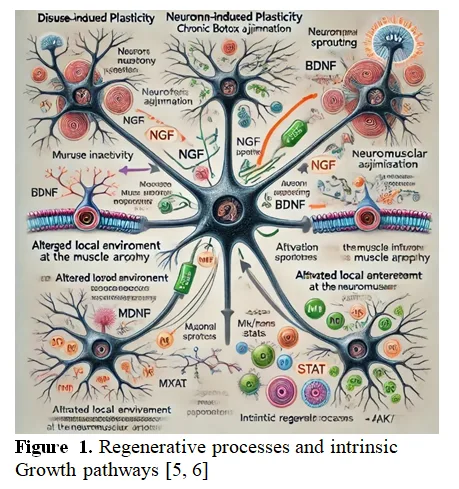
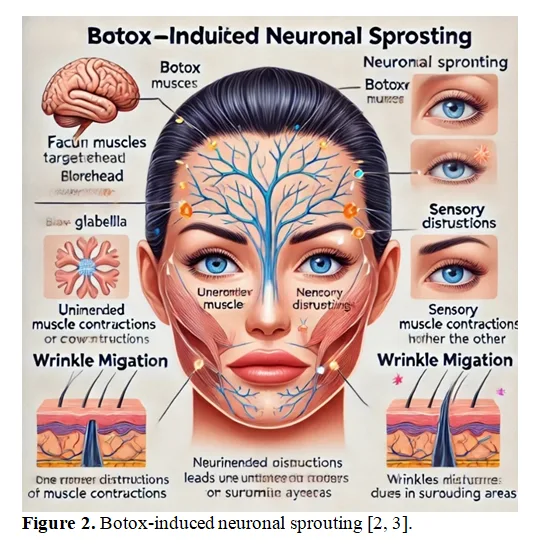
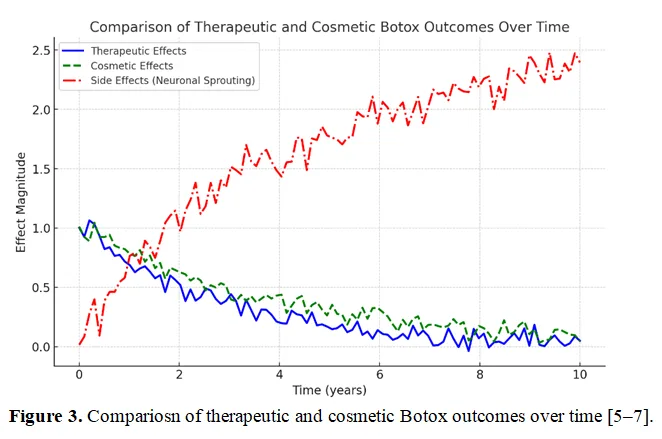
Botulinum toxin (Botox) is extensively used for its ability to induce temporary muscle paralysis through inhibition of acetylcholine release at neuromuscular junctions. While its short-term effects are well documented, emerging evidence suggests that chronic use of Botox may trigger neuronal sprouting, a process that could have significant long-term implications. This review synthesizes current research on the mechanisms by which Botox induces nerve sprouting and evaluates the clinical outcomes associated with this phenomenon. Findings from both clinical and experimental studies indicate that while nerve sprouting may facilitate recovery in some contexts, it also poses risks of maladaptive changes such as muscle spasm and neuropathic pain. These findings underscore the need for further research into the long-term safety of repeated Botox treatments and highlight the importance of monitoring patients for potential adverse effects.
Keywords: Botulinum toxin, neuromuscular junctions, neuropathic pain, acetylcholine, Botox.
[This article belongs to Research and Reviews: A Journal of Pharmaceutical Science ]
References
1. Münchau A, Bhatia KP. Uses of botulinum toxin injection in medicine today.BMJ. 2000;320:161–5 doi: 10.1136/bmj.320.7228.161.
- Scott AB. Botulinum toxin injection of eye muscles to correct strabismus. Trans Trans Am Ophthalmol Soc. 1981;79:734–70.
- Ellenhorn MJ, Barceloux DG, editors.Diagnosis and Treatment of Human Poisoning. New York: Elsevier; 1988. Medical Toxicology; pp. 1185–7.
- Brin MF. Botulinum toxin: Chemistry, pharmacology, toxicity, and immunology. Muscle Nerve Suppl. 1997;20:146–68. https://doi.org/10.1002/(SICI)1097-4598(1997)6+3.0.CO;2-4
- Sellin LC. The pharmacological mechanism of botulism. Trends Pharmacol Sci. 1985;6:80–2.
- Burgen AS, Dickens F, Zatman LJ. The action of botulinum toxin on the neuro-muscular junction. J Physiol. 1949; Aug;109(1-2):10-24. doi: 10.1113/jphysiol.1949.sp004364.
- Stanley EF, Drachman DB. Botulinum toxin blocks quantal but not non-quantal release of ACh at the neuromuscular junction. Brain research. 1983 Feb 14;261(1):172-5.
- Hoffman RO, Helveston EM.Botulinum in the treatment of adult motility disorders. Int Ophthalmol Clin. 1986;26:(4)241–50.
- Priori A, Berardelli A, Mercuri B, Manfredi M. Physiological effects produced by botulinum toxin treatment of upper limb dystonia: Changes in reciprocal inhibition between forearm muscles. Brain. 1995;118,(3):801–7.
- Göschel H, Wohlfarth K, Frevert J, Dengler R, Bigalke H. Botulinum A toxin therapy: Neutralizing and nonneutralizing antibodies and therapeutic consequences. Exp Neurol. 1997;147:(1):96–102.
- Benedetto AV. The cosmetic uses of Botulinum toxin type A. Int J Dermatol. 1999;38:(9)641–55.
- Jankovic J, Brin MF. Botulinum toxin: historical perspective and potential new indications. Muscle & Nerve: Official Journal of the American Association of Electrodiagnostic Medicine. 1997;20(S6):129-45.
- Marion MH, Sheehy M, Sangla S, Soulayrol S. Dose standardisation of botulinum toxin. J Neurol Neurosurg Psychiatry. 1995 Jul;59(1):102-3. doi: 10.1136/jnnp.59.1.102.
- Odergren T, Hjaltason H, Kaakkola S, Solders G, Hanko J, Fehling C, Marttila RJ, Lundh H, Gedin S, Westergren I, Richardson A. A double blind, randomised, parallel group study to investigate the dose equivalence of Dysport® and Botox® in the treatment of cervical dystonia. Journal of Neurology, Neurosurgery & Psychiatry. 1998 Jan 1;64(1):6-12.
- Schantz EJ, Johnson EA. Preparation and characterization of botulinum toxin type A for human treatment. In: Jankovik J, Hallet M, editors. Therapy with Botulinum Toxin.Vol. 109. New York, NY: Marcel Dekker; 1994. pp. 10–24.
- Brin MF, Lew MF, Adler CH, Comella CL, Factor SA, Jankovic J, et al. Safety and efficacy of NeuroBloc (botulinum toxin type B) in type A-resistant cervical dystonia. Neurology. 1999;53:(7)1431–8. https://doi.org/10.1212/WNL.53.7.1431
- Ranoux D, Gury C, Fondarai J, Mas JL, Zuber M. Respective potencies of Botox and Dysport: a double blind, randomised, crossover study in cervical dystonia. Journal of Neurology, Neurosurgery & Psychiatry. 2002 Apr 1;72(4):459-62. https://doi.org/10.1136/jnnp.72.4.459
- Pramit Malhotra S, Daniel Danahey G. BOTOX® Injections to Improve Facial Aesthetics. eMedicine. Available from: http://www.emedicine.com/ent/topic134.htm. [last accessed on 2010 Jan 1]
- Houser MK, Sheean GL, Lees AJ. Further studies using higher doses of botulinum toxin type F for torticollis resistant to botulinum toxin type A. Journal of Neurology, Neurosurgery & Psychiatry. 1998 May 1;64(5):577-80.
- Dolly JO. Therapeutic and research exploitation of botulinum neurotoxins. Eur J Neurol. 1997;4:S5–10.

Research and Reviews: A Journal of Pharmaceutical Science
| Volume | 15 | |
| Issue | 03 | |
| Received | 02/09/2024 | |
| Accepted | 04/10/2024 | |
| Published | 09/10/2024 | |
| Publication Time | Days |