
Lakshay Bhutani,
- Student, Department of Life science, Amity University, Noida, Uttar Pradesh, India
Abstract
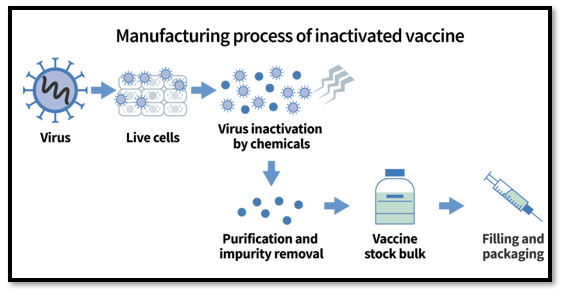
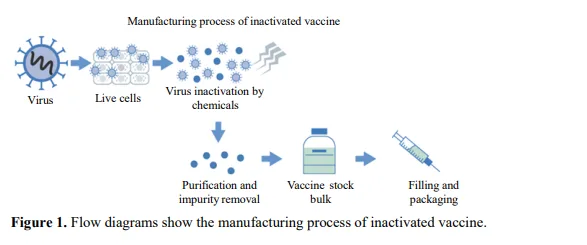
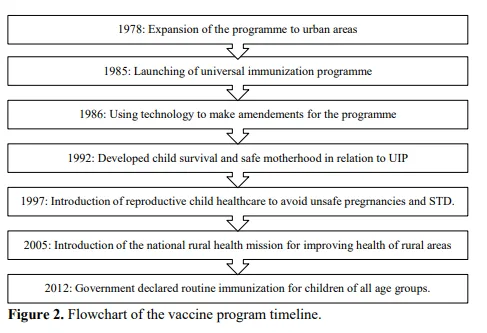
The Universal Immunization Program (UIP) in India, initiated by the Government of India in 1985 and incorporated into the Child Survival and Safe Motherhood Program in 1992, plays a crucial role in enhancing public health through systematic vaccination efforts. This program aims to save lives and strengthen immune systems by administering vaccines and antibiotics. The UIP has spurred the development of various campaigns, including mass media efforts, to promote immunization against a range of diseases such as tetanus, coronavirus, and others. Supported by the Bureau of Energy and Family Prosperity, the Management of India, and the National Technical Advisory Group on Immunization (NTAGI), the UIP provides essential vaccines to infants, children, and pregnant women. India, as a major vaccine manufacturing hub with a robust national regulatory authority, is integral to the global supply of vaccines and conducts one of the world’s largest immunization programs. In recent advancements, the UIP has introduced adult vaccines against specific diseases like the Orient type of encephalitis in areas with high incidence rates, following thorough studies and consultations with NTAGI. Vaccines under UIP can be categorized into two types: inactivated and live attenuated. Inactivated vaccines use dead pathogens to stimulate immunity and require frequent booster shots, examples include polio and rabies vaccines. Live attenuated vaccines, on the other hand, use weakened forms of pathogens to induce a strong, lasting immune response, as seen in vaccines for measles, mumps, rotavirus, smallpox, and chickenpox. The development of vaccines generally involves either inactivating the virus chemically or physically or weakening it before administration. Although inactivated vaccines necessitate regular transfusions to maintain immunity, they are a critical component of the immunization strategy. Through these multifaceted efforts, the UIP continues to combat infectious diseases and safeguard public health in India.
Keywords: Universal immunization, inactivated vaccines, virus, polio, rabies vaccines
[This article belongs to Research and Reviews: A Journal of Microbiology and Virology ]
References
- Sachdeva A. Pneumococcal conjugate vaccine introduction in India’s universal immunization program [Internet]. Indian Pediatr. 2017;54:445–6.
- Anekwe TD, Kumar S. The effect of a vaccination program on child anthropometry: Evidence from India’s Universal Immunization Program. J Public Health (Oxf). 2012;34:489–97. DOI: 10.1093/pubmed/fds032, PubMed: 22611261.
- Pradhan SK. Time to revamp the universal immunization program in India. Indian J Public Health. 2010;54:71–4. DOI: 10.4103/0019-557X.73273, PubMed: 21119238.
- Shrivastwa N, Gillespie BW, Lepkowski JM, Boulton ML. Vaccination timeliness in children under India’s universal immunization program. Pediatr Infect Dis J. 2016;35:955–60. DOI: 10.1097/INF.0000000000001223, PubMed: 27195601.
- Kim D, Pekgün P, Yildirim İ, Keskinocak P. Resource allocation for different types of vaccines against COVID-19: Tradeoffs and synergies between efficacy and reach. Vaccine. 2021;39:6876–82. DOI: 10.1016/j.vaccine.2021.10.025, PubMed: 34688498.
- Có-Rives I, Chen AYA, Moore AC. Skin-based vaccination: A systematic mapping review of the types of vaccines and methods used and immunity and protection elicited in pigs. Vaccines. 2023;11:450. DOI: 10.3390/vaccines11020450, PubMed: 36851328.
- Shen AK, Fields R, McQuestion M. The future of routine immunization in the developing world: Challenges and opportunities. Glob Health Sci Pract. 2014;2:381–94. DOI: 10.9745/GHSP-D-14-00137, PubMed: 25611473.
- Dinleyici EC, Borrow R, Safadi MAP, van Damme P, Munoz FM. Vaccines and routine immunization strategies during the COVID-19 pandemic. Hum Vaccin Immunother. 2021;17:400–7. DOI: 10.1080/21645515.2020.1804776, PubMed: 32845739.
- Anderson R, Perrier T, Pervaiz F, Sisouveth N, Kumar B, Phongphila S, et al. Supporting immunization programs with improved vaccine cold chain information systems. In: IEEE Global Humanitarian Technology Conference (GHTC 2014). IEEE Publications; 2014. p. 215–22. DOI: 10.1109/GHTC.2014.6970284.
- Bremer P. Towards a reference model for the cold chain. Int J Logist Manag. 2018;29:822–38. DOI: 10.1108/IJLM-02-2017-0052.
- Weiss WM, Winch PJ, Burnham G. Factors associated with missed vaccination during mass immunization campaigns. J Health Popul Nutr. 2009;27:358–67. DOI: 10.3329/jhpn.v27i3.3378, PubMed: 19507751.
- Bonu S, Rani M, Baker TD. The impact of the national polio immunization campaign on levels and equity in immunization coverage: Evidence from rural North India. Soc Sci Med. 2003;57:1807–19. DOI: 10.1016/s0277-9536(03)00056-x, PubMed: 14499507.
- Duintjer Tebbens RJ, Kalkowska DA, Wassilak SGF, Pallansch MA, Cochi SL, Thompson KM. The potential impact of expanding target age groups for polio immunization campaigns. BMC Infect Dis. 2014;14:45. DOI: 10.1186/1471-2334-14-45, PubMed: 24472313.

Research and Reviews: A Journal of Microbiology and Virology
| Volume | 14 | |
| Issue | 02 | |
| Received | 16/05/2024 | |
| Accepted | 09/07/2024 | |
| Published | 18/07/2024 | |
| Publication Time | Days |