
Qurratul Ain Kausar Ansari,
Pratiksha Parihar,
Shrutika Chincholkar,
Karuna Dohare,
Mangesh S. Dhore,
- Assistant Professor, Department of Forensic Science, G.H. Raisoni University, Anjangaon Bari Road, Amravati, Maharashtra, India
- Student, Department of Forensic Science, G.H. Raisoni University, Anjangaon Bari Road, Amravati, Maharashtra, India
- Student, Department of Forensic Science, G.H. Raisoni University, Anjangaon Bari Road, Amravati, Maharashtra, India
- Student, Department of Forensic Science, G.H. Raisoni University, Anjangaon Bari Road, Amravati, Maharashtra, India
- H.O.D, Department of Forensic Science, G.H. Raisoni University, Anjangaon Bari Road, Amravati, Maharashtra, India
Abstract
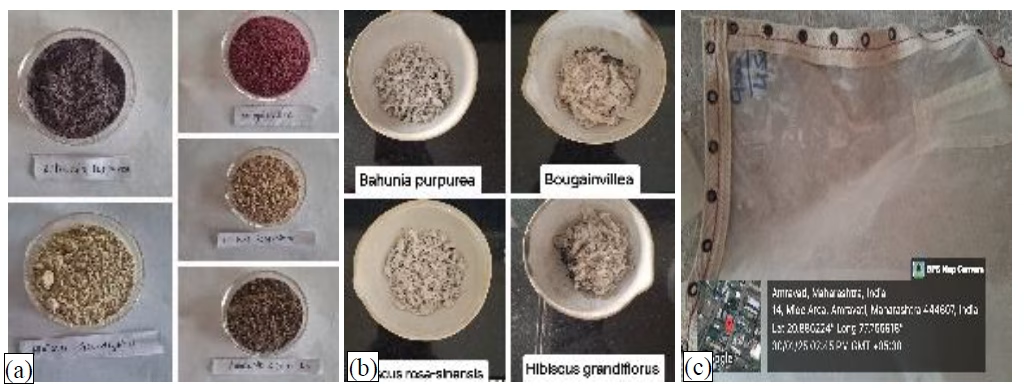
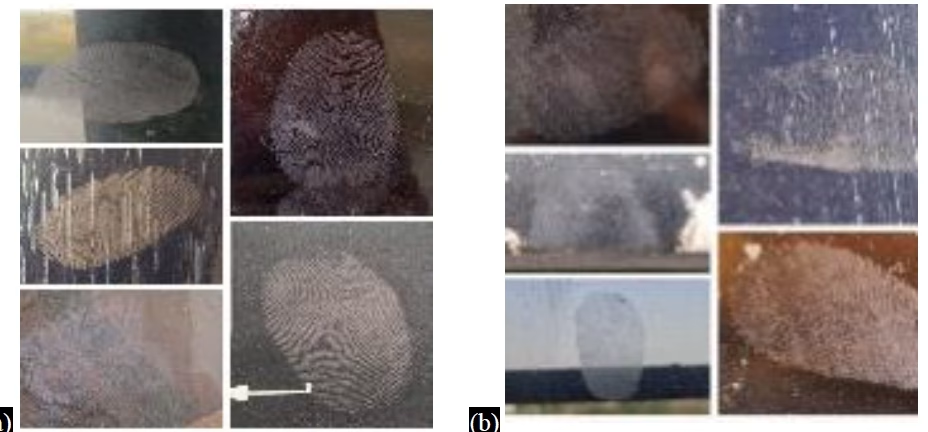
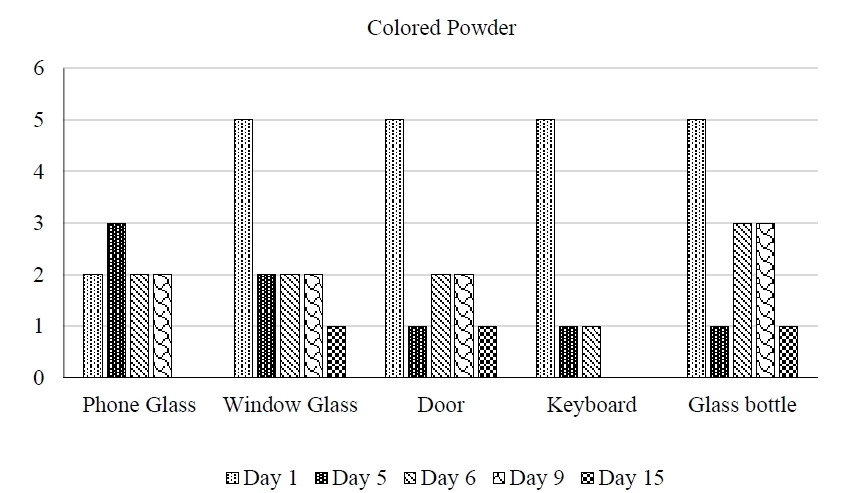
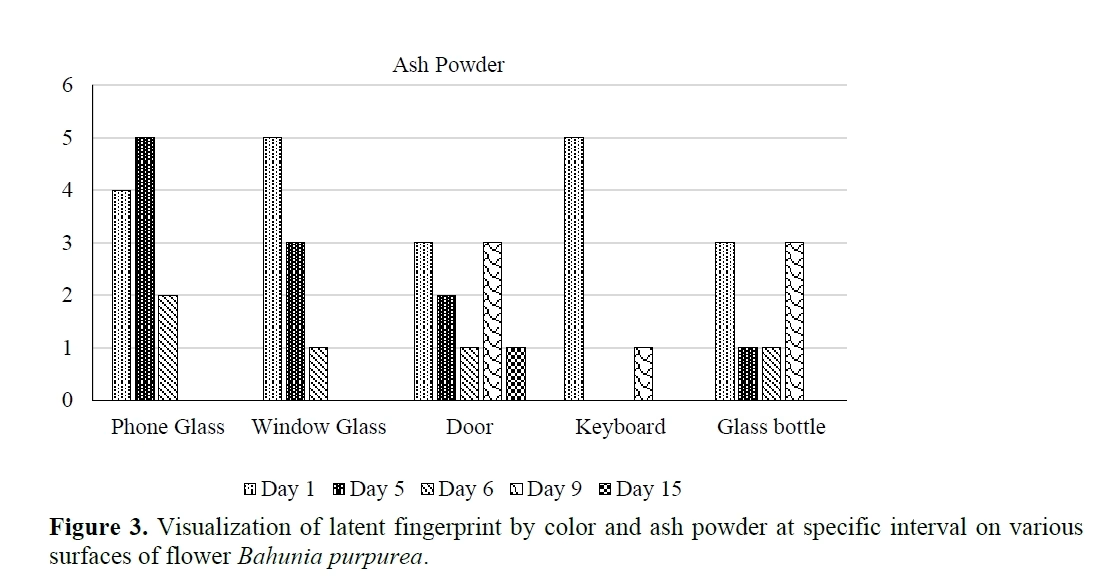
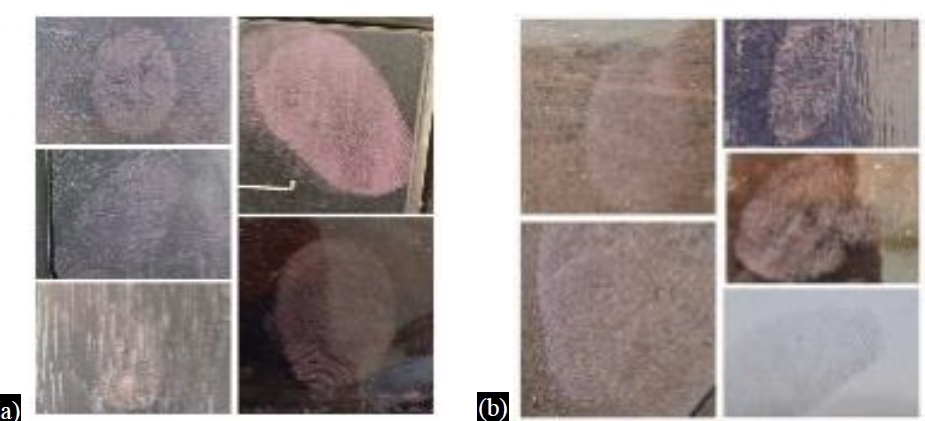
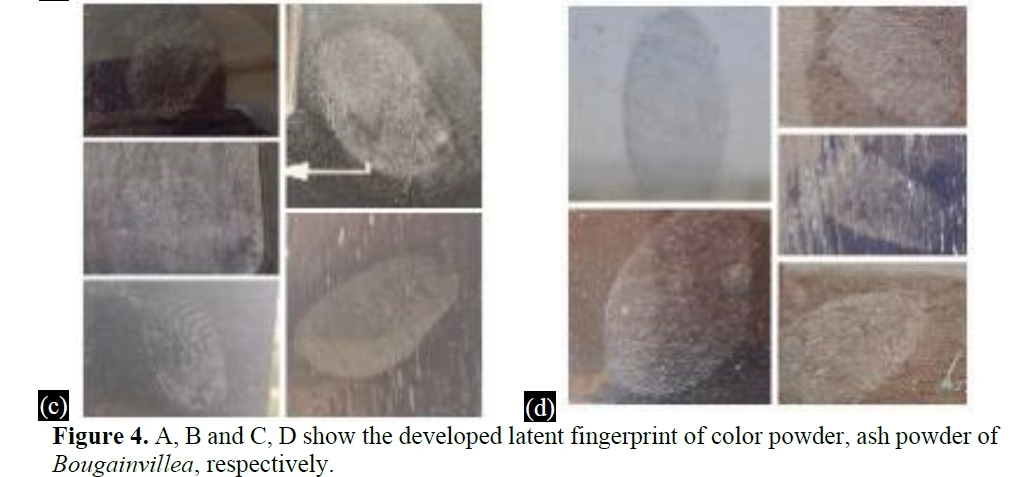
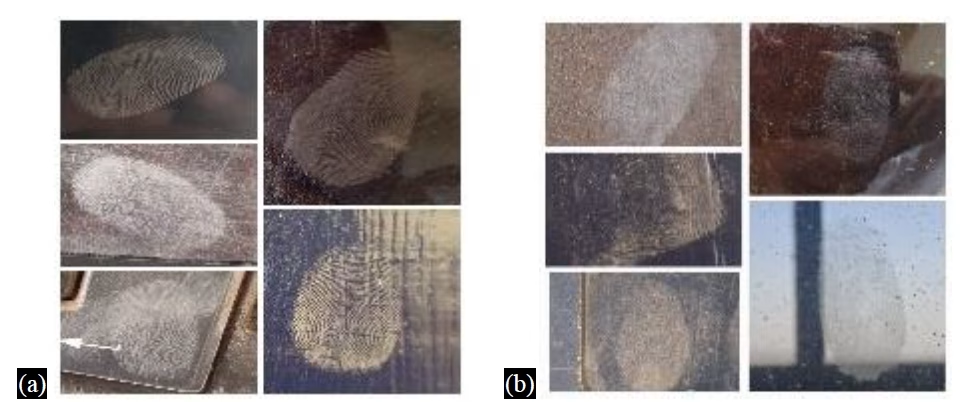
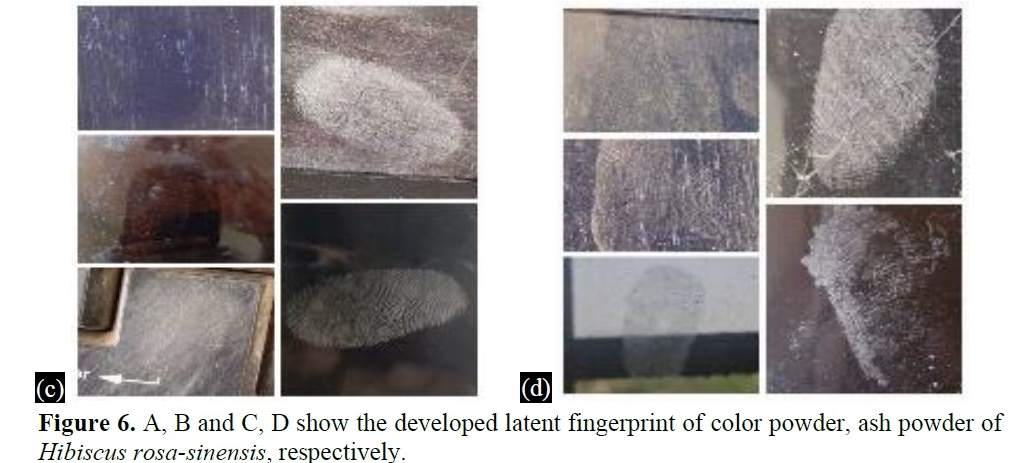
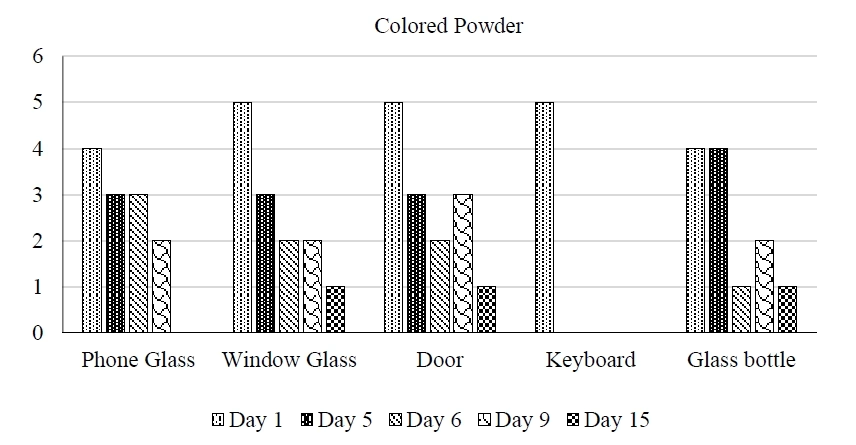
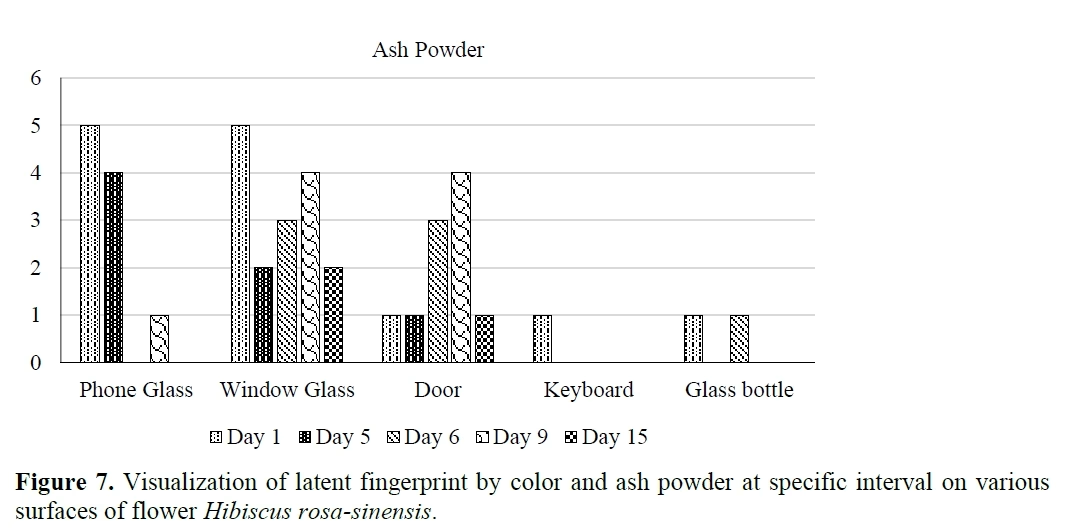
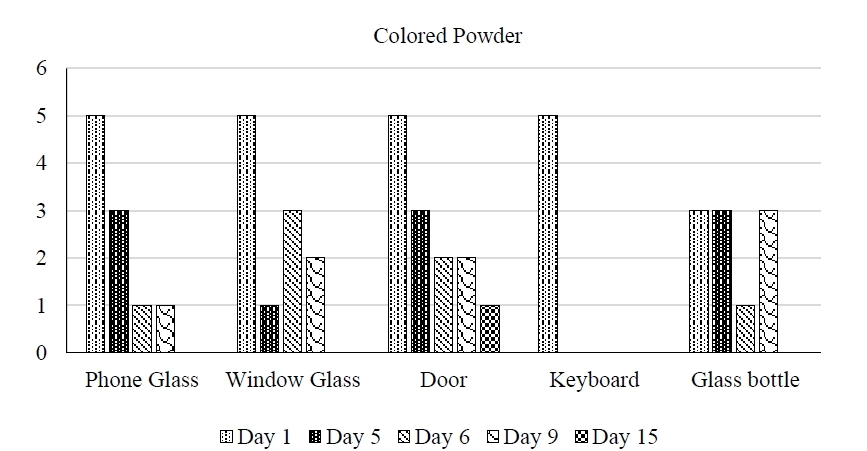
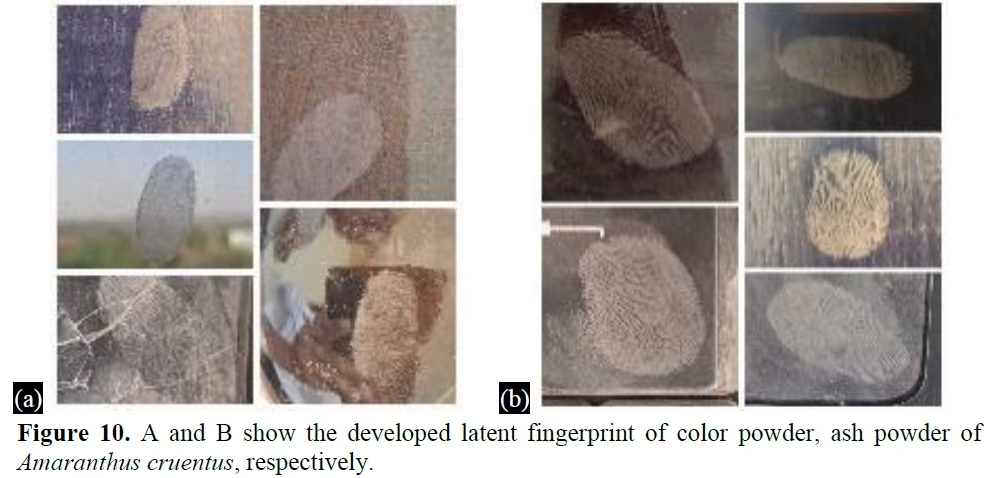
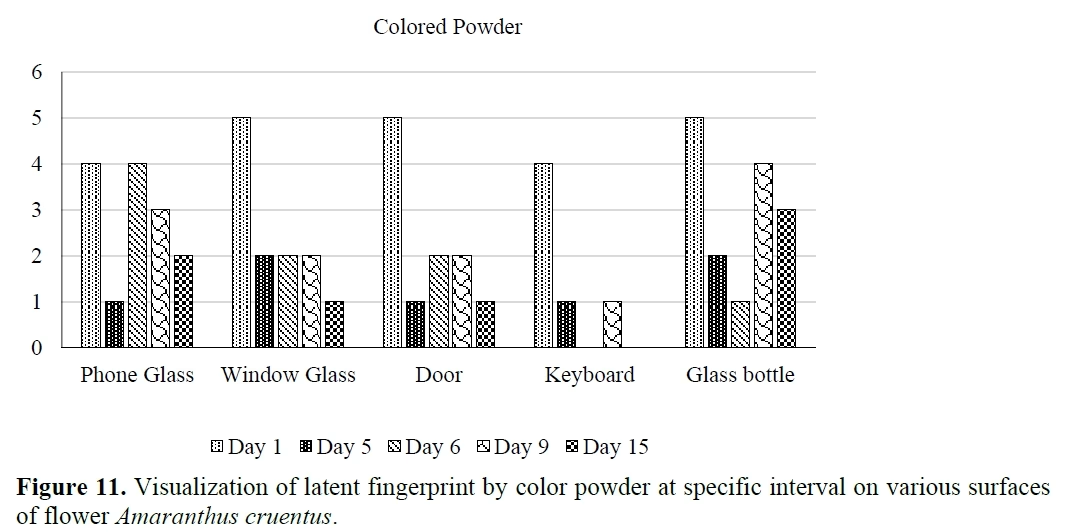
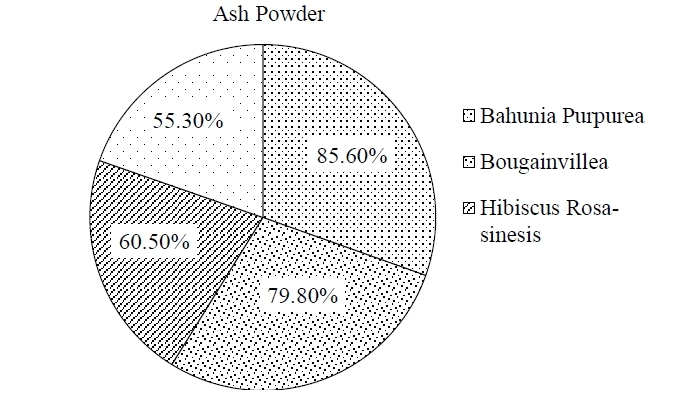
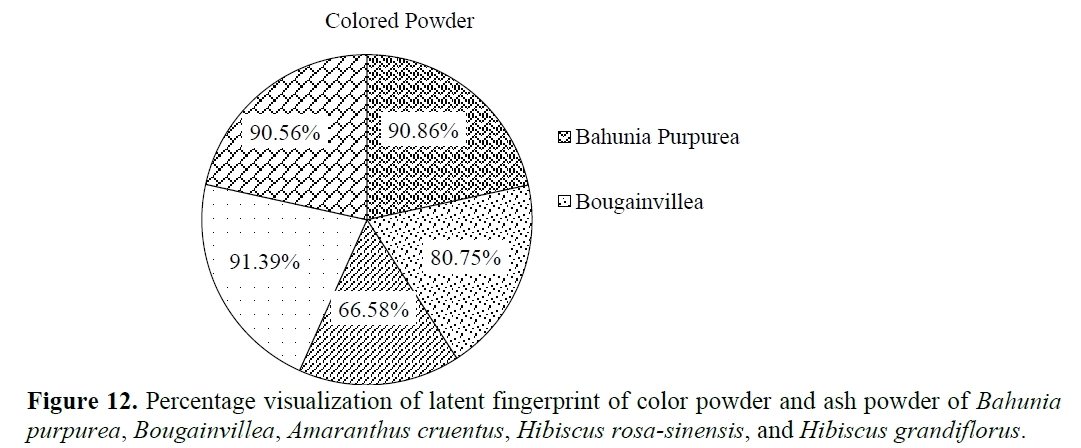
Fingerprints are crucial elements in forensic investigations. Latent or invisible fingerprints are commonly recovered from the scene of crime and hence require an attention for which visualization methods are needed. Conventional methods are relatively expensive, which may cause harmful threats and health hazards due to presence of chemical content. This study offers a cheap and sustainable fingerprint powder sourced from natural materials. In this study the powders were prepared from the dried petals of Bahunia purpurea, Bougainvillea, Amaranthus cruentus, Hibiscus rosa-sinensis, and Hibiscus grandiflorus. The petals were dried in sunlight for six days in the summer and then a mechanical method was used to prepare powder, i.e., motor and pastel and it was sieved by using a 40-mesh size. The dried petals were grinded and kept in oven at 110°C for about four hours. The ash powder was also prepared by using similar petals in muffle furnace for about 400°C for five hours. The grain size of prepared fingerprint powders was also determined. The durability of these novel powders was evaluated on non-porous surfaces including mobile screens, window glass, doors, keyboards, and glass bottles for the development and visualization of fingerprint impressions. All powders were efficient in window glass and door which is having more than 90% visualization. This research provides the efficacy and durability of natural powders in investigation and discovering new, safer and more affordable fingerprint powder alternatives.
Keywords: Fingerprint powder, latent fingerprints, natural flowers, colored powder, ash powder
[This article belongs to Research and Reviews : A Journal of Life Sciences ]






References
- R I, Gupta P, S M, R D. A study on development of fingerprint powders using natural sources for latent fingerprint visualization on non-porous surfaces. Int J Forensic Med. 2024;6(1):49–52. doi:10.33545/27074447.2024.v6.i1a.80.
- Natural extracts for fingerprint development. Int J Emerg Technol Innov Res. 2024;11(4):m1–m2. Available from: http://www.jetir.org/papers/JETIR2404C01.pdf.
- Godara V, Aseri V, Lohar S, Kumari P, Mavry B, Nagar V, et al. Comparative study of rose and hibiscus petals powders in latent friction ridge analysis. Probl Forensic Sci. 2022;130–131:145–55. doi:10.4467/12307483pfs.22.008.16817.
- Mia R, Panchal V, Dangi P, Kamle C, Tripathi A. Latent fingerprint development by brick powder. Austin J Forensic Sci Criminol. 2023;10(1). doi:10.26420/austinjforensicscicriminol.2023.1091.
- J N, K D, Kulkarni SG, S NS, K N, S BM. Development of latent fingerprints on indoor plant leaves using powder methods. South East Eur J Public Health. 2025:1121–9. doi:10.70135/seejph.vi.4876.
- Kamble D, Pandey S, Kumari A, Sharma K. A new powder method for development of latent fingerprint. In: All India Forensic Science Conference; 2018.
- Mia R, Panchal V, Dangi P, Kamle C, Tripathi A. Latent fingerprint development by brick powder. Austin J Forensic Sci Criminol. 2023;10(1). doi:10.26420/austinjforensicscicriminol.2023.1091.
- Said NFN, Anuar SN, Zakaria Y, Rajan R, Shukri NM, Hassan NFNN. Recycling potential of natural waste products in the development of fingerprint powders for forensic application. Malays J Med Health Sci. 2021;17(4):196–204.
- Dhunna A, Anand S, Aggarwal A, Agarwal A, Verma P, Singh U. New visualization agents to reveal the hidden secrets of latent fingerprints. Egypt J Forensic Sci. 2018;8(1). doi:10.1186/s41935-018-0063-9.
- Kim E, Lee D, Park S, Seo K, Choi S. A pilot study of a new fingerprint powder application method for the reduction of health risk. Anal Sci Technol. 2019;32(5):196–209. doi:10.5806/ast.2019.32.5.196.
- Madkour S, Sheta NA, Dine FBE, Elwakeel Y, AbdAllah N. Development of latent fingerprints on non-porous surfaces recovered from fresh and sea water. Egypt J Forensic Sci. 2017;7(1). doi:10.1186/s41935-017-0008-8.
- Darshan RS, Sharma V, Sharma A, Rai AR, Kumari P, Gautam A, et al. Pomegranate peel powder: An effective and environmentally friendly tool for developing latent fingerprints on nonporous surfaces. J Forensic Sci Med. 2025;11(1):38–44. doi:10.4103/jfsm.jfsm_103_23.
- Bisht S. Peels to prints – exploring natural peels for development of latent fingerprints: A review. Acad J Forensic Sci. 2024;7(2):1–5.
- Nugroho D, Chanthai S, Oh W, Benchawattananon R. Fluorophores-rich natural powder from selected medicinal plants for detection latent fingerprints and cyanide. Sci Prog. 2023;106(1). doi:10.1177/00368504231156217.
- Dalwale CG. Babul tree peels new powder development of latent fingerprint. Int J Forensic Res. 2024;5(1):1–3. doi:10.33140/ijfr.05.01.04.
- Dhore M. S, Butoliya S.S., Zade A.B., Removal of toxic metal ions from water using chelating terpolymer resin as a function of different concentration time and pH, J. Chem., 2014 (2014) 873520. https://doi.org/10.1155/2014/873520.

Research and Reviews : A Journal of Life Sciences
| Volume | 15 | |
| Issue | 03 | |
| Received | 10/07/2025 | |
| Accepted | 26/07/2025 | |
| Published | 28/07/2025 | |
| Publication Time | 18 Days |