
Sohail Khan,
Ashwani Mathur,
- Research Scholar, Department of Biotechnology, Jaypee Institute of Information Technology, A-10, Sector-62, Noida, Uttar Pradesh, India
- Professor, Department of Biotechnology, Jaypee Institute of Information Technology, A-10, Sector-62, Noida, Uttar Pradesh, India
Abstract
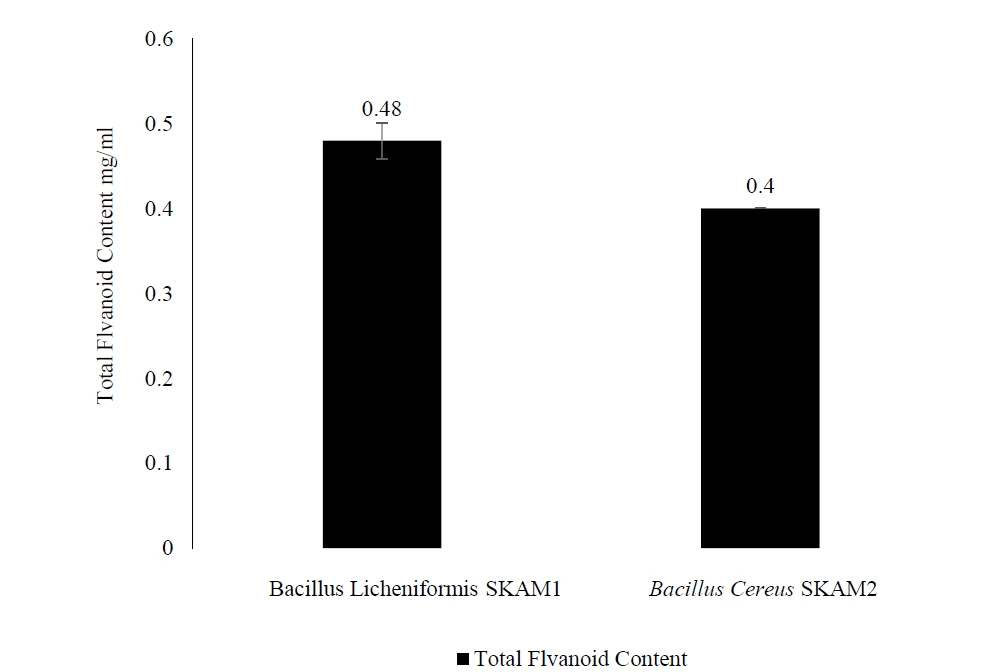
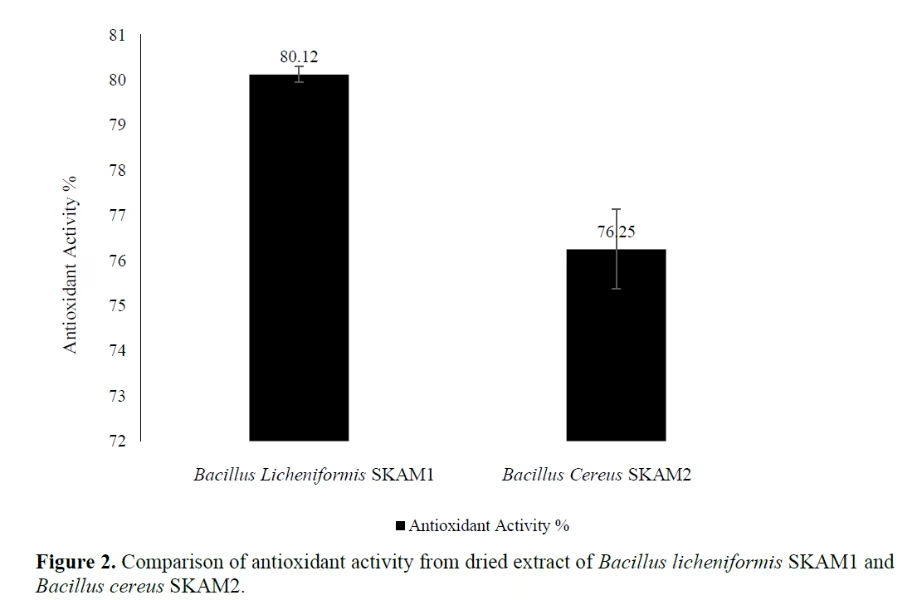
Endophytes are symbiotic microorganisms, most often bacteria or fungi, that reside and multiply within plant tissues without inducing visible signs of disease or negatively affecting the host plant. Endophytic bacteria contribute to plant development by stimulating growth, strengthening defence mechanisms, enhancing tolerance to both abiotic and biotic stresses, and facilitating improved nutrient uptake. Endophytic bacteria serve as an important reservoir of bioactive compounds, notably antioxidant molecules, that play a crucial role in plant defence and human health. Furthermore, there is an escalating scientific focus on the distinctive and relatively unexplored organic compounds derived from diverse endophytic bacteria, owing to their broad functional traits and valuable applications in numerous fields. The heterogeneity of endophyte bacterial isolates across distinct geo-climatic zones underscores the uniqueness of each organism, positioning them as promising reservoirs for the discovery of novel bioactive compounds. Endophytes represent a crucial source of biologically active natural products. This investigation focuses on isolated and characterized endophytic bacteria from the medicinal plant Humulus lupulus. Two endophytic bacteria were isolated. The dried extract of the endophytic bacteria was subjected to phytochemical analysis and evaluation of its antioxidant activity. Total Flavonoid Content (TFC) in the dried extract from the Bacillus licheniformis SKAM1 and Bacillus cereus SKAM2 showed a yield of around 0.48 mg/ml and 0.40 mg/ml, respectively. The antioxidant activity of the dried extract from the Bacillus licheniformis SKAM1 and Bacillus cereus SKAM2 showed antioxidant activity of 80.12% and 76.25%, respectively. To conclude, endophytic bacteria emerge as noteworthy prospects for natural antioxidant applications.
Keywords: Endophytic bacteria, Humulus lupulus, antioxidant, total flavonoids content
[This article belongs to Research & Reviews : Journal of Herbal Science ]

References
- Wu W, Chen W, Liu S, Wu J, Zhu Y, Qin L, et al. Beneficial relationships between endophytic bacteria and medicinal plants. Front Plant Sci. 2021 Apr 22;12:1–13.
- Khan S, Mathur A, Khan F. Endophytic fungi-bioinspired nanoparticles potential to control infectious disease. Crit Rev Microbiol. 2025 May 5;1–23.
- Zou L, Wang Q, Li M, Wang S, Ye K, Dai W, et al. Culturable bacterial endophytes of Aconitum carmichaelii Debx. were diverse in phylogeny, plant growth promotion, and antifungal potential. Front Microbiol. 2023 May 17;14:1–14.
- Sharma A, Malhotra B, Kharkwal H, Kulkarni GT, Kaushik N. Therapeutic agents from endophytes harbored in Asian medicinal plants. Phytochem Rev. 2020 Jun 27;19(3):691–720.
- Gorai PS, Ghosh R, Mandal S, Ghosh S, Chatterjee S, Gond SK, et al. Bacillus siamensis CNE6—a multifaceted plant growth promoting endophyte of Cicer arietinum L. having broad spectrum antifungal activities and host colonizing potential. Microbiol Res. 2021 Nov;252:126859.
- Singh M, Kumar A, Singh R, Pandey KD. Endophytic bacteria: A new source of bioactive compounds. 3 Biotech. 2017 Oct 14;7(5):315.
- Butler MS. The role of natural product chemistry in drug discovery. J Nat Prod. 2004 Dec 1;67(12):2141–53.
- Mishra S, Priyanka, Sharma S. Metabolomic insights into endophyte-derived bioactive compounds. Front Microbiol. 2022 Mar 2;13:1–12.
- Zhang S, Soltis DE, Yang Y, Li D, Yi T. Multi-gene analysis provides a well-supported phylogeny of Rosales. Mol Phylogenet Evol. 2011 Jul;60(1):21–8.
- Jaskula B, Kafarski P, Aerts G, De Cooman L. A kinetic study on the isomerization of hop α-acids. J Agric Food Chem. 2008 Aug 1;56(15):6408–15.
- Milligan SR, Kalita JC, Pocock V, Van De Kauter V, Stevens JF, Deinzer ML, et al. The endocrine activities of 8-prenylnaringenin and related hop (Humulus lupulus L.) flavonoids. J Clin Endocrinol Metab. 2000 Dec;85(12):4912–5.
- Jeong GJ, Khan F, Khan S, Tabassum N, Mehta S, Kim YM. Pseudomonas aeruginosa virulence attenuation by inhibiting siderophore functions. Appl Microbiol Biotechnol. 2023 Feb 12;107(4):1019–38.
- Fahle A, Bereswill S, Heimesaat MM. Antibacterial effects of biologically active ingredients in hop provide promising options to fight infections by pathogens including multi-drug resistant bacteria. Eur J Microbiol Immunol (Bp). 2022 Apr 20;12(1):22–30.
- Sleha R, Radochova V, Malis J, Mikyska A, Houska M, Krofta K, et al. Strong antimicrobial and healing effects of beta-acids from hops in methicillin-resistant Staphylococcus aureus-infected external wounds in vivo. Antibiotics. 2021 Jun 12;10(6):708.
- Patakova P, Vasylkivska M, Sedlar K, Jureckova K, Bezdicek M, Lovecka P, et al. Whole genome sequencing and characterization of Pantoea agglomerans DBM 3797, endophyte, isolated from fresh hop (Humulus lupulus L.). Front Microbiol. 2024 Feb 8;15:1–12.
- Micci A, Zhang Q, Chang X, Kingsley K, Park L, Chiaranunt P, et al. Histochemical evidence for nitrogen-transfer endosymbiosis in non-photosynthetic cells of leaves and inflorescence bracts of angiosperms. Biology (Basel). 2022 Jun 7;11(6):876.
- Allen ME, Piefer AJ, Cole SN, Werner JJ, Benziger PT, Grieneisen L, et al. Characterization of microbial communities populating the inflorescences of Humulus lupulus L. J Am Soc Brew Chem. 2019 Oct 2;77(4):243–50.
- Goryluk-Salmonowicz A, Piórek M, Rekosz-Burlaga H, Studnicki M, Mieczysław B. Endophytic detection in selected European herbal plants. Pol J Microbiol. 2016 Jan 1;65(3):369–75.
- Özdemir Koçak F. Identification of Streptomyces strains isolated from Humulus lupulus rhizosphere and determination of plant growth promotion potential of selected strains. Turk J Biol. 2019 Dec 13;43(6):391–403.
- Sevigny JL, Lloyd B, McComish C, Ramsey A, Koziol L. Whole-genome sequences of Pantoea agglomerans BL3, Pseudomonas fluorescens BL, and Pseudomonas stutzeri CM14, isolated from hops (Humulus lupulus). Microbiol Resour Announc. 2019 Jul 25;8(30):1–3.
- Sharma M, Sood G, Chauhan A. Bioprospecting beneficial endophytic bacterial communities associated with Rosmarinus officinalis for sustaining plant health and productivity. World J Microbiol Biotechnol. 2021;37(8):135.
- Shraim AM, Ahmed TA, Rahman MM, Hijji YM. Determination of total flavonoid content by aluminum chloride assay: a critical evaluation. LWT. 2021 Oct;150:111932.
- Zhang X, Xu Z, Ma J, Zhou D, Xu J. Phylogenetic diversity, antimicrobial and antioxidant potential and identification of bioactive compounds from culturable endophytic fungi associated with mangrove Bruguiera sexangula (Lour.) Poir. Curr Microbiol. 2021 Feb 2;78(2):479–89.
- Deshmukh RK, Gaikwad KK. Natural antimicrobial and antioxidant compounds for active food packaging applications. Biomass Convers Biorefin. 2024 Feb 26;14(4):4419–40.
- Jeong GJ, Khan S, Tabassum N, Khan F, Kim YM. Marine-bioinspired nanoparticles as potential drugs for multiple biological roles. Mar Drugs. 2022 Aug 18;20(8):527.
- Zandi P, Schnug E. Reactive oxygen species, antioxidant responses and implications from a microbial modulation perspective. Biology (Basel). 2022 Jan 18;11(2):155.

Research & Reviews : Journal of Herbal Science
| Volume | 14 | |
| Issue | 03 | |
| Received | 02/06/2025 | |
| Accepted | 19/07/2025 | |
| Published | 21/07/2025 | |
| Publication Time | 49 Days |