
Swati Malsariya,
K. Bharathi,
B. Pushpalatha,
Rahul Dandiya,
- Ph.D. Scholar, Department of Prasutitantra and Streeroga, National Institute of Ayurveda, Deemed to be University, Jaipur, Rajasthan, India
- Professor and HOD, Department of Prasutitantra and Streeroga, National Institute of Ayurveda, Deemed to be University, Jaipur, Rajasthan, India
- Professor, Department of Prasutitantra and Streeroga, National Institute of Ayurveda, Deemed to be University, Jaipur, Rajasthan, India
- P.G. Scholar, Department of Panchkarma, National Institute of Ayurveda, Deemed to be University, Jaipur, Rajasthan, India
Abstract
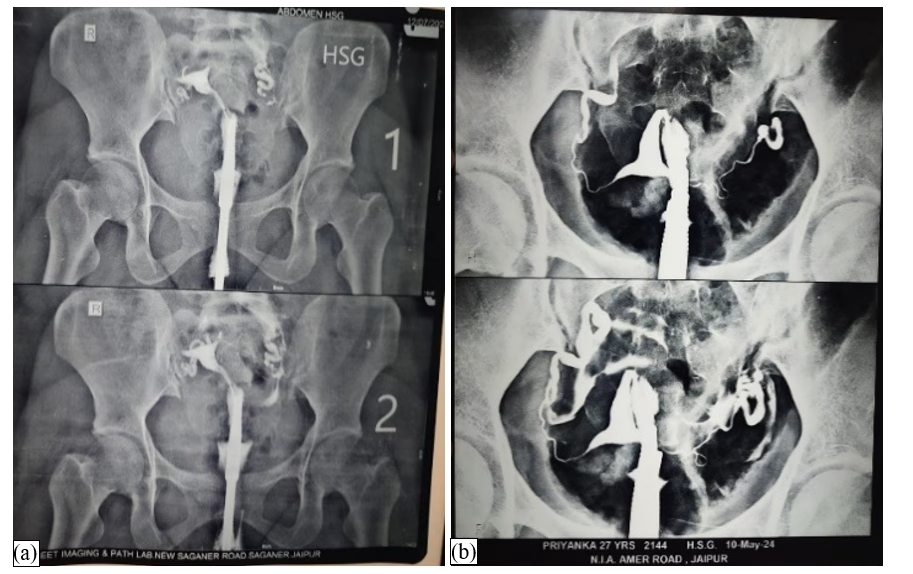
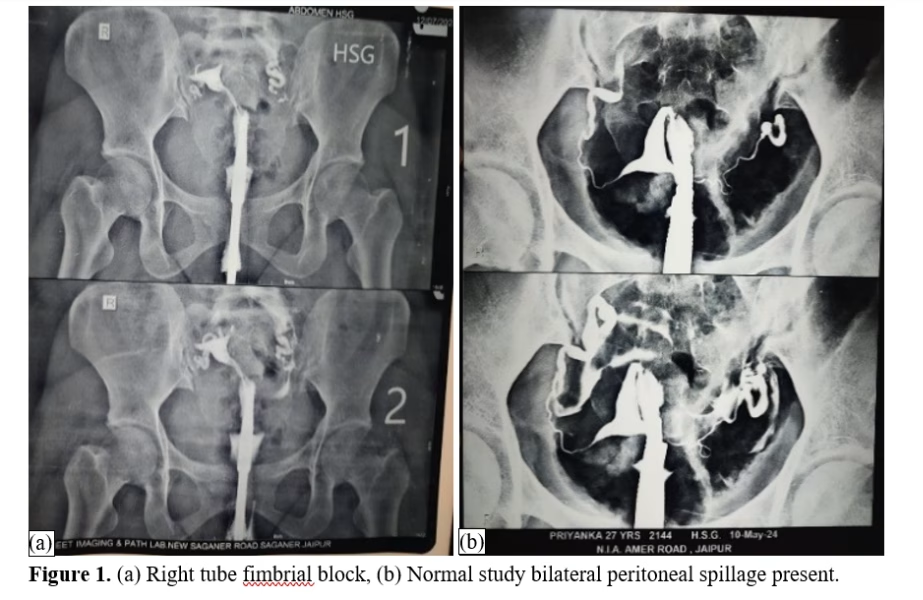
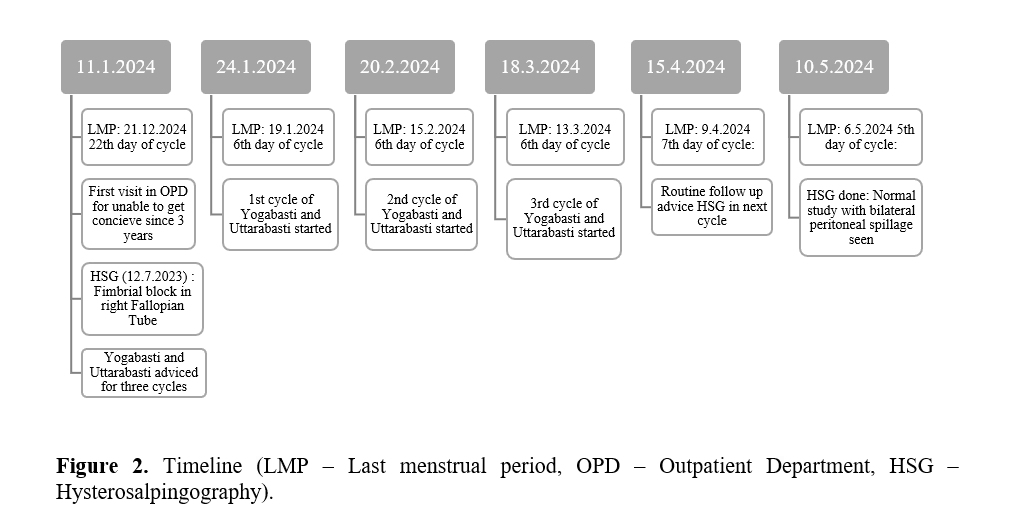
Infertility significantly impacts a woman’s psychological and physical health, as well as that of her family. Fallopian tube blockage is one of the leading causes of female infertility, accounting for a substantial number of cases globally. Conventional medical approaches, including in vitro fertilization (IVF) and surgical procedures, often present barriers due to their high cost, invasive nature, and limited accessibility. Additionally, cultural, financial, and personal considerations can further restrict their adoption. Ayurveda, an ancient holistic medical system, offers alternative therapeutic options that are less invasive, cost-effective, and comprehensive in their approach. This case study focuses on a 27-year-old woman presenting with primary infertility attributed to right tubal fimbrial blockage, as confirmed through hysterosalpingography (HSG). The patient underwent a treatment protocol involving Yoga Basti using Dashmoola Taila and Dashmoola Kwatha, along with Uttarabasti utilizing Apamarga Kshara Taila. Following three cycles of these therapies, a subsequent HSG revealed restored tubal patency and normal peritoneal spillage, indicating the effectiveness of the Ayurvedic regimen in reestablishing reproductive functionality. This case highlights the potential of Ayurvedic interventions, particularly Uttarabasti and Basti therapies, in managing infertility associated with fallopian tube blockage. It emphasizes the role of traditional medicine as a viable complement to modern infertility treatments. Further research and clinical trials are essential to validate these findings and establish standardized Ayurvedic protocols for broader application in reproductive healthcare.
Keywords: Uttarabasti, fallopian tube blockage, infertility, yoga basti, apamarga kshara taila, dashmoola taila, dashmoola kwatha
[This article belongs to Research and Reviews : A Journal of Ayurvedic Science, Yoga and Naturopathy ]
References
- World Health Organization. International Classification of Diseases for Mortality and Morbidity Statistics (11th Revision). Geneva: WHO; 2020.
- Practice Committee of the American Society for Reproductive Medicine. Definitions of infertility and recurrent pregnancy loss: A committee opinion. Fertil Steril. 2020;113(3):533–535. doi: 1016/j.fertnstert.2019.11.025 .
- Royal College of Obstetricians and Gynaecologists. The investigation and treatment of couples with recurrent first trimester and second trimester miscarriage. Green top Guideline No. 17. London: RCOG; 2020. doi: 10.1111/1471-0528.17515.
- Zegers-Hochschild F, Adamson GD, Dyer S, Racowsky C, de Mouzon J, Sokol R, et al. The International Glossary on Infertility and Fertility Care, 2017. Fertil Steril. 2017;108(3):393–406. doi: 10.1016/j.fertnstert.2017.06.005.
- International Journal of Ayurveda Research. Uttarabasti: Therapeutic intrauterine oil infusion for tubal blockage. Int J Ayurveda Res. 2021;12(2):56–60.
- Tiwari PV. Ayurvediya Prasutitantra Evam Striroga. 2nd ed., Part 1. Varanasi: Chaukhambha Orientalia; 2003. p. 13.
- American Society for Reproductive Medicine. Definitions of infertility and recurrent pregnancy loss: A committee opinion. Fertil Steril. 2015;103(3):e1–e9.
- Shukla Upadhyay K, Karunagoda K, Sata N, Dei LP. Effect of Kumari Taila Uttar Basti on fallopian tube blockage. Ayu. 2010;31(4):424–429. doi: 10.4103/0974-8520.82031.
- International Journal of Ayurveda Research. Role of Uttarabasti in treating female infertility: A review. Int J Ayurveda Res. 2021;12(1):55–61.
- World Health Organization. Infertility: A tabulation of available data on prevalence of primary and secondary infertility. Geneva: WHO; 2020. Available at https://iris.who.int/handle/10665/59769.
- Singh N, Rastogi A. Therapeutic potentials of Dashmoola in Ayurveda. J Ethnopharmacol. 2017;203:45–49.
- Tiwari S. Role of Panchakarma in female reproductive health: A review. J Ayurveda Integr Med. 2019;10(3):170–175.
- Jagtap S. Clinical evaluation of Apamarga Kshara Taila in gynecological disorders. Int J Ayurveda Res. 2021;12(2):65–68.
- Goyal M, Sharma A. Sarvanga Snehana and Swedana in Panchakarma: A critical review. Ayu. 2018;39(1):47–51.
- Patel R, Bhalerao S. Hysterosalpingography: A diagnostic tool in infertility. Indian J Radiol Imaging. 2020;30(1):13–17.
- Kumar A, Gupta R. Ayurvedic management of tubal infertility: A case study. J Ayurveda Holist Med. 2021;9(4):85–89.
- Srikanth N, Suchitra R. Physiological effects of Uttarabasti in female reproductive disorders. Ayurveda Int J. 2019;7(2):120–127.
- Nanal S, Joshi A. Advances in Panchakarma: Understanding the systemic effects of basti therapy. Ayurveda J. 2021;11(3):19–27.

| Volume | 12 | |
| Issue | 03 | |
| Received | 19/05/2025 | |
| Accepted | 08/08/2025 | |
| Published | 11/08/2025 | |
| Publication Time | 84 Days |