
Haydar U. Zaman,
- Assistant Professor, Department of Physics, National University of Bangladesh and Institute of Radiation and Polymer Technology, Bangladesh Atomic Energy Commission, P.O. Box-3787, SavarDepartment of Physics, National University of Bangladesh and Institute of Radiation and Polymer Technology, Bangladesh Atomic Energy Commission, P.O. Box-3787, Savar,, Dhaka, Bangladesh
Abstract
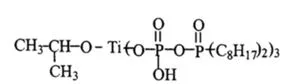
This work used the melt-mixing method followed by compression molding to create nanocomposites of polyolefins, such as high-density polyethylene and linear low-density polyethylene, packed with both surface-modified and unmodified nano-calcite. The study examined the effects of varying concentrations of nano-calcite, which had been modified using isopropyl tri-(dioctylpyrophosphato) titanate, on the mechanical properties, morphological characteristics, and flow behavior of the resulting nanocomposites. A corotational twin-screw extruder was utilized to manufacture three different compositions of nano-calcite, linear low-density polyethylene, and high-density polyethylene nanocomposites. SEM results showed that nano-calcite treated with isopropyl tri-(dioctylpyrophosphato) titanate enhanced compatibility between high-density polyethylene/linear low-density polyethylene and nano-calcite by increasing interfacial adhesion between the filler and the matrix. Mechanical property measurements demonstrated that the modified nano-calcite filled polyethylene composite had a much better tensile fracture strength than the unmodified composite, particularly when the filler amount was higher. As the weight percent of the fillers grew, so did the impact strength and tensile elastic modulus. Measurements were also made of the melt flow rate of the components used in the nanocomposite. It turned out that adding weight fraction resulted in a decrease in the melt flow rate.
Keywords: Polyolefins, nano-calcite, titanate coupling agent, flow property, mechanical properties
[This article belongs to Nano Trends – A Journal of Nano Technology & Its Applications ]


References
1. Zaman HU, Beg M. Mechanical, thermal, and rheological properties of nano-calcium carbonate/polypropylene composites modified by methacrylic acid. J Thermoplastic Compos Mater. 2016;29(2):189–203.
2. Mishra P, Seenivasan R, Mukherjee A, Chandrasekaran N. Polymer/layered silicate nanocomposites as matrix for bioinsecticide formulations. In: Nano-Biopesticides Today and Future Perspectives. Elsevier; 2019. p. 161–78.
3. Yas M, Shahrani Korani H, Zare Jouneghani F. Studying the mechanical and thermal properties of polymer nanocomposites reinforced with montmorillonite nanoparticles using micromechanics method. J Solid Mech. 2020;12(1):90–101.
4. Mohammed Z, Tcherbi-Narteh A, Jeelani S. Effect of graphene nanoplatelets and montmorillonite nanoclay on mechanical and thermal properties of polymer nanocomposites and carbon fiber reinforced composites. SN Appl Sci. 2020;2(12):1–14.
5. Mizushima M, Kawamura T, Takahashi K, Nitta K-H. In situ near-infrared spectroscopic studies of the structural changes of polyethylene during melting. Polym J. 2012;44(2):162–6.
6. Oliveira AD, Freitas DM, Araújo JP, Cavalcanti SN, Câmara DS, Agrawal P, Mélo TJ. HDPE/LLDPE blends: rheological, thermal, and mechanical properties. Mater Res Innov. 2020;24(5):289–94.
7. Laria JG, Gaggino R, Kreiker J, Peisino LE, Positieri M, Cappelletti A. Mechanical and processing properties of recycled PET and LDPE-HDPE composite materials for building components. J Thermoplastic Compos Mater. 2020;0892705720939141.
8. Shaidullin N, Salakhov I, Borisenko V, Tavtorkin A, Nifant’ev I. Structural, rheological, and mechanical properties of binary compounds based on high-density polyethylene and linear low-density polyethylene. Russ J Appl Chem. 2020;93(8):1179–87 Shaidullin N, Salakhov I, Borisenko V, Tavtorkin A, Nifant’ev I. Structural, rheological, and mechanical properties of binary compounds based on high-density polyethylene and linear low-density polyethylene. Russ J Appl Chem. 2020;93(8):1179–87.
9. Cao Z, Daly M, Clémence L, Geever LM, Major I, Higginbotham CL, Devine DM. Chemical surface modification of calcium carbonate particles with stearic acid using different treating methods. Appl Surf Sci. 2016;378:320–9.
10. Wu Z, Zhang Z, Mai K. Preparation and thermal property of ultrahigh molecular weight polyethylene composites filled by calcium carbonate modified with long chain. J Thermoplastic Compos Mater. 2020;33(4):464–76.
11. de Oliveira AG, Moreno JF, de Sousa AMF, Escócio VA, Guimarães MJdOC, da Silva ALN. Composites based on high-density polyethylene, polylactide and calcium carbonate: effect of calcium carbonate nanoparticles as co-compatibilizers. Polym Bull. 2020;77(6):2889–904.
12. Rajamuneeswaran S, Vairamuthu J, Nagarajan S, Stalin B, Jayabal S. A comparative study on mechanical properties of coir fiber reinforced polymer composites filled with calcium carbonate particles. Mater Today Proc. 2020.
13. Wang Y, Lu J, Wang G. Toughening and reinforcement of HDPE/CaCO3 blends by interfacial modification—interfacial interaction. J Appl Polym Sci. 1997;64(7):1275–81..
14. ISO. Plastics–determination of the melt mass-flow rate (MFR) and the melt volume-flow rate (MVR) of thermoplastics. ISO Geneva; 2011.
15. Pukánszky B, Fekete E. Adhesion and surface modification. In: Mineral fillers in thermoplastics I. Springer; 1999. p. 109–53.
16. Liang J, Li R. Mechanical properties and morphology of glass bead–filled polypropylene composites. Polym Compos. 1998;19(6):698–703..
17. Nicolais L, Narkis M. Stress‐strain behavior of styrene‐acrylonitrile/glass bead composites in the glassy region. Polym Eng Sci. 1971;11(3):194–9.
18. Goujon G, Mutaftschiev B. On the crystallinity and the stoichiometry of the calcite surface. J Colloid Interface Sci. 1976;57(1):148–61.
19. Wu S. Phase structure and adhesion in polymer blends: a criterion for rubber toughening. Polymer. 1985;26(12):1855–63.
20. Abd El-Rahman KM, Ali SFA, Khalil A, Kandil S. Influence of poly (butylene succinate) and calcium carbonate nanoparticles on the biodegradability of high density-polyethylene nanocomposites. J Polym Res. 2020;27(8):1–21.

Nano Trends – A Journal of Nano Technology & Its Applications
| Volume | 26 | |
| Issue | 03 | |
| Received | 01/10/2024 | |
| Accepted | 10/10/2024 | |
| Published | 22/10/2024 | |
| Publication Time | 21 Days |