
This is an unedited manuscript accepted for publication and provided as an Article in Press for early access at the author’s request. The article will undergo copyediting, typesetting, and galley proof review before final publication. Please be aware that errors may be identified during production that could affect the content. All legal disclaimers of the journal apply.
K. Bharath Kumar,
- Formerly Researcher, Oki Electric Company, R&D Division, Semiconductor and High-speed Devices, Tokyo, Japan
Abstract
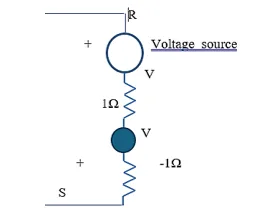
Voltage dependent switch and Current dependent switch are extensively used to obtain open/short circuit in various networks for various applications. PSPICE /OrCAD software analog behavioral modellings options and Spice dependent sources are used to obtain control equivalent circuits for switches (P-spice built-in models) to be used for two types of applications. Different circuits (at DC, time-domain), and Spice files are described to simulation circuits with analyses. The following features are available with this type of Voltage controlled/Current controlled switches. 1. Kirchoff voltage-current laws are used to obtain open/short circuit even after attaching controlling voltage/current circuit to main circuit. 2. The controlling circuit is attached at the desired NODE/ across the branch of the main circuit. 3. Different networks can be connected OR separated by this procedure without affecting the purpose for which they are separated or connected. The techniques described would find various uses, firstly, analog behavioral modelling, and secondly in switching circuits. P-spice analog behavioral modelling and independent time domain, simulation with available models for Pulse, Piece-wise linear current/voltage generators. Normally, the Thevenin resistance is computed with DC or AC energy sources excitation shorting voltages and removing independent current sources. The Thevenin resistance for two types of circuits is determined by conventional method using Voltage/Current Pulse in time-domain, by making use of P-spice voltage and current switch. Two resistors with 1 ohm, and -1ohm value are used in controlling circuit.
Keywords: PSPICE, OrCAD, voltage/current, Kirchhoff’s current law, resistance
[This article belongs to Journal of Semiconductor Devices and Circuits ]

References
- Xu J, Yu J. Equivalent circuit models of switches for SPICE simulation. Electronics letters. 1988 Mar 31;24(7):437–8.
- W. Nagel, D. O. Pedesrson, SPICE (Simulation Program with Integrated Circuit Emphasis), (Technical Report). University of California, Berkeley. UCB/ERL M382.
- Lurece W. Nagel (May 1975). SPICE2: A Computer Program tp Simulate Semiconductor Circuits (Technical report). University of California, Berkeley. UCB/ERL M520.
- Prigozy, S. (1989). Novel applications of SPICE in engineering education. IEEE Transactions on Education, 32(1), pp. 35–38
- SPICE version 2G user’s guide. (1975), U.C.Berkeley, USA
- Bharath Kumar, K.(1990). Multi two port parameter simulation using Pspice, Technical Report, Semiconductor Research Laboratory, Oki Electric Industry, Japan
- Rashid MH, Rashid MH. SPICE for circuits and electronics using PSPICE. Upper Saddle River, NJ: Prentice Hall; 1995.
- Keown J. OrCAD PSpice and circuit analysis. Prentice-Hall, Inc.; 2000 Jul 1.
- Du H, Gorcea D, So PP, Hoefer WJ. A Spice analog behavioral model of two‐port devices with arbitrary port impedances based on the S‐parameters extracted from time‐domain field responses. International Journal of Numerical Modelling: Electronic Networks, Devices and Fields. 2008 Jan;21(1‐2):77–90.
- E. Van Valkenburg, M. E.(1976). Network Analysis( 3rd Edition). Chapter IX,.pp. 259–261, Prentice-Hall
- Nahin PJ. The Science of Radio: with MATLAB® and Electronics Workbench® Demonstrations. Springer Science & Business Media; 2001 Jun 8.
- Vladimirescu A, Newton AR, Pederson DO. SPICE Version 2G. 1 user’s Guide. Berkeley, Ca: University of California; 1980 Oct.
- Bharath kumar,K. , (16 th February 2022). Techniques for using SPICE to derive to derive Thevenin and Norton equivalent circuits, EDN Magazine, Design Ideas, ONLINE EDITION
- Jin LM, Chan SP. A unified and efficient approach for determining Thevenin (Norton) equivalent circuits. IEEE Transactions on Education. 1989 Aug;32(3):408–10.
- Holder ME. Thevenin’s Theorem and a black box. IEEE Transactions on Education. 2009 Jun 30;52(4):573–5.
- Hongyang Z. Discussion on the Thevenin’s theorem and Norton’s theorem. InProceedings of 2011 International Conference on Electronic & Mechanical Engineering and Information Technology 2011 Aug 12 (Vol. 1, pp. 520–522). IEEE.
- Attia JO. Electronics and circuit analysis using MATLAB. CRC press; 2018 Oct 8.
- PING Y. SPICE2 application notes for dependent sources. IEEE Circuits and Devices Magazine. 1987 Sep 1;3(5):36–44.
- Kumar K. Inverse ABCD parameter determination using Spice. International Journal of Analog Integrated Circuits. 2017;3(1):14–9.
- Lindigkeit R, Boehme A, Eiserloh I, Luebbecke M, Wiggermann M, Ernst L, Beuerle T. Spice: a never ending story?. Forensic science international. 2009 Oct 30;191(1–3):58-63.

Journal of Semiconductor Devices and Circuits
| Volume | 11 | |
| Issue | 03 | |
| Received | 15/11/2024 | |
| Accepted | 23/11/2024 | |
| Published | 03/12/2024 | |
| Publication Time | Days |