
Sandeep P. Shewale,
Dipti Y. Sakhare,
- Associate Professor, Department of Chemical Engineering, MIT Academy of Engineering Alandi (D), Pune, Maharashtra, India
- Professor, Department of Electronics and Telecommunication, MIT Academy of Engineering Alandi (D), Pune, Maharashtra, India
Abstract
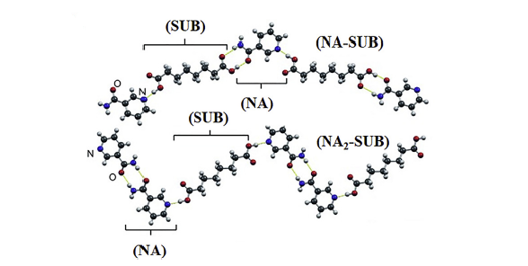
The long-standing problem of low aqueous solubility, which affects about 90% of all new drug molecules under development, requires an immediate need for alternative approaches apart from the usual practice of crystallization. Polymer-composite-assisted crystal engineering is a novel technique for overcoming the aforementioned problem. This involves the addition of accepted pharmaceutical polymers, such as HPMC, PVP, PEG, and Eudragit copolymers in a single process, which can promote nucleation, stabilize the metastable crystals, and maintain drug supersaturation in the gastrointestinal tract. A pharmaceutical co-crystal is a multicomponent system where one of the components is an active pharmaceutical ingredient (API) while other components are pharmaceutically acceptable co-formers held by weak intermolecular interactions, including hydrogen bonding, van der Waals forces, and π-π stacking. The co-crystallization strategy proves to be a promising way for enhancing solubility, dissolution, bioavailability, stability, hygroscopicity, and tableting properties of API regardless of the ionization range. With the addition of a polymer into this binary API co-former system, a ternary architecture is created, which demonstrates performance that outperforms both that of the polymer-free co-crystal as well as an amorphous solid dispersion. An increase in solubility by factors of 2-8 over the parent API has been reported in the case of polymer-composite co-crystals, compared to that of the polymer-free co-crystal with an increase by factors of 1.5-5. This review provides a comprehensive overview of the preparation approaches, changes to physicochemical properties, and biomedical applications of the newly emerging class of polymers incorporated within co-crystals and solid solutions. Various solid-state approaches include polymer-assisted liquid-assisted grinding, hot-melt extrusion, and melt crystallization, while liquid state approaches include polymer-directed slurry conversion, reaction co-crystallisation, spray drying, and antisolvent co-precipitation. Changes to the physicochemical properties including physical and chemical stability, hygroscopicity, solubility, dissolution rate, and optical behavior due to incorporation of polymers are reviewed.
Keywords: Polymer composites; pharmaceutical co-crystals; crystal engineering; physicochemical properties; solid solutions; solid dosage forms; HPMC; PVP; PEG; Eudragit; co-crystallisation; bioavailability; BCS Class II/IV drugs
[This article belongs to Journal of Polymer & Composites ]
References
- Trask AV. An overview of pharmaceutical cocrystals as intellectual property. Mol Pharm. 2007;4(3):301–309.
- Kale DP, Zode SS, Bansal AK. Challenges in translational development of pharmaceutical cocrystals. J Pharm Sci. 2016;2:1–14.
- Childs SL, Hardcastle KI. Cocrystals of piroxicam with carboxylic acids. Cryst Growth Des. 2007;7(7):1291–1204.
- Vishweshwar P, McMahon JA, Bis JA, Zaworotko MJ. Pharmaceutical co-crystals. J Pharm Sci. 2006;95(3):499–516.
- Newman AW, Byrn SR. Solid-state analysis of the active pharmaceutical ingredient in drug development. Drug Discov Today. 2003;8(19):898–905.
- Duggirala NK, Perry ML, Almarsson Ö, Zaworotko MJ. Pharmaceutical cocrystals: along the path to improved medicines. Chem Commun. 2016;52(4):640–655.
- Bolla G, Nangia A. Pharmaceutical cocrystals: walking the talk. Chem Commun. 2016;52(54):8342–8360.
- McNamara DP, Childs SL, Giordano J, Iarriccio A, Cassidy J, Shet MS, et al. Use of a glutaric acid cocrystal to improve oral bioavailability of a low solubility API. Pharm Res. 2006;23(8):1888–1897.
- Padrela L, Rodrigues MA, Tiago J, Velaga SP, Matos HA, de Azevedo EG. Tuning physicochemical properties of theophylline via supercritical fluid technologies. J Supercrit Fluids. 2014;86:129–136.
- Haeria A, Ismail NI. Pharmaceutical co-crystals: preparation and characterisation. Int J PharmaTech Res. 2015;8(10):166–170.
- Sathisaran I, Dalvi SV. Engineering cocrystals of poorly water-soluble drugs to enhance dissolution in aqueous medium. Pharmaceutics. 2018;10(3):108.
- Swapna B, Maddileti D, Nangia A. Cocrystals of the tuberculosis drug isoniazid. Cryst Growth Des. 2014;14(11):5991–6005.
- Huang Y, Zhou L, Yang W, Li Y, Yin Q. Preparation of theophylline–benzoic acid cocrystal and on-line monitoring by Raman spectroscopy. Crystals. 2019;9(7):329–344.
- Germann LS, Arhangelskis M, Etter M, Dinnebier RE, Friščić T. Challenging the Ostwald rule of stages in mechanochemical cocrystallisation. Chem Sci. 2020;11(39):10092–10100.
- Liu X, Lu M, Guo Z, Huang L, Feng X, Wu C. Improving the chemical stability of amorphous solid dispersion with cocrystal technique by hot melt extrusion. Pharm Res. 2012;29(3):806–817.
- Douroumis D, Ross SA, Nokhodchi A. Advanced methodologies for cocrystal synthesis. Adv Drug Deliv Rev. 2017;117:178–195.
- Guo M, Sun X, Chen J, Cai T. Pharmaceutical cocrystals: a review of preparations, physicochemical properties and applications. Acta Pharm Sin B. 2021;11(8):2537–2564.
- Fonseca JDC, Tenorio Clavijo JC, Alvarez N, Ellena J, Ayala AP. Novel solid solution of the antiretroviral drugs lamivudine and emtricitabine. Cryst Growth Des. 2018;18(6):3441–3448.
- Kuminek G, Cao F, Bahia de Oliveira da Rocha A, Gonçalves Cardoso S, Rodríguez-Hornedo N. Cocrystals to facilitate delivery of poorly soluble compounds beyond-rule-of-5. Adv Drug Deliv Rev. 2016;101:143–166.
- Cappuccino C, Spoletti E, Renni F, Muntoni E, Keiser J, Voinovich D, et al. Co-crystalline solid solution affords a high-soluble and fast-absorbing form of praziquantel. Mol Pharm. 2023;20(4):2009–2016.
- Suresh K, Minkov VS, Namila KK, Derevyannikova E, Losev E, Nangia A, et al. Novel cocrystals of sulfacetamide with aromatic acids. Cryst Growth Des. 2015;15(7):3498–3510.
- Kumar S, Nanda A. Pharmaceutical cocrystals: an overview. Indian J Pharm Sci. 2017;79(6):858–871.
- United States Pharmacopeia and National Formulary. USP 39–NF 34. Rockville, MD: United States Pharmacopeial Convention; 2016.
- Raghuram Reddy K, Kothur AS, Swetha NPB. A review on pharmaceutical co-crystals. Int J Pharm Res Dev. 2012;4(2):84–92.
- Brahamdutt CM, Kumar S, Bhatia M, Budhwar V. Co-crystals of active pharmaceutical ingredients. Int Res J Pharm. 2016;7(10):27–35.
- Cheney ML, Weyna DR, Shan N, Hanna M, Wojtas L, Zaworotko MJ. Coformer selection in pharmaceutical cocrystal development. J Pharm Sci. 2011;100(6):2172–2181.
- Kavanagh ON, Croker DM, Walker GM, Zaworotko MJ. Pharmaceutical cocrystals: from serendipity to design to application. Drug Discov Today. 2019;24(3):796–804.
- Rodrigues M, Baptista B, Lopes JA, Sarraguça MC. Pharmaceutical cocrystallization techniques. Int J Pharm. 2018;547(1–2):404–420.
- Kras W, Carletta A, Montis R, Sullivan RA, Cruz-Cabeza AJ. Switching polymorph stabilities with impurities reveals thermodynamic and kinetic drivers of polymorphism. Commun Chem. 2021;4(1):1–7.
- Cerreia Vioglio P, Chierotti MR, Gobetto R. Pharmaceutical aspects of salt and cocrystal forms of APIs and characterisation challenges. Adv Drug Deliv Rev. 2017;117:86–110.
- Kalepu S, Nekkanti V. Insoluble drug delivery strategies: review of recent advances and business prospects. Acta Pharm Sin B. 2015;5(5):442–453.
- Yan Y, Chen JM, Lu TB. Simultaneously improving the solubility and permeability of acyclovir by crystal engineering approach. CrystEngComm. 2015;17(3):612–620.
- Seefeldt K, Miller J, Alvarez-Núñez F, Rodríguez-Hornedo N. Crystallization pathways and kinetics of carbamazepine–nicotinamide cocrystals from the amorphous state by in situ thermomicroscopy, spectroscopy, and calorimetry studies. J Pharm Sci. 2007;96(5):1147–1158.
- Fischer F, Scholz G, Benemann S, Rademann K, Emmerling F. Evaluation of the formation pathways of cocrystal polymorphs in liquid-assisted syntheses. CrystEngComm. 2014;16(39):8272–8278.
- Seera R, Cherukuvada S, Guru Row TN. Evolution of cocrystals from solid solutions in benzoic acid–fluorobenzoic acid combinations. Cryst Growth Des. 2021;21(8):4607–4618.
- Chadwick K, Davey R, Cross W. How does grinding produce co-crystals? Insights from the case of benzophenone and diphenylamine. CrystEngComm. 2007;9(9):732–734.
- Lien Nguyen K, Friščić T, Day GM, Gladden LF, Jones W. Terahertz time-domain spectroscopy and the quantitative monitoring of mechanochemical cocrystal formation. Nat Mater. 2007;6(3):206–209.
- Friščić T, Jones W. Recent advances in understanding the mechanism of cocrystal formation via grinding. Cryst Growth Des. 2009;9(3):1621–1637.
- Jayasankar A, Somwangthanaroj A, Shao ZJ, Rodríguez-Hornedo N. Cocrystal formation during cogrinding and storage is mediated by amorphous phase. Pharm Res. 2006;23(10):2381–2392.
- Rehder S, Klukkert M, Lobmann KA, Strachan CJ, Sakmann A, Gordon K, et al. Investigation into the formation process of two piracetam cocrystals during grinding. Pharmaceutics. 2011;3(4):706–722.
- Karki S, Friščić T, Jones W. Control and interconversion of cocrystal stoichiometry in grinding: stepwise mechanism for the formation of a hydrogen-bonded cocrystal. CrystEngComm. 2009;11(3):470–481.
- Halasz I, Puškarić A, Kimber SAJ, Beldon PJ, Patel AM, Jones W, et al. Real-time in situ powder X-ray diffraction monitoring of mechanochemical synthesis of pharmaceutical cocrystals. Angew Chem Int Ed. 2013;52(44):11538–11541.
- Ahuja D, Ramisetty KA, Sumanth PK, Crowley CM, Lusi M, Rasmuson AC. Microwave-assisted slurry conversion crystallization: the case of carbamazepine cocrystals. CrystEngComm. 2020;22(8):1381–1394.
- Rodríguez-Hornedo N, Nehm SJ, Seefeldt KF, Pagán-Torres Y, Falkiewicz CJ. Reaction crystallization of pharmaceutical molecular complexes. Mol Pharm. 2006;3(3):362–367.
- Machado TC, Kuminek G, Cardoso SG, Rodríguez-Hornedo N. pH impact on cocrystal solubility and thermodynamic stability with ionizable coformer or API. Eur J Pharm Sci. 2020;152:105422.
- Cao F, Amidon GL, Rodriguez-Hornedo N, Amidon GE. Mechanistic analysis of cocrystal dissolution as a function of pH and micellar solubilization. Mol Pharm. 2016;13(3):1030–1046.
- Maya P, Lipert N, Rodríguez-Hornedo N. Crystallization of cocrystals by slurry conversion. Mol Pharm. 2015;12(9):3535–3546.
- Dai XL, Yao J, Wu C, Deng JH, Mo YH, Lu TB, et al. Cocrystal and salt of febuxostat with piperazine: reducing the gastrointestinal toxicity. Cryst Growth Des. 2020;20(8):5160–5168.
- Huang S, Xue Q, Xu J, Ruan S, Cai T. Simultaneously improving the physicochemical properties and bioavailability of apigenin and daidzein by co-crystallization with theophylline. J Pharm Sci. 2019;108(9):2982–2993.
- Trask AV, Motherwell WDS, Jones W. Solvent-drop grinding: green polymorph control of cocrystallisation. Cryst Growth Des. 2005;5(3):1013–1021.
- Oburn SM, Ray OA, Macgillivray LR. Cocrystallization enables the isolation of a light-stable, complete solid-state photoproduct. Cryst Growth Des. 2018;18(4):2495–2501.
- Vidovic S, Vladić J, Nastic N, Jokić S. Supercritical fluid techniques in drug co-crystal engineering. In: Innovative Food Processing Technologies. 2020:705–721.
- European Medicines Agency. Reflection paper on the use of cocrystals of active substances in medicinal products. EMA/CHMP/NCE/2014. London: EMA; 2015. Available from: https://www.ema.europa.eu
- Huang S, Xu J, Peng Y, Guo M, Cai T. Tuning photoluminescence and dissolution of phloretin through cocrystallization. Cryst Growth Des. 2019;19(12):6837–6844.
- Raghuram M, Alam MS, Prasad M, Khanduri CH. Physicochemical characterization of pharmaceutical cocrystals. Tetrahedron Lett. 2014;55(2):279–282.
- Thomas SP, Sathishkumar R, Guru Row TN. Organic alloys and drug–drug cocrystal of three common analgesic drugs: aspirin, paracetamol and ibuprofen. Chem Commun. 2015;51(72):14255–14258.
- Romasanta AKS, Braga D, Duarte MT, Grepioni F. Changing properties by making pharmaceutical cocrystals: the case of zidovudine and lamivudine. CrystEngComm. 2017;19(4):653–660.
- Lusi M, Vitorica-Yrezabal IJ, Zaworotko MJ. Expanding the scope of molecular mixed crystals enabled by three component solid solutions. Cryst Growth Des. 2015;15(8):4098–4103.
- Trask AV, Motherwell WDS, Jones W. Physical stability enhancement of theophylline via cocrystallisation. Int J Pharm. 2006;320(1–2):114–123.

Journal of Polymer & Composites
| Volume | 14 | |
| Issue | 03 | |
| Received | 24/04/2026 | |
| Accepted | 08/05/2026 | |
| Published | 18/05/2026 | |
| Publication Time | 24 Days |