
Mayank Parekh,
S.B.Joshi,
- Ph.D Scholar, Department of Civil Engineering, School of Engineering, RK University, Rajkot, Gujarat, India
- Ph.D Guide, Department of Civil Engineering, School of Engineering, RK University, Rajkot, Gujarat, India
Abstract
It is becoming crucial to transition from a traditional, utilization-based society to a sustainable one, resulting of the decline in the natural environment, depletion of natural resources, and decreased capacity for final waste disposal. As the populatio grows, so will the demand for concrete. The major goal of this research is to look at the possible technical benefits of using extruded recycled high-density-polyethylene (HDPE) fibers into structural concrete. The mechanical properties of the concrete were tested and compared with plain concrete, and rest combinations of Ø 2mm HDPE, with 0.50%, 0.75%, 1% and 1.25% volume fraction of fibres and Ceramic powder, with 10%, 20%, 30% and 40%. In varying sets of percentages, and tests were performed, mainly focusing on compressive tests at 7, 14 and 28-days. The specific percentages of both materials were selected based on a combination of prior research findings and preliminary experimental trials. Previous studies indicated that HDPE fiber content beyond 1.25% can lead to workability issues, while ceramic powder replacement above 40% could negatively impact compressive strength. These values were chosen to balance mechanical performance and material feasibility. Fibres mainly aided in providing post-cracking remedial measures, while ceramic powder aided in reducing the amount of cement required. This article showcases an experimental examination of using ceramic waste for limited cement replacement in structural concrete, and HDPE as an additive material. Ceramic waste poses numerous environmental issues, but also has cementitious properties. The objective was to evaluate the performance of cement concrete incorporating varying proportions of replacement and additive materials. It is important to acknowledge that this performance may differ based on the cement grade or the chemical composition of ceramic waste powder.
Keywords: Concrete technology, pollution, cementitious, sustainability, natural environment, HDPE – high density polyethylene, ductility, recycling
[This article belongs to Journal of Polymer & Composites ]
References
- United Nation Sustainable Development Goals. New York, USA; 2017. Available from: http://www.un.org/sustainabledevelopment/sustainable-development-goals/ [Accessed 2017 Aug 27].
- Umar T, Egbu C. Global commitment towards sustainable energy. Proc Inst Civ Eng Eng Sustain. 2018;1–9. https://doi.org/10.1680/jensu.17.00059.
- Umar T, Egbu C, Saidani M. A modified method for Los Angeles Abrasion Test. Iran J Sci Technol Trans Civ Eng. 2019;1–7. https://doi.org/10.1007/s40996-019-00268-w.
- Sarvaiya D, Joshi S, Parekh M. The effect of nano materials on self-compacting concrete – A review. Icset. 2022;285–91.
- Parekh M, Joshi SB, Sarvaiya D. Development of sustainable concrete using CWP and HDPE – A review. Icset. 2022;613–21.
- Umar T. Briefing: Cost of accidents in the construction industry of Oman. Proc Inst Civ Eng Munic Eng. 2017;170(2):68–73. https://doi.org/10.1680/jmuen.16.00032.
- Umar T, Egbu C, Wamuziri S, Honnurvali MS. Occupational safety and health regulations in Oman. Proc Inst Civ Eng Manag Proc Law. 2018;171(3):93–9. https://doi.org/10.1680/jmapl.18.00007.
- Emissions from the Cement Industry. Earth Institute, Columbia University. New York, USA; 2012. Available from: http://blogs.ei.columbia.edu/2012/05/09/emissions-from-the-cement-industry/ [Accessed 2017 Oct 12].
- Global Cement. Update on cement industry of Oman. Global Cement. Surrey, UK; 2016. Available from: http://www.globalcement.com/news/itemlist/tag/Oman%20Cement [Accessed 2017 Oct 12].
- Pacheco-Torgal F, Jalali S. Reusing ceramic wastes in concrete. Constr Build Mater. 2010;24(5):832–8.
- Umar T. Towards a sustainable energy: the potential of biomass for electricity generation in Oman. Proc Inst Civ Eng Eng Sustain. 2017;171(7):329–33. https://doi.org/10.1680/jensu.17.00001.
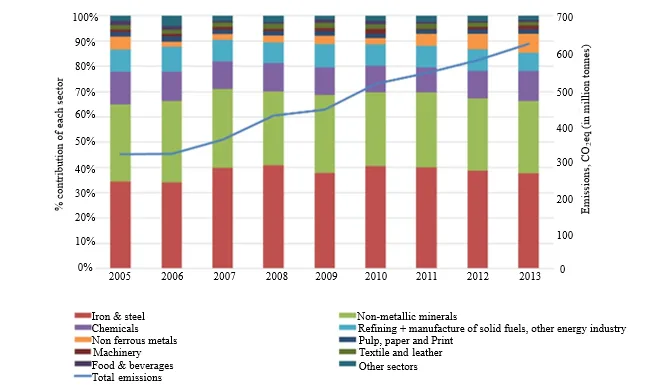
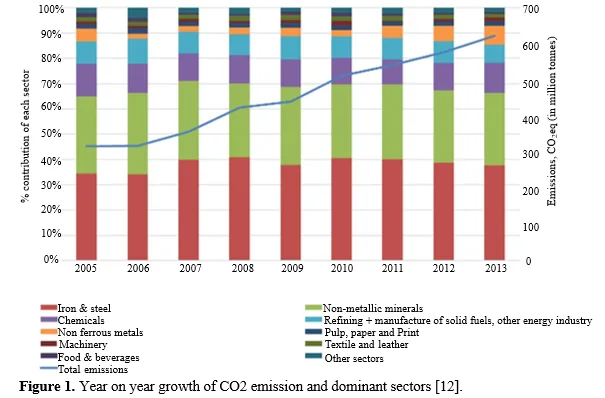
- Vaibhav Gupta, Tirtha Biswas, Karthik Ganesan, Greenhouse Gases Emission Estimates from the Manufacturing Industries in India National level estimates: (Energy use, Industrial Processes and Product Use), Building Sustainable GHG Estimates: Reporting, Council on Energy, Environment and Water (CEEW). 2005 to 2013.
- https://www.jkpi.org/plastic-a-threat-to-environmental-sustainability-and-human-well-being/
- Subaşı S, Öztürk H, Emiroğlu M. Utilizing waste ceramic powders as filler material in self-consolidating concrete. Constr Build Mater. 2017;149:567–74.
- Rashid K, Razzaq A, Ahmad M, Rashid T, Tariq S. Experimental and analytical selection of sustainable recycled concrete with ceramic waste aggregate. Constr Build Mater. 2017;154(1):829–40.
- Torkittikul P, Chaipanich A. Utilization of ceramic waste as fine aggregate within Portland cement and fly ash concretes. Cem Concr Compos. 2010;32(6):440–9.
- IS 456 (2000). Indian Standards for Plain and Reinforced Concrete – Code of Practice. Bureau of Indian Standards, New Delhi, India. Available from: https://archive.org/stream/gov.in.is.456.2000#page/n3/mode/2up [Accessed 2017 Feb 1].
- ASTM C136. Standard Test Method for Sieve Analysis of Fine and Coarse Aggregates. American Society of Testing and Materials; Pennsylvania, USA.
- BS 1881-116:1983. Testing concrete – Method for determination of compressive strength of concrete cubes. British Standards Institution, London, UK.
- Mobhera M, Bhamani S. Analytical Evaluation of vehicular air pollutants at urban Arterial road: A case study of Rajkot city.
- Marzouk OY, Dheilly RM, Queneudec MN. Valorization of post-consumer waste products in cementitious concrete composites. Waste Manag. 2007;27(2):310–8.
- Chidiac SE, Mihaljevic´ SN. Performance of dry cast concrete blocks containing waste glass powder or polyethylene aggregates. Cem Concr Compos. 2011;33(8):855–63.
- Rahim NL, Sallehuddin S, Ibrahim NM, Amat RC, Jalil MF. Use of plastic waste (high-density polyethylene) in concrete mixture as aggregate replacement. Adv Mater Res. 2013;701:265–9.
- Ghernouti Y, Rabehi B, Safi B, Chaid R. Use of recycled plastic bag waste in the concrete. J Int Sci Public. 2011;5(9):6–13.
- Sharma R, Bansal PP. Use of different forms of waste plastic in concrete – A review. J Clean Prod. 2016;112:473–82.
- Saikia N, Brito JD. Use of plastic waste as aggregate in cement mortar and concrete preparation: A review. Constr Build Mater. 2012;34:385–401.
- Ferreira L, Brito JD, Saikia N. Influence of curing conditions on the mechanical performance of concrete containing recycled plastic aggregate. Constr Build Mater. 2012;36:196–204.
- Babafemi AJ, Šavija B, Paul SC, Anggraini V. Engineering properties of concrete with waste recycled plastic: A review. Sustain. 2018;10(11):3875. https://doi.org/10.3390/su10113875.
- Subramani T, Ravi K. Experimental investigation of using concrete waste and HDPE waste in concrete. Int J Appl Innov Eng Manag. 2015;4(5):1–10.
- Alqahtani F, Yahia A, Mehdipour I. Use of recycled plastic water bottles in concrete blocks. Constr Build Mater. 2020;234:117336.
- Mishra S, Panda KC, Panda S. Utilization of waste materials in concrete: A review. Mater Today Proc. 2020;33(7):4155–60.
- Kamali M, Ghahremaninezhad A. An investigation into the durability and compressive strength of concrete incorporating recycled plastic as fine aggregate. Constr Build Mater. 2015;121:196–207.
- BS EN 12390-7:2009. Testing hardened concrete. Density of hardened concrete. British Standards Institution, London, UK.
- BS EN 12390-3:2009. Testing hardened concrete. Compressive strength of test specimens. British Standards Institution, London, UK.
- ASTM C157/C157M. Standard Test Method for Length Change of Hardened Hydraulic-Cement Mortar and Concrete. American Society for Testing and Materials; Pennsylvania, USA.
- Joshi DP, Mathakiya AM. Effect of Warm Mix Additive on the Performance of the Bituminous Mix.
- ISO 14040:2006. Environmental management – Life cycle assessment – Principles and framework. International Organization for Standardization, Geneva, Switzerland.
- European Commission. Best Available Techniques (BAT) Reference Document for the Production of Cement, Lime, and Magnesium Oxide. JRC Science and Policy Reports, Publications Office of the European Union, Luxembourg; 2013.
- Ghaffar SH, Nasir A, Pourrahimian Y. Influence of sustainable waste materials on properties of fresh and hardened concrete: A review. J Clean Prod. 2019;223:10–28.
- Sonkusare HG, Pawade PY, Pujara HP. Experimental mix design approach of reactive powder concrete to recognize compressive strength through non-destructive test. In Journal of Physics: Conference Series 2021 May 1 (Vol. 1913, No. 1, p. 012149). IOP Publishing.
- Kevern JT, Farney CM. Mitigating shrinkage cracking in low cementitious systems through internal curing. Transp Res Rec J Transp Res Board. 2012;2290(1):73–9.
- Tagnit-Hamou A, Gholizadeh M, Bouzoubaa N. Development of cementitious material incorporating glass powder: durability analysis. Cem Concr Compos. 2009;31(8):613–21.
- Siddique R, Aggarwal Y, Aggarwal P, Kadri EH, Bennacer R. Strength, durability, and micro-structural properties of concrete made with used-foundry sand (UFS). Constr Build Mater. 2011;25(4):1916–25.
- User Guidelines for Waste and Byproduct Materials in Pavement Construction. Federal Highway Administration, Washington, D.C.; 2008.

Journal of Polymer & Composites
| Volume | 13 | |
| Issue | 03 | |
| Received | 04/12/2024 | |
| Accepted | 11/04/2025 | |
| Published | 14/05/2025 | |
| Publication Time | 161 Days |