
U. Rama Krishna,
R. Saipreethi,
Vivek Vardhan,
G. Satvik Reddy,
- Associate Professor, Department of Civil Engineering, Vignana Bharathi Institute of Technology, Hyderabad, Telangana, India
- Student, Department of Civil Engineering, Vignana Bharathi Institute of Technology, Hyderabad, Telangana, India
- Student, Department of Civil Engineering, Vignana Bharathi Institute of Technology, Hyderabad, Telangana, India
- Student, Department of Civil Engineering, Vignana Bharathi Institute of Technology, Hyderabad, Telangana, India
Abstract
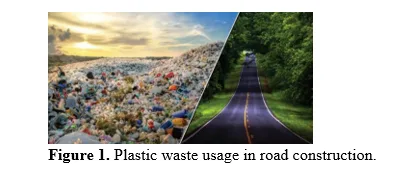
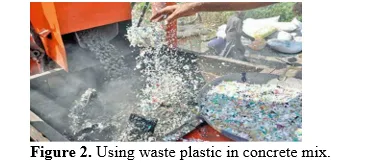
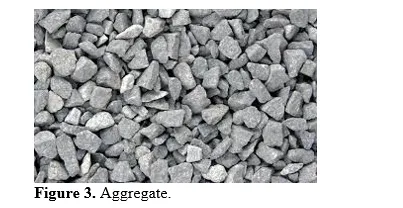
The disposal of plastic garbage Plastic products including cold drink bottles, carry bags, chocolate and chip wrappers, and all other types of plastic produce serious environmental and financial issues. These plastic types use a lot of energy and deplete the environment in a number of ways. Plastics are non-biodegradable, resulting in long-term environmental pollution and contributing to hazards such as microplastic contamination, marine debris, and threats to wildlife. Additionally, the improper disposal of plastics exacerbates climate change through greenhouse gas emissions during production and degradation processes. Because plastic is strong, lightweight, and reasonably priced, it is a preferred material for handling and packing goods in the manufacturing and construction sectors. The plastic waste that is utilised includes polyethylene, polystyrene, and polypropylene. The softening point of these polymers is determined by temperature variations between 120ºC and 160ºC. When plastic garbage is shred and spread over aggregate, it is combined with heated bitumen to create a mixture that is used to construct pavements. This mixture not only makes the pavement more durable but also strengthens it. This paper’s major goal is to explain the value of plastic in terms of cost savings. It also shows how heating plastics may strengthen their strength and durability, eliminate air spaces with plastic coating aggregates, and bind aggregates to offer stability. It’s both cost-effective and sustainable.
Keywords: Flexible pavement, plastic waste, plastic roads, bituminous mix, sustainable pavement materials
[This article belongs to Journal of Polymer & Composites ]
References
- Nasr, D., & Pakshir, A. H. (2019). Rheology and storage stability of modified binders with waste polymers composites. Road Materials and Pavement Design, 20 (4), 773–792.
- Ramakrishna, U., & Mohan, S. C. (2020). Performance of low-cost viscoelastic damper for coupling adjacent structures subjected dynamic loads. Materials Today: Proceedings, 28, 1024-1029.
- Congress, I. R. (2013). Guidelines for the use of waste plastic in hot bituminous mixes (dry process) in wearing courses. In Indian Road Congress.
- Vasudevan, R. (2004). Use of plastic waste in construction of tar road. Environmental information system (Envis), Indian Centre for Plastics in the Environment, 2, 1-4.
- Vasudevan, R. N. S. K., Nigam, S. K., Velkennedy, R., Sekar, A. R. C., & Sundarakannan, B. (2010). Utilization of waste polymers for flexible pavement and easy disposal of waste polymers. International Journal of Pavement Research and Technology, 3(1), 34-42.
- Gawande, A., Zamare, G., Renge, V. C., Tayde, S., & Bharsakale, G. (2012). An overview on waste plastic utilization in asphalting of roads. Journal of Engineering Research and Studies, 3(2), 1-5.
- Chavan, A. J. (2013). Use of waste plastic in flexible pavements. J. Appl. or Innov. Eng. Manag. ISSN, 2319-4847.
- Kumar, R., & Khan, M. A. (2020). Use of plastic waste along with bitumen in construction of flexible pavement. J. Eng. Res. Technol, 9, 153-158.
- Patel, V., Popli, S., & Bhatt, D. (2014). Utilization of plastic waste in construction of roads. International journal of scientific research, 3(4), 161-163.
- Singh, P., Kumar, A., Singh, S., Rajput, R., & Singh, C. L. (2020). Use of plastic waste in flexible pavement-green highway. International Journal of Engineering Research and, 9(09).
- Rokdey, S. N., Naktode, P. L., & Nikhar, M. R. (2015). Use of plastic waste in road construction. International Journal of Computer Applications, 7, 27-29.
- Gautam, P. K., Kalla, P., Jethoo, A. S., Agrawal, R., & Singh, H. (2018). Sustainable use of waste in flexible pavement: A review. Construction and Building Materials, 180, 239-253.
- Duggal, P., Shisodia, A. S., Havelia, S., & Jolly, K. (2020). Use of waste plastic in wearing course of flexible pavement. In Advances in Structural Engineering and Rehabilitation: Select Proceedings of TRACE 2018(pp. 177-187). Springer Singapore.
- Biswas, A., Goel, A., & Potnis, S. (2020). Performance comparison of waste plastic modified versus conventional bituminous roads in Pune city: A case study. Case Studies in Construction Materials, 13, e00411.
- Bilema, M. (2024). A review on waste plastic in flexible pavement: types, dosage, mixing, performance and challenges. Innovative Infrastructure Solutions, 9(7), 249.

Journal of Polymer & Composites
| Volume | 13 | |
| Issue | 01 | |
| Received | 06/08/2024 | |
| Accepted | 22/11/2024 | |
| Published | 18/12/2024 | |
| Publication Time | Days |