
Juhi Gupta,
Md. Ikbal Ahmed Talukdar,
Archana Chakravarty,
Nitu Singh,
Janesh Gautam,
Suresh Sagadevan,
Athar A. Hashmi,
- PhD Scholar, Bioinorganic Research Lab, Department of Chemistry, Jamia Millia Islamia,New Delhi, , India
- PhD Scholar, Bioinorganic Research Lab, Department of Chemistry, Jamia Millia Islamia,New Delhi, , India
- PhD Scholar, Scholar, Department of Chemistry, Independent Researcher, New Delhi, , India
- PhD Scholar, Scholar, Department of Chemistry, Independent Researcher, New Delhi, ,
- Scientist, ICMR, National Institute for Implementation Research on Non-Communicable Diseases, Jodhpur, Rajasthan, India
- Associate Professor, Nanotechnology and Catalysis Research Centre, University of Malaya, Kuala Lumpur, , Malaysia
- Professor, Bioinorganic Research Lab, Department of Chemistry, Jamia Millia Islamia, New Delhi, , India
Abstract
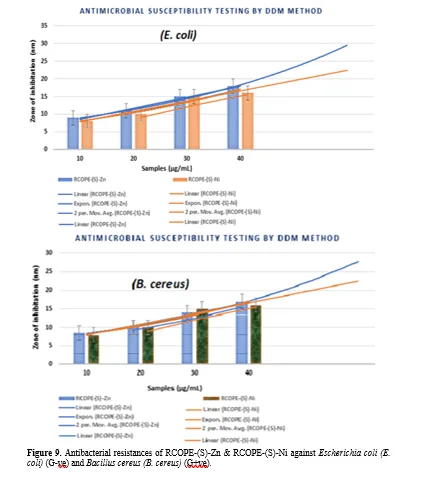
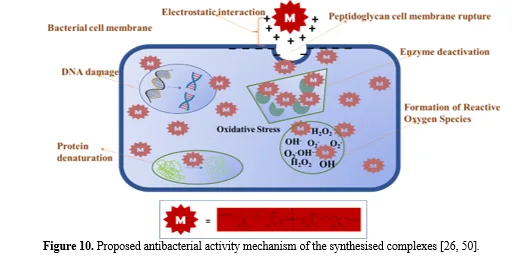
This present research study is to fabricate efficient metal-incorporated Canola oil (CO) polymers synthesised using dicarboxylic acids – Citric acid (CA) and Succinic acid (SA). The research mainly highlights the fabrication of polymeric materials using CO via a safer chemical synthesis route with less toxic reactants and minimal solvent/diluent to accomplish sustainability, adopting the green chemistry principle. Divalent Zinc (Zn) and Nickel (Ni) were incorporated in the poly-(Citrate/Succinate)-amide matrix, Ni being less explored till now. The composition, skeletal system and properties of Zn and Ni incorporated poly-(Citrate/Succinate)-amide were analysed by UV-visible, band gap energy, FTIR and NMR (1H/13C) spectroscopic studies along with their physio-chemical properties using standard methods. The size, stability and surface charge distribution were studied using DLS-Zeta, which has not been reported previously. Notably, the study established a slight comparison between the metal incorporated poly-(Citrate/Succinate)-amide. Metal-incorporated CO poly-(Citrate/Succinate)-amide were also examined for in-vitro antibacterial activity against Gram-positive (G+ve) B. cereus (MCC2243) and Gram-negative (G-ve) E. coli (MCC2412) bacteria using conventional procedures. The research analysis demonstrated that the antibacterial activity was enhanced when divalent Zn and Ni ions were introduced into the polymer matrix more than virgin canola oil, with more efficacy registered for Zn than Ni incorporated poly-(Citrate/Succinate)-amide and the mechanism for the same have also been discussed here. This research contributes to the development of sustainable biomaterials with promising applications as antibacterial coatings, biomedical and pharmaceutical, offering a greener and safer alternative to conventional synthesis methods.
Keywords: Canola oil, citric acid, succinic acid, metal incorporated polymers, zinc, nickel, biopolymers, biological activity, antibacterial activity.
[This article belongs to Journal of Polymer & Composites ]
References
- M. Gandini, A. and Lacerda, Polymers from Renewable Resources: Macromolecular Materials for the Twenty-First Century?, Macromol. Eng. (2022). https://doi.org/https://doi.org/10.1002/9783527815562.mme0019.
- A.C. Silva, L.M. Grilo, A. Gandini, T.M. Lacerda, The prospering of macromolecular materials based on plant oils within the blooming field of polymers from renewable resources, Polymers (Basel). 13 (2021). https://doi.org/10.3390/polym13111722.
- Finnveden, P. Hendil-Forssell, M. Claudino, M. Johansson, M. Martinelle, Lipase-catalyzed synthesis of renewable plant oil-based polyamides, Polymers (Basel). 11 (2019) 1–9. https://doi.org/10.3390/polym11111730.
- Al-Otaibi, N.M. Alandis, M. Alam, Leucaena leucocephala oil-based poly malate-amide nanocomposite coating material for anticorrosive applications, E-Polymers. 23 (2023). https://doi.org/10.1515/epoly-2023-0036.
- Alam, A. Ghosal, F. Zafar, M. Ahmed, M. Altaf, Preparation of Co(II)/Cu(II) Metal-Based Metallopolymer Nanocomposites: A Protective Coating for Carbon Steel, J. Polym. Environ. 32 (2024) 588–606. https://doi.org/10.1007/s10924-023-02968-x.
- I. Bhat, S. Ahmad, Castor oil-TiO2 hyperbranched poly (ester amide) nanocomposite: a sustainable, green precursor-based anticorrosive nanocomposite coatings, Prog. Org. Coatings. 123 (2018) 326–336. https://doi.org/10.1016/j.porgcoat.2018.06.010.
- A. Manawwer Alam, Fahmina Zafar, Anujit Ghosal, Formulation of silica-based corn oil transformed polyester acryl amide-phenol formaldehyde corrosion resistant coating material, J. Appl. Polym. Sci. 139 (2021). https://doi.org/https://doi.org/10.1002/app.51651.
- Nagabhooshanam, S. Baskar, T.R. Prabhu, S. Arumugam, Evaluation of tribological characteristics of nano zirconia dispersed biodegradable canola oil methyl ester metalworking fluid, Tribol. Int. 151 (2020) 106510. https://doi.org/10.1016/j.triboint.2020.106510.
- Alam, N.M. Alandis, N. Ahmad, F. Zafar, A. Khan, M.A. Alam, Development of hydrophobic, anticorrosive, nanocomposite polymeric coatings from canola oil: A sustainable resource, Polymers (Basel). 12 (2020) 1–15. https://doi.org/10.3390/polym12122886.
- Kong, G. Liu, J.M. Curtis, Novel polyurethane produced from canola oil based poly(ether ester) polyols: Synthesis, characterization and properties, Eur. Polym. J. 48 (2012) 2097–2106. https://doi.org/10.1016/j.eurpolymj.2012.08.012.
- B. Karimi, G. Khanbabaei, G.M.M. Sadeghi, Unsaturated canola oil-based polyol as effective nucleating agent for polyurethane hard segments, J. Polym. Res. 26 (2019). https://doi.org/10.1007/s10965-019-1924-0.
- S. Omonov, J.M. Curtis, Biobased epoxy resin from canola oil, J. Appl. Polym. Sci. 131 (2014) 1–9. https://doi.org/10.1002/app.40142.
- R. López-Cuellar, J. Alba-Flores, J.N.G. Rodríguez, F. Pérez-Guevara, Production of polyhydroxyalkanoates (PHAs) with canola oil as carbon source, Int. J. Biol. Macromol. 48 (2011) 74–80. https://doi.org/10.1016/j.ijbiomac.2010.09.016.
- V. Nimbalkar, V.D. Athawale, Synthesis and characterization of canola oil alkyd resins based on novel acrylic monomer (ATBS), JAOCS, J. Am. Oil Chem. Soc. 87 (2010) 947–954. https://doi.org/10.1007/s11746-010-1573-2.
- A. Lundquist, M.J.H. Worthington, N. Adamson, C.T. Gibson, M.R. Johnston, A. V. Ellis, J.M. Chalker, Polysulfides made from re-purposed waste are sustainable materials for removing iron from water, RSC Adv. 8 (2018) 1232–1236. https://doi.org/10.1039/c7ra11999b.
- Ghobadi, Z. Hassanzadeh-Rostami, F. Mohammadian, M. Zare, S. Faghih, Effects of Canola Oil Consumption on Lipid Profile: A Systematic Review and Meta-Analysis of Randomized Controlled Clinical Trials, J. Am. Coll. Nutr. 38 (2019) 185–196. https://doi.org/10.1080/07315724.2018.1475270.
- Ahmad, M. Saleem, B.M. Atta, S. Mahmood, Characterization of Desi Ghee Extracted by Different Methods Using Fluorescence Spectroscopy, J. Fluoresc. 29 (2019) 1411–1421. https://doi.org/10.1007/s10895-019-02453-6.
- N.A. Eskin, F. Aladedunye, E.H. Unger, S. Shah, G. Chen, P.J. Jones, Canola Oil, Bailey’s Ind. Oil Fat Prod. (2020) 1–63. https://doi.org/10.1002/047167849x.bio004.pub2.
- Dupont, P.J. White, K.M. Johnston, D.H. Alexander Heggtveit, B.E. McDonald, S.M. Grundy, A. Bonanome, Food Safety and Health Effects of Canola Oil, J. Am. Coll. Nutr. 8 (1989) 360–375. https://doi.org/10.1080/07315724.1989.10720311.
- Yu, J. Chen, Q. Zhou, X. Wang, Y. Chen, L. Wang, B. Yu, Catalytic transfer hydrogenation of low-erucic-acid rapeseed oil over a ni-ag0.15/sba15 catalyst, J. Oleo Sci. 69 (2020) 1191–1198. https://doi.org/10.5650/jos.ess20055.
- J.S. Nurhan Turgut Dunford, Enrique Martínez-Force, High-oleic sunflower seed oil, in: Frank J. Flider (Ed.), High Oleic Oils, AOCS Press, 2022: pp. 109–124. https://doi.org/https://doi.org/10.1016/B978-0-12-822912-5.00004-6.
- P. Bharathi, M. Alam, S. Shreaz, A.A. Hashmi, Synthesis, characterization and biological studies of oil based Tin polymer, J. Inorg. Organomet. Polym. Mater. 19 (2009) 459–465. https://doi.org/10.1007/s10904-009-9288-2.
- A. Malik, O.A. Dar, P. Gull, M.Y. Wani, A.A. Hashmi, Heterocyclic Schiff base transition metal complexes in antimicrobial and anticancer chemotherapy, Medchemcomm. 9 (2018) 409–436. https://doi.org/10.1039/c7md00526a.
- Singh, S. Shreaz, A.A. Hashmi, Synthesis of sunflower oil based bimetallic polymer and its antifungal studies, Int. J. Polym. Mater. Polym. Biomater. 62 (2013) 653–662. https://doi.org/10.1080/00914037.2013.769168.
- Faisal, Shah; Sadiq, Saima; Mustafa, Muhammad; Khan, M.H.; Sadiq, Muhammad; Iqbal, Zaffar; Khan, Tailoring the antibacterial and antioxidant activities of iron nanoparticles with amino benzoic acid, RSC Sustain. (2022).
- I.A. Talukdar, I. Ahamad, S. Iqbal, M.A. Malik, O.A. Dar, M. Khursheed Akram, T. Fatma, A.A. Hashmi, Fabrication of metal incorporated polymer composite: An excellent antibacterial agent, J. Mol. Struct. 1225 (2021). https://doi.org/10.1016/j.molstruc.2020.129091.
- Mageshwaran, V., Sivasubramanian, P., Kumar, P., Nagaraju, Antibacterial Response of Nanostructured Chitosan Hybrid Materials., in: A. Swain, S.K., Biswal (Ed.), Chitosan Nanocomposites. Biol. Med. Physics, Biomed. Eng., Springer, Singapore, 2023: pp. 161–179. https://doi.org/https://doi.org/10.1007/978-981-19-9646-7_7.
- Sharmin, J.T. Rosnes, L. Prabhu, U. Böcker, M. Sivertsvik, Effect of Citric Acid Cross Linking on the Mechanical, Rheological and Barrier Properties of Chitosan, Molecules. 27 (2022) 1–16. https://doi.org/10.3390/molecules27165118.
- Wen, Y. Liang, Z. Lin, D. Xie, Z. Zheng, C. Xu, B. Lin, Design of multifunctional food packaging films based on carboxymethyl chitosan/polyvinyl alcohol crosslinked network by using citric acid as crosslinker, Polymer (Guildf). 230 (2021) 124048. https://doi.org/10.1016/j.polymer.2021.124048.
- C. Anandarup Goswami, Chandrasekar Kuppan, Shajeeya Amren Shaik, Greener synthesis at different scales, in: O.K. Boris Kharisov (Ed.), Handb. Greener Synth. Nanomater. Compd., Elsevier, 2021: pp. 63–106. https://doi.org/https://doi.org/10.1016/B978-0-12-821938-6.00003-7.
- Latos-Brozio, A. Masek, Environmentally friendly polymer compositions with natural amber acid, Int. J. Mol. Sci. 22 (2021) 1–17. https://doi.org/10.3390/ijms22041556.
- A. Sawpan, Polyurethanes from vegetable oils and applications: a review, J. Polym. Res. 25 (2018). https://doi.org/10.1007/s10965-018-1578-3.
- Zafar, F., Ashraf, S. M., & Ahmad, Studies on zinc-containing linseed oil based polyesteramide., React. Funct. Polym. 67 (2007) 928–935. https://doi.org/10.1016/j.reactfunctpolym.2007.05.018.
- H. Ifijen, H.D. Odi, M. Maliki, S.O. Omorogbe, A.I. Aigbodion, E.U. Ikhuoria, Correlative studies on the properties of rubber seed and soybean oil-based alkyd resins and their blends, J. Coatings Technol. Res. 18 (2021) 459–467. https://doi.org/10.1007/s11998-020-00416-2.
- Ozcelik, E. Kuram, E. Demirbas, E. Şik, Effects of vegetable-based cutting fluids on the wear in drilling, Sadhana – Acad. Proc. Eng. Sci. 38 (2013) 687–706. https://doi.org/10.1007/s12046-013-0179-4.
- H. Al-obaidi, Synthesis , Characterization , Theoretical And Antimicrobial Evaluation Of New Co (Ii), Ni ( Ii ) And Cu ( Ii ) Complexes Of Flavylium Salt, Int. Res. J. Apllied Basic Sci. 8 (2014) 88–92. https://doi.org/10.11648/j.ijbbmb.20160101.15.
- Kletsch, R. Jordan, A.S. Köcher, S. Buss, C.A. Strassert, A. Klein, Photoluminescence of ni(Ii), pd(ii), and pt(ii) complexes [m(me2dpb)cl] obtained from c-h activation of 1,5-di(2-pyridyl)-2,4-dimethylbenzene (me2dpbh), Molecules. 26 (2021). https://doi.org/10.3390/molecules26165051.
- D. Allendorf, M.E. Foster, F. Léonard, V. Stavila, P.L. Feng, F.P. Doty, K. Leong, E.Y. Ma, S.R. Johnston, A.A. Talin, Guest-induced emergent properties in metal-organic frameworks, J. Phys. Chem. Lett. 6 (2015) 1182–1195. https://doi.org/10.1021/jz5026883.
- E. Malekshah, F. Shakeri, A. Khaleghian, M. Salehi, Developing a biopolymeric chitosan supported Schiff-base and Cu(II), Ni(II) and Zn(II) complexes and biological evaluation as pro-drug, Int. J. Biol. Macromol. 152 (2020) 846–861. https://doi.org/10.1016/j.ijbiomac.2020.02.245.
- Raj kumar, Ramasamy; Kasim, Mohamed; Subarkhan, Mohamed; Ramesh, Synthesis and Structure of Nickel(II) thiocarboxamide Complexes: Effect of ligand substitutions on DNA/Protein binding, Antioxidant and Cytotoxicity, RSC Adv. (2012). https://doi.org/10.1039/x0xx00000x.
- H. Ahmed, A.M. Hassan, H.A. Gumaa, B.H. Mohamed, A.M. Eraky, Nickel(II)-oxaloyldihydrazone complexes: Characterization, indirect band gap energy and antimicrobial evaluation, Cogent Chem. 2 (2016) 1142820. https://doi.org/10.1080/23312009.2016.1142820.
- Armstrong, S. Mahadevan, N. Selvapalam, C. Santulli, S. Palanisamy, C. Fragassa, Augmenting the double pipe heat exchanger efficiency using varied molar Ag ornamented graphene oxide (GO) nanoparticles aqueous hybrid nanofluids, Front. Mater. 10 (2023). https://doi.org/10.3389/fmats.2023.1240606.
- M. Mahbubul, Stability and Dispersion Characterization of Nanofluid, William Andrew Publishing, 2019. https://doi.org/10.1016/b978-0-12-813245-6.00003-4.
- Barhoum, M.L. García-Betancourt, H. Rahier, G. Van Assche, Physicochemical characterization of nanomaterials: Polymorph, composition, wettability, and thermal stability, in: A.S.H.M. Ahmed Barhoum (Ed.), Emerg. Appl. Nanoparticles Archit. Nanostructures Curr. Prospect. Futur. Trends, Elsevier, 2018: pp. 255–278. https://doi.org/10.1016/B978-0-323-51254-1.00009-9.
- Pate, P. Safier, Chemical metrology methods for CMP quality, in: Suryadevara Babu (Ed.), Adv. Chem. Mech. Planarization, SECOND, Woodhead Publishing Series, 2021: pp. 355–383. https://doi.org/10.1016/B978-0-12-821791-7.00017-4.
- M.A. Dannoun, S.B. Aziz, M.A. Brza, M.M. Nofal, A.S.F.M. Asnawi, Y.M. Yusof, S. Al-Zangana, M.H. Hamsan, M.F.Z. Kadir, H.J. Woo, The study of plasticized solid polymer blend electrolytes based on natural polymers and their application for energy storage EDLC devices, Polymers (Basel). 12 (2020) 1–19. https://doi.org/10.3390/polym12112531.
- M. Tosi, A.P. Ramos, B.S. Esposto, S.M. Jafari, Dynamic light scattering (DLS) of nanoencapsulated food ingredients, Elsevier Inc., 2020. https://doi.org/10.1016/b978-0-12-815667-4.00006-7.
- Haseena, A. Khan, F. Aslam, T. Kanwal, M.R. Shah, A.A. Khan Khalil, S.W. Ali Shah, E.M. Alshammari, E.A. El-Masry, G.E.S. Batiha, R.S. Baty, Enhanced antibacterial potential of amoxicillin against helicobacter pylori mediated by lactobionic acid coated zn-mofs, Antibiotics. 10 (2021) 1–13. https://doi.org/10.3390/antibiotics10091071.
- Alam, N. M Alandis, E. Sharmin, N. Ahmad, F.M. Husain, A. Khan, Mechanically Strong, Hydrophobic, Antimicrobial, and Corrosion Protective Polyesteramide Nanocomposite Coatings from Leucaena leucocephala Oil: A Sustainable Resource, ACS Omega. 5 (2020) 30383–30394. https://doi.org/10.1021/acsomega.0c03333.
- M. Dizaj, F. Lotfipour, M. Barzegar-Jalali, M.H. Zarrintan, K. Adibkia, Antimicrobial activity of the metals and metal oxide nanoparticles, Mater. Sci. Eng. C. 44 (2014) 278–284. https://doi.org/10.1016/j.msec.2014.08.031.

Journal of Polymer & Composites
| Volume | 12 | |
| Issue | 06 | |
| Received | 19/06/2024 | |
| Accepted | 30/07/2024 | |
| Published | 17/09/2024 | |
| Publication Time | Days |