Patel Mohd Furqan Ahmad,
Yezam Akhtar,
Sana Kauser Ateeque Ahmed,
- Assistant Professor, Department of Moalijat, Mohammadia Tibbiya College and Assayer Hospital, Malegaon, Nashik, Maharashtra, India
- Assistant Professor, Department of Tahaffuzi wa Samaji Tib (Community Medicine), Mohammadia Tibbia College & Assayer Hospital, Malegaon, Maharashtra, India
- Assistant Professor, Department of Mahiyatul Amraz (Pathology), Mohammadia Tibbia College & Assayer Hospital, Malegaon, Maharashtra, India
Abstract
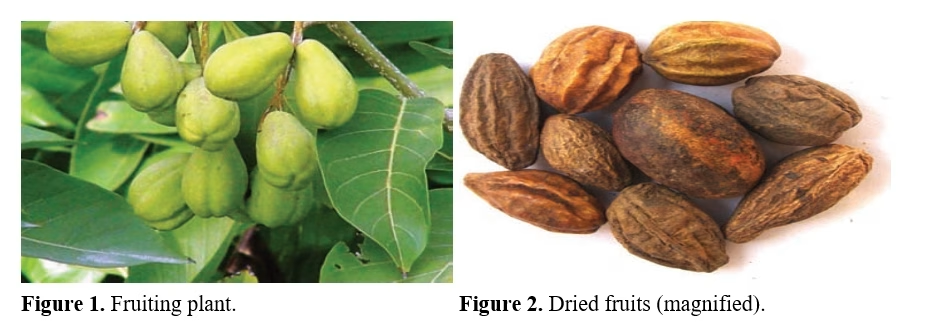
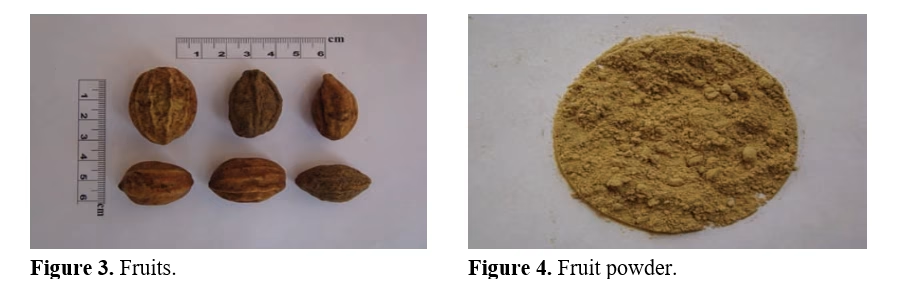
Halela Zard (Terminalia chebula Retz.), commonly known as Haritaki in Sanskrit and Chebulic Myrobalan in English, is a cornerstone of Unani pharmacotherapy due to its remarkable therapeutic versatility. The dried pericarp of its fruit has been extensively employed in traditional medicine for the treatment of a wide spectrum of ailments, ranging from digestive disturbances to chronic systemic disorders. This review aims to present a comprehensive overview of Halela Zard by integrating classical Unani literature with modern scientific findings, thereby reinforcing its status as a valuable medicinal agent. Classical Unani texts describe Halela Zard as possessing a cold and dry temperament (2°) and enumerate its key actions as a muhallil (resolvent), daaf-e-samoom (detoxicant), qabiz (astringent), muqawwi dimagh (brain tonic), and munaqqi-e-dam (blood purifier). It is a principal ingredient in several canonical compound formulations, notably Itrifal Zamani and Itrifal Ustukhuddoos, used for conditions like chronic headaches, melancholia, and digestive weakness. Botanical and phytochemical investigations have identified several active constituents, including chebulagic acid, chebulinic acid, gallic acid, ellagic acid, and phloroglucinol, which are known for their potent antioxidant, antimicrobial, and hepatoprotective properties. Pharmacological studies further substantiate its efficacy in treating bacterial and fungal infections, oxidative stress-related conditions, and promoting wound healing. The convergence of Unani wisdom with modern evidence affirms the enduring relevance of Halela Zard in both traditional and integrative medicine. This review advocates for further clinical trials and interdisciplinary research to explore its full therapeutic potential, particularly as a safe and effective adjunct in managing chronic inflammatory diseases, microbial infections, and neurological disorders.
Keywords: Halela Zard, Terminalia chebula, Unani medicine, phytochemistry, pharmacological activities
[This article belongs to Journal of AYUSH: Ayurveda, Yoga, Unani, Siddha and Homeopathy ]
References
- Kokate CK, Purohit AP, Gokhale SB. 42nd ed. Pune: Nirali Prakashan; 2009. p. 8.23–8.30, 9.4–9.5, 11.56–11.58, 11.103–11.105, 13.63–13.65.
- Khan MA. Haziq. Delhi: Minjar Hindustani Dawa Khana; 1987. p. 73.
- Nadkarni KM. Indian Materia Medica. 1. 3rd ed. Mumbai: Popular Prakashan; 2009. p. 73–74, 172–174, 242–246, 969–972, 1205–1210, 1308–1315.
- Dymock W, Warden CJH, Hooper D. Pharmacographia Indica: A History of the Principal Drugs of Vegetable Origin. Vol. 2. New Delhi: Srishti Book Distributors; 2005. p. 1–5, 428–437.
- Weber H, Holme I, Amlie E. The natural course of acute sciatica with nerve root symptoms in a double-blind placebo-controlled trial evaluating the effect of piroxicam. Spine (Phila Pa 1976). 1993;18(11):1433–8.
- Valat JP, Genevay S, Marty M, Rozenberg S, Koes B. Sciatica. Best Pract Res Clin Rheumatol. 2010;24(2):241–252.
- Khare CP. Indian Medicinal Plants: An Illustrated Dictionary. New York: Springer; 2007. p. 36–37, 80–81, 113–114, 492, 653–654, 733–734.
- Kritikar KR, Basu BD. Indian Medicinal Plants with Illustrations. Vol. 5. 2nd ed. Dehradun: Oriental Enterprises; 2003. p. 1424–1428.
- Adams JC, Hamblen DL. Outline of Orthopaedics. 13th ed. Edinburgh: Churchill Livingstone; 2001. p. 198–205.
- Sharma PC, Yelne MB, Dennis TJ. Database on Medicinal Plants Used in Ayurveda. Vol. 3. New Delhi: CCRAS, Dept. of AYUSH, Govt. of India; 2005. p. 282–286.
- Ghani N. Khazainul Advia. New Delhi: Idara Kitab-ul-Shifa; 2002. p. 113, 175–178, 308–312, 335–336, 861–862, 869–870, 1231–1233, 1355–1356.
- Majoosi IA. Kamilus Sana’a. Vol. 2. New Delhi: Idara Kitab-us-Shifa; 2010. p. 155, 159, 165.
- Baitar I. Aljame al Mufradat al Advia wa al Aghzia. Vol. 4. (Urdu translation by CCRUM). New Delhi: Dept of AYUSH, Govt. of India; 2003. p. 67–68, 436–439.
- Tariq MNA. Taj ul Mufradat. New Delhi: Idara Kitab-us-Shifa; 2010. p. 17–21, 39–41, 105–107, 123, 460, 659–661, 677.
- The Wealth of India. Vol. 10. New Delhi: CSIR; 2003. p. 171–177.
- Haleem MA. Mufradate Azizi. New Delhi: CCRUM, Dept of AYUSH, Govt. of India; 2009. p. 17, 21, 26, 29, 33, 36, 52, 54, 55, 66, 85, 91, 102, 115, 117.
- Kabiruddin M. Makhzanul Mufradat yani Kitab ul Advia. New Delhi: Idarah Kitab-ul-Shifa; 2007. p. 46–47, 89–90, 99, 270–272, 382–384, 415–416.
- Baghdadi IH. Almukhtarat fit Tibb. Part II. (Urdu translation by CCRUM). New Delhi: Dept of AYUSH, Govt. of India; 2005. p. 118, 126, 209, 228–229, 239–240, 248.
- Duke JA. Handbook of Medicinal Herbs. 2nd ed. India: Replika Press; 2002. p. 17–18, 45, 98–99, 180–181, 327–329, 682–683.
- Khan HA. Majmaul Behrain. Lucknow: Munshi Naval Kishore; YNM. p. 134, 152, 154, 157, 162.
- Qadry JS. Pharmacognosy. Ahmedabad: B.S. Shah Prakashan; 2007. p. 193–5, 239–42, 302, 317–9, 396–7.
- Tabri AR. Firdaus ul Hikmat. Deoband: Faisal Publication; 2002. p. 358–9, 362–6.
- Momin MH. Tohfatul Momineen. Matba Hasani; 1272 H. p. 40, 136, 147, 155, 165, 175, 188, 195.
- Chopra RN. Glossary of Indian Medicinal Plants. New Delhi: NISCAIR; 2002. p. 13, 33, 46–7, 73, 194, 242, 261.
- The Useful Plants of India. New Delhi: NISCAIR; 2006. p. 29–30, 66, 98, 460, 628, 701.
- Gazrooni MS Alsadidi. Lucknow: Munshi Naval Kishore; 1311 H. p. 159–63, 190–1, 200–1.
- Prajapati ND, Kumar U. Agro’s Dictionary of Medicinal Plants. Jodhpur: Agrobios; 2003. p. 19, 44, 60, 88, 257, 343, 382.
- Bag A, Bhattacharyya SK, Bharti P, Pal NK, Chattopadhyay RR. Evaluation of antibacterial properties of Terminalia chebula extracts against MRSA and resistant E. coli. Afr J Plant Sci. 2009;3(2):25–9.
- Khan KH, Jain SK. Regular intake of Terminalia chebula reduces typhoid fever risk. Adv Biotech. 2009 Mar;8:10–5.
- Mahesh R, Begum VMH. Antioxidant effect of Terminalia chebula on age-related oxidative stress. Iran J Pharmacol Ther. 2007;6(2):197–201.
- Singh MP, Sharma CS. Wound healing activity of Terminalia chebula in diabetic rats. Int J PharmTech Res. 2009;1(4):1267–70.
- Ebadi M. Pharmacodynamic Basis of Herbal Medicine. 2nd ed. USA: CRC Press; 2007. p. 275.
- Cerquaglia C, Diaco M, Nucera G, et al. Pharmacological basis of FMF treatment with colchicine. Curr Drug Targets Inflamm Allergy. 2005;4(1):117–24.
- Konda C, Rao AG. Colchicine in dermatology. Indian J Dermatol Venereol Leprol. 2010;76(2):201–5.
- Duke JA. Handbook of Medicinal Herbs. 2nd ed. Haryana: Replika Press; 2002. p. 17–18, 45, 98–9, 180–1, 327–9, 682–3.
- Kabiruddin M. Makhzanul Mufradat yani Kitab ul Advia. New Delhi: Idara Kitab-us-Shifa; 2007. p. 46–7, 89–90, 99, 270–2, 382–4, 415–6.
- Chopra RN. Glossary of Indian Medicinal Plants. New Delhi: National Institute of Science Communication and Information Resources (NISCAIR), CSIR; 2002. p. 13, 33, 46–7, 73, 194, 242, 261.
- Nadkarni KM. Indian Materia Medica. 1. 3rd ed. Mumbai: Popular Prakashan; 2009. p. 73–4, 172–4, 242–6, 969–72, 1205–10, 1308–15.
- The Useful Plants of India. New Delhi: National Institute of Science Communication and Information Resources (NISCAIR); 2006. p. 29–30, 66, 98, 460, 628, 701.
- Gazrooni MS Alsadidi. Lucknow: Munshi Naval Kishore; 1894. p. 159–63, 190–1, 200–1.
- Prajapati ND, Kumar U. Agro’s Dictionary of Medicinal Plants. Jodhpur: Agrobios; 2003. p. 19, 44, 60, 88, 257, 343, 382.
Journal of AYUSH: Ayurveda, Yoga, Unani, Siddha and Homeopathy
| Volume | 14 | |
| Issue | 03 | |
| Received | 03/06/2025 | |
| Accepted | 21/06/2025 | |
| Published | 22/06/2025 | |
| Publication Time | 19 Days |