
Palak Sharma,
Balwinder Singh,
Manisha,
Vikas Kumar,
- Assistant Professor, Department of Pharmaceutical Sciences, Amritsar Group of Colleges, Meharbanpur, Amritsar, Punjab,
- Assistant Professor, Department of Pharmaceutical Sciences, Amritsar Group of Colleges, Meharbanpur, Amritsar, Punjab, India
- Assistant Professor, Department of Pharmaceutical Sciences, Amritsar Group of Colleges, Meharbanpur, Amritsar, Punjab, India
- Assistant Professor, Department of Pharmaceutical Sciences, Amritsar Group of Colleges, Meharbanpur, Amritsar, Punjab, India
Abstract
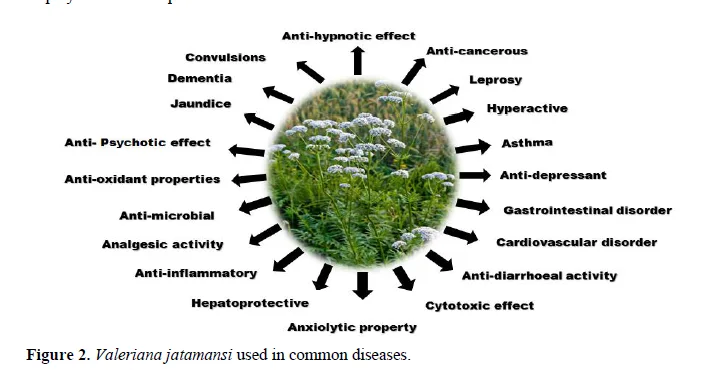
V. wallichii, often known as Valeriana jatamansi, is a significant medicinal herb. The word ‘Valerian’, which is derived from the word ‘Velo’ means ‘strong drug’, was originally used by an Indian doctor in the ninth century. This review focus on their geographical characterization, botanical characterization, traditional uses, and their mechanism of action on various bioactivity. This review discusses the major bioactive constituents and their 2D and 3D structures. V. jatamansi mostly preferred humus-rich, fertile, loamy soil with slightly acidic to neutral pH (6-7). This plant has very good antioxidant activity, anti-inflammatory activity, antibacterial activity, cytotoxic activity, anxiolytic activity, and hyperactive effects. It is found growing in the vicinity of an uncontrolled forest of Netherlands, France, Britain, Belgium, Eastern Europe, Germany, and Japan. It is also found growing in parts of Pakistan, southwestern China, Burma, and South-East Asia. Usually, this herb grows well under deep shade conditions having an ideal temperature of 15–25ºC with 80–90% of relative humidity). The herb has been employed as traditional medicine in the Himalayas health systems of Ayurveda, Siddha, Homeopathy, Ethnomedicine, and the Indian System of Medicine (ISM). In future studies, we warranted that the various bioactivity of V. Jatamansi and their mechanism of action on various diseases are explored.
Keywords: Valeriana jatamansi, traditional uses, antioxidant, anti-inflammatory, antibacterial, cytotoxic activity, anxiolytic, hyperactive, bioactivity
[This article belongs to Journal of AYUSH: Ayurveda, Yoga, Unani, Siddha and Homeopathy ]

References
- Jugran AK, Rawat S, Bhatt ID, Rawal RS. Essential oil composition, phenolics, and antioxidant activities of Valeriana jatamansi at different phenological stages. Plant Biosyst. 2020;154(3):1–8.
- Sundaresan N, Ilango K. Review on Valeriana species—Valeriana wallichii and Valeriana jatamansi. J Pharm Sci Res. 2018;10(12):2697–2701.
- Rather AM, Nawchoo IA, Ganie AH, Singh HD, Dutt B, Wani AA. Bioactive compounds and medicinal properties of Valeriana jatamansi Jones: A review. J Life Sci. 2012;2(1):2–10.
- Bhatt ID, Dauthal P, Rawat S, Gaira KS, Jugran A, Rawal RS, Dhar U. Characterization of essential oil composition, phenolic content, and antioxidant properties in wild and planted individuals of Valeriana jatamansi Sci Hortic (Amsterdam). 2012;136:61–8.
- Chakraborty S, Mukherjee D, Baskey S. Selection of lines of Valeriana jatamansi Jones: A high-value medicinal plant in the North-Eastern Himalayan region. Indian J Genet Plant Breed. 2015;75(3):1–4.
- Nawchoo AI, Rather MA, Ganie HA, Jan RT. Need for unprecedented impetus for monitoring and conservation of Valeriana jatamansi: A valuable medicinal plant of the Kashmir Himalaya. J Agric Sci Res. 2012;4(2):369–373.
- Verma P, Mathur AK, Jain SP, Mathur A. In vitro conservation of twenty-three overexploited medicinal plants belonging to the Indian subcontinent. Sci World J. 2012:2231–2234.
- Yanhua M, Shaofei P. A narrative review of botanical characteristics, phytochemical, and pharmacology of Valeriana jatamansi Longhua Chin Med. 2021;9(1):1–32.
- He S, Ma X, He R, et al. Intestinal absorption characteristics of 35% ethanol extract from Valeriana jatamansi. Chin Tradit Pat Med. 2019;41(6):485–9.
- Polunin O, Stainton A. Flowers of the Himalaya. London: Oxford University Press; 1984.
- Quan LQ, Liu H, Li RT, et al. Three new 38-epoxy iridoids from the roots and rhizomes of Valeriana jatamansi. Phytochem Lett. 2019;34:35–8.
- Shasha T, Siyue L. Valtrate from Valeriana jatamansi Jones induces apoptosis and inhibits migration of human breast cancer cells in vitro. Nat Prod Res. 2019;34(5):1–5.
- Kour M, Singh H, Kaur J. In vitro antioxidant and anti-inflammatory activities of hydroalcoholic extract of leaves of Valeriana jatamansi. Int Arch Integr Med. 2014;1(1):18–26.
- Eriksen B. Note on the generic and infrageneric delimitation in the Valerianaceae. Nord J Bot. 1989;9(3):179–87.
- Prakash V. Indian Valerianaceae: A monograph on medicinally important family. Jodhpur, India: Scientific Publishers, 1999. pp. 1–2.
- Mathela CS, Sati S, Chanotiya CS. Comparative investigations of the leaf and root oils of Valeriana wallichii from north-western Himalaya. J Essent Oil Res. 2005;408–409.
- Dweck AC. In Valerian—The genus Valeriana edulis. In: Houghton PJ, editor. UK: Harwood Academic Publishers, 1997. p. 20.
- Chakraborty S, Mukherjee D and Baskey S. Selection of lines of Valeriana jatamansi Jones, a high value medicinal plant in North Eastern Himalayan region. Indian J Genetics and Plant Breeding. 2015;1–4
- Huang PH, Huang CY, Chen MC, Lee YT, Yue CH, Wang HY, Lin H. Emodin and aloe-emodin suppress breast cancer cell proliferation through ERα inhibition. Evid Based Complement Alternat Med. 2013;1–12.
- Totland O. Pollination in alpine Norway: flowering phenology, insect visitors, and visitation rates in two plant communities. Can J Bot. 1993;1072–1079.
- Hidalgo O, Garnatje T, Susanna A, Mathez JL. Phylogeny of Valerianaceae based on mat K and ITS markers with reference to mat K individual polymorphism. Ann Bot. 2004;283–293.
- Sharma R. Medicinal plants of India – An Encyclopaedia. New Delhi: Daya Publishing House; 2003.
- Singh M, Yadav AS. Study the effect of growth regulators on micropropagation of Gloriosa superba from seeds and their acclimatization. Ann Res Rev Biol. 2015;84–90.
- Kirtikar KR, Basu BD. Indian medicinal plants. Indian medicinal plants. 1935.
- Houghton PJ. The scientific basis for the reputed activity of valerian. J Pharm Pharmacol. 1999;505–512.
- Purohit SS, Vyas SP. Medicinal Plant Cultivation—A Scientific Approach. Jodhpur: Agrobios; 2005.
- Fern K. Plants for a Future: Edible and useful plants for healthier world. Permanent Publications; 1997.
- Rather AM, Nawchoo IA, Wani AA, Ganie AH. Effect of habitat diversification and temperature on Valeriana jatamansi. N Y Sci J. 2011;57–59.
- Mukherjee D. Studies on seed germination pattern and effect of sowing date with planting prototype on Valeriana jatamansi (Jones): A rare medicinal plant of eastern Himalaya. J Crop Weed. 2015;9–13.
- Uniyal MR, Issar RK. Commercially important medicinal plants of Konatal Forest, Tehri Garhwal. Indian For. 1967;107–114.
- Nayar MP, Sastry ARK. Red Data Book of Indian Plants, vol. II. Howa: Botanical Survey of India; 1987.
- Chopra RN, Chopra IC, Handa KL, Kapur LD. Indigenous Drugs of India. New Delhi: Academic Publishers; 1958. p. 30–36.
- Kaur R, Sood M, Chander S, Mahajan R, Kumar V, Sharma DR. In vitro propagation of Valeriana jatamansi. Plant Cell Tissue Organ Cult. 1999;227–229.
- Prajapati N, Kumar U. Agro’s Dictionary of Medicinal Plants. Agrobios; 2003.
- Komori T, Matsumoto T, Motomura E, Shiroyama T. The sleep-enhancing effect of valerian inhalation and sleep-shortening effect of lemon inhalation. Chem Senses. 2006;731–737.
- Bent S, Padula A, Moore D, Patterson M, Mehling W. Valerian for sleep: a systematic review and meta-analysis. Am J Med. 2006;1005–1012.
- Cornara L, Ambu G, Trombetta D, Denaro M, Alloisio S, Frigerio J, et al. Comparative and functional screening of three species traditionally used as antidepressants: Valeriana officinalis, Valeriana jatamansi, and Nardostachys jatamansi. Plants. 2020;9(8):994.
- Afroz P, Anisha. Valeriana jatamansi: The ethanobotanical review. Asian J Pharm Clin Res. 2019;38–40.
- National Center for Biotechnology Information. PubChem Compound Summary for CID 14505 2-Acetylfuran. [Internet]. 2023 [cited 2023 Feb 1]. Available from: https://pubchem.ncbi.nlm.nih.gov/compound/2-Acetylfuran
- National Center for Biotechnology Information. PubChem Compound Summary for CID 18818 Sabinene. [Internet]. 2023 [cited 2023 Feb 2]. Available from: https://pubchem.ncbi.nlm.nih.gov/compound/Sabinene
- National Center for Biotechnology Information. PubChem Compound Summary for CID 79035 [Internet]. 2023 [cited 2023 Feb 2]. Available from: https://pubchem.ncbi.nlm.nih.gov/compound/Tricyclene
- National Center for Biotechnology Information. PubChem Compound Summary for CID 7755 3-Methylvaleric acid. [Internet]. 2023 [cited 2023 Feb 2]. Available from: https://pubchem.ncbi.nlm.nih.gov/compound/3-Methylvaleric-acid
- National Center for Biotechnology Information. PubChem Compound Summary for CID 6616 Camphene. [Internet]. 2023 [cited 2023 Feb 2]. Available from: https://pubchem.ncbi.nlm.nih.gov/compound/Camphene
- National Center for Biotechnology Information. PubChem Compound Summary for CID 17868 alpha-Thujene. [Internet]. 2023 [cited 2023 Feb 2]. Available from: https://pubchem.ncbi.nlm.nih.gov/compound/alpha-Thujene
- National Center for Biotechnology Information. PubChem Compound Summary for CID 6654 alpha-Pinene. [Internet]. 2023 [cited 2023 Feb 2]. Available from: https://pubchem.ncbi.nlm.nih.gov/compound/alpha-Pinene
- National Center for Biotechnology Information. PubChem Compound Summary for CID 22311 Limonene. [Internet]. 2023 [cited 2023 Feb 2]. Available from: https://pubchem.ncbi.nlm.nih.gov/compound/Limonene
- National Center for Biotechnology Information. PubChem Compound Summary for CID 2758 Eucalyptol. [Internet]. 2023 [cited 2023 Feb 2]. Available from: https://pubchem.ncbi.nlm.nih.gov/compound/Eucalyptol
- National Center for Biotechnology Information. PubChem Compound Summary for CID 11463 Terpinolene. [Internet]. 2023 [cited 2023 Feb 2]. Available from: https://pubchem.ncbi.nlm.nih.gov/compound/Terpinolene.
- National Center for Biotechnology Information. PubChem Compound Summary for CID 5281520 Humulene. [Internet]. 2023 [cited 2023 Feb 2]. Available from: https://pubchem.ncbi.nlm.nih.gov/compound/Humulene.
- National Center for Biotechnology Information. PubChem Compound Summary for CID 521710 alpha-Patchoulene. [Internet]. 2023 [cited 2023 Feb 2]. Available from: https://pubchem.ncbi.nlm.nih.gov/compound/alpha-Patchoulene.
- National Center for Biotechnology Information. PubChem Compound Summary for CID 42608158 Allo-Aromadendrene. [Internet]. 2023 [cited 2023 Feb 2]. Available from: https://pubchem.ncbi.nlm.nih.gov/compound/42608158.
- National Center for Biotechnology Information. PubChem Compound Summary for CID 92139 alpha-Curcumene. [Internet]. 2023 [cited 2023 Feb 2]. Available from: https://pubchem.ncbi.nlm.nih.gov/compound/alpha-Curcumene.
- National Center for Biotechnology Information. PubChem Compound Summary for CID 5317570 (-)-Germacrene D. [Internet]. 2023 [cited 2023 Feb 2]. Available from: https://pubchem.ncbi.nlm.nih.gov/compound/Germacrene-D.
- National Center for Biotechnology Information. PubChem Compound Summary for CID 9855795 Valencene. [Internet]. 2023 [cited 2023 Feb 2]. Available from: https://pubchem.ncbi.nlm.nih.gov/compound/Valencene
- National Center for Biotechnology Information. PubChem Compound Summary for CID 6428488 Zonarene. [Internet]. 2023 [cited 2023 Feb 2]. Available from: https://pubchem.ncbi.nlm.nih.gov/compound/Zonarene
- National Center for Biotechnology Information. PubChem Compound Summary for CID 11310616 Kessane. [Internet]. 2023 [cited 2023 Feb 2]. Available from: https://pubchem.ncbi.nlm.nih.gov/compound/Kessane
- National Center for Biotechnology Information. PubChem Compound Summary for CID 92138 Elemol. [Internet]. 2023 [cited 2023 Feb 2]. Available from: https://pubchem.ncbi.nlm.nih.gov/compound/Elemol
- National Center for Biotechnology Information. PubChem Compound Summary for CID 6429378 Valeranol. [Internet]. 2023 [cited 2023 Feb 2]. Available from: https://pubchem.ncbi.nlm.nih.gov/compound/Valeranol
- National Center for Biotechnology Information. PubChem Compound Summary for CID 12315252 (+)-alpha-Santalene. [Internet]. 2023 [cited 2023 Feb 20]. Available from: https://pubchem.ncbi.nlm.nih.gov/compound/12315252
- National Center for Biotechnology Information. PubChem Compound Summary for CID 8163 2-Undecanone. [Internet]. 2023 [cited 2023 Feb 20]. Available from: https://pubchem.ncbi.nlm.nih.gov/compound/2-Undecanone
- National Center for Biotechnology Information. PubChem Compound Summary for CID 133562479 Maaliol, derivative of. [Internet]. 2023 [cited 2023 Feb 20]. Available from: https://pubchem.ncbi.nlm.nih.gov/compound/Maaliol-derivative-of
- National Center for Biotechnology Information. PubChem Compound Summary for CID 92812 Ledol. [Internet]. 2023 [cited 2023 Feb 2]. Available from: https://pubchem.ncbi.nlm.nih.gov/compound/Ledol
Journal of AYUSH: Ayurveda, Yoga, Unani, Siddha and Homeopathy
| Volume | 13 | |
| Issue | 03 | |
| Received | 05/07/2024 | |
| Accepted | 20/07/2024 | |
| Published | 24/08/2024 | |
| Publication Time | Days |