
V. Basil Hans,
- Research Professor, Srinivas University, Mangalore, India
Abstract
The integration of computers and space technology has revolutionized the way we explore and understand space. Advanced computing systems play a pivotal role in space missions, from spacecraft navigation and communication to data processing and analysis. These technologies enable accurate modelling, simulation, and mission planning, allowing scientists and engineers to overcome the challenges of space exploration. Computers have also facilitated innovations such as artificial intelligence in autonomous spacecraft and real-time monitoring systems. This article explores the synergy between computers and space technology, examining the critical contributions of computational power in satellite operations, space telescopes, robotic exploration, and deep space missions. By analysing current advancements and future trends, the paper highlights how the evolving relationship between computers and space technology is shaping the future of space exploration.
Keywords: Current advancements, space exploration, space radiation, satellite system
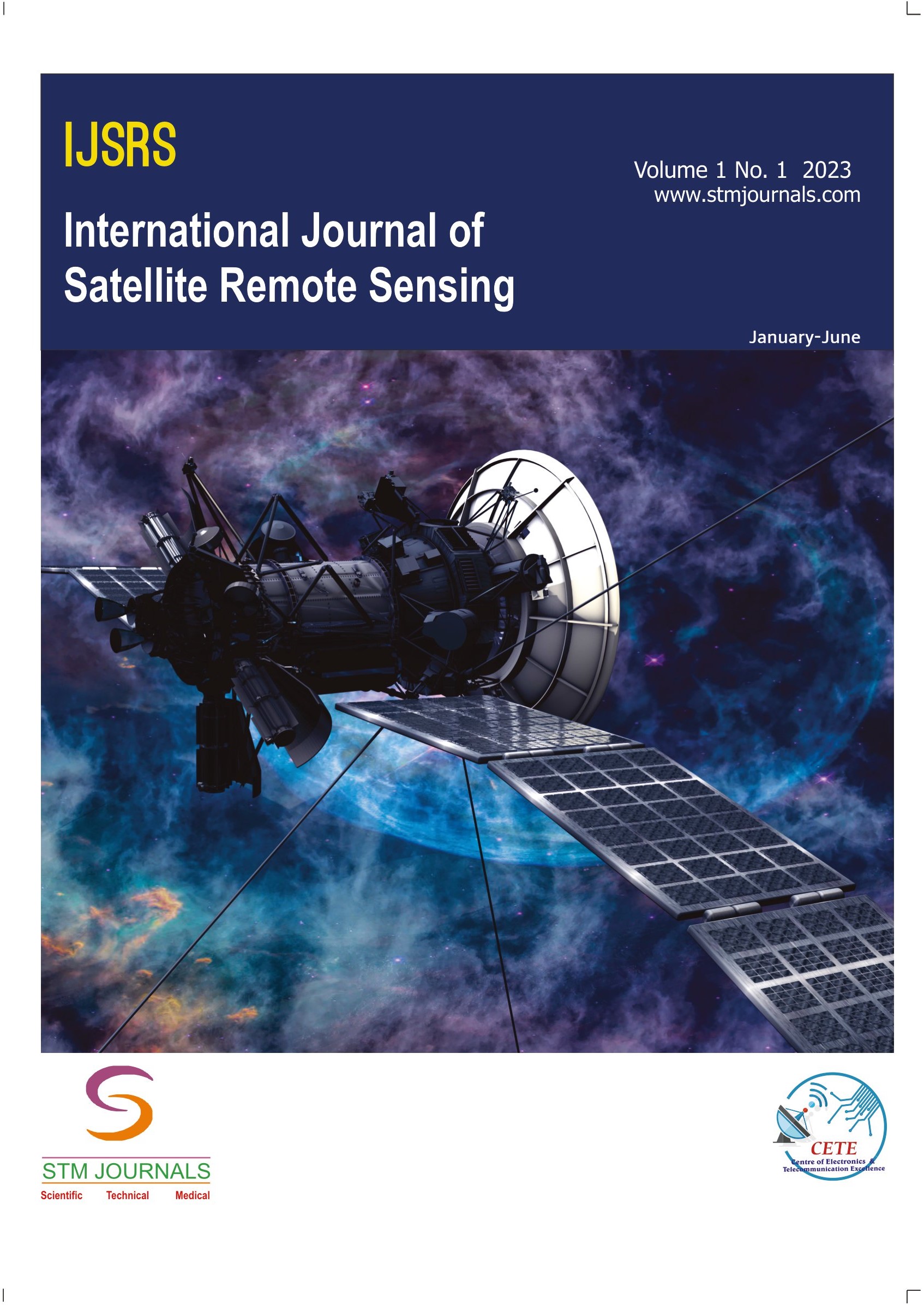
[This article belongs to International Journal of Satellite Remote Sensing ]
References
1. Smelyanskiy VN, Rieffel EG, Knysh SI, Williams CP, Johnson MW, Thom MC, Macready WG, Pudenz KL. A near-term quantum computing approach for hard computational problems in space exploration. arXiv preprint. arXiv:1204.2821. April 12, 2012.
2. Feruglio L. Artificial Intelligence for Small Satellites Mission Autonomy. Doctoral Dissertation. Turin, Italy: Politecnico di Torino; 2017.
3. Kodali V, Duggirala RK, Segall RS, Aboudja H, Berleant D. Travel to extraterrestrial bodies over time: some exploratory analyses of mission data. J Arkansas Acad Sci. 2018; 72 (1): 58–66.
4. Jordan P. Investigating the intersection of science fiction, human-computer interaction and computer science research. arXiv preprint. arXiv:1807.09490. July 25, 2018.
5. Leotta F, Mecella M, Sora D, Catarci T. Surveying human habit modeling and mining techniques in smart spaces. Future Internet. 2019; 11 (1): 23.
6. Fourati F, Alouini MS. Artificial intelligence for satellite communication: a review. Intell Converged Netw. 2021; 2 (3): 213–243.
7. Kua J, Loke SW, Arora C, Fernando N, Ranaweera C. Internet of things in space: a review of opportunities and challenges from satellite-aided computing to digitally-enhanced space living. Sensors. 2021; 21 (23): 8117.
8. Sanders LM, Yang JH, Scott RT, Qutub AA, Martín HG, Berrios DC, Hastings JJ, Rask J, Mackintosh G, Hoarfrost AL, Chalk S. Beyond low earth orbit: biological research, artificial intelligence, and self-driving labs. arXiv preprint. arXiv:2112.12582. December 22, 2021.
9. Jakka MS. Assessing exoplanet habitability through data-driven approaches: a comprehensive literature review. arXiv preprint. arXiv:2305.11204. May 18, 2023.
10. Kareem KM. Cyber threat landscape analysis for starlink assessing risks and mitigation strategies in the global satellite internet infrastructure. arXiv preprint. arXiv:2406.07562. May 11, 2024.
| Volume | 03 | |
| Issue | 01 | |
| Received | 13/03/2025 | |
| Accepted | 27/03/2025 | |
| Published | 08/04/2025 | |
| Publication Time | 26 Days |