
Hemant Rajoriya,
Balajee Sharma,
- Assistant Professor, Department of Electronics and Telecommunication Engineering, Ram Krishna Dharmarth Foundation (RKDF) University, Bhopal, Madhya Pradesh, India
- Assistant Professor, Department of Electronics and Telecommunication Engineering, Ram Krishna Dharmarth Foundation (RKDF) University, Bhopal, Madhya Pradesh, India
Abstract
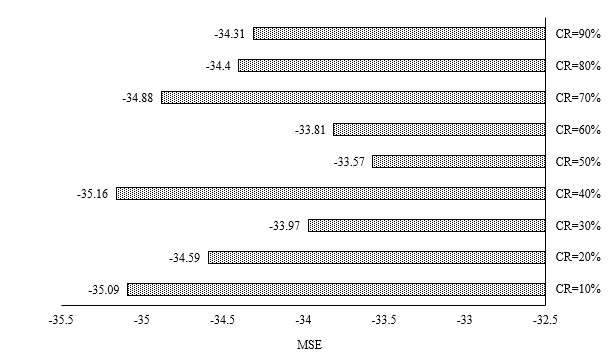
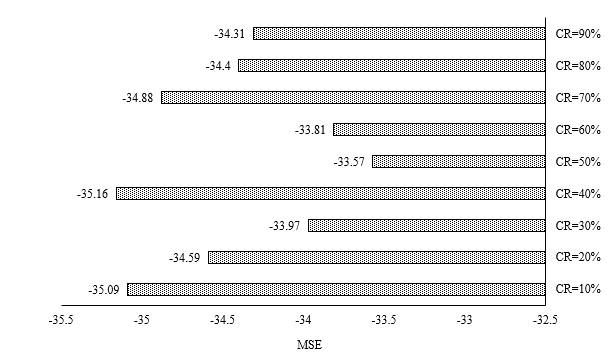
This research explores the application of deep learning and compressive sensing in order to optimize data traffic in non-orthogonal multiple access (NOMA)-based wireless internet of things (IoT) networks and weather monitoring. Such a framework would be very effective and overcome pilot attacks and reconstruction losses for secure data transmission. In this regard, a strong communication model has been adopted based on power-domain NOMA for simultaneous wireless transmission by multiple IoT devices. The system utilizes spreading codes based on advanced transformations to prevent collisions in signals. It uses a novel deep compressive sensing algorithm, which employs a combination of greedy reconstruction techniques, like CoSAMP, with deep learning to improve the accuracy with which signals are reconstructed. It ensures resilience against noise and pilot contamination attacks while it maintains very low latency and high accuracy in methodology. Simulations run on MATLAB confirm the model with substantial enhancements regarding mean square error (MSE) and root mean square error (RMSE) performances from various signal-to-noise ratios (SNRs) as well as compression ratios. This study introduces an improved compressive sensing framework for weather data acquisition, utilizing deep learning-driven reconstruction algorithms. The proposed method enhances the sampling process, minimizes the data needed for precise reconstruction, and boosts the efficiency of weather monitoring systems. Through comprehensive simulations and analysis of real-world data, the performance of the suggested approach is assessed, showing notable advancements in reconstruction precision and computational efficiency over traditional methods. These results suggest promising prospects for the development of scalable, real-time, and cost-effective weather monitoring solutions. Extensive scalability, robustness, and high potential to meet the stringent demands of next-generation IoT networks come out clearly in the results. Future research directions would span the model over multi-hop IoT environments, and blockchain-based security mechanisms would be integrated.
Keywords: Wireless internet of things (IoT), deep learning, compressive sensing, non-orthogonal multiple access (NOMA), pilot attack, signal reconstruction
[This article belongs to International Journal of Satellite Remote Sensing ]
References
1. Al Neyadi E, Al Shehhi S, Al Shehhi A, Al Hashimi N, Mohammad QH, Alrabaee S. Discovering public Wi-Fi vulnerabilities using Raspberry Pi and Kali Linux. In: 2020 12th Annual Undergraduate Research Conference on Applied Computing (URC), Dubai, UAE, April 15–16, 2020. pp. 1–4.
2. AlDaajeh S, Saleous H, Alrabaee S, Barka E, Breitinger F, Choo KKR. The role of national cybersecurity strategies on the improvement of cybersecurity education. Computers Security. 2022; 119: 102754.
3. Azab A, Khasawneh M, Alrabaee S, Choo KKR, Sarsour M. Network traffic classification: techniques, datasets, and challenges. Digital Commun Netw. 2024; 10 (3): 676–692.
4. Pekar A, Mocnej J, Seah WK, Zolotova I. Application domain-based overview of IoT network traffic characteristics. ACM Comput Surv.. 2020; 53 (4): 1–33.
5. Abbasi M, Shahraki A, Taherkordi A. Deep learning for network traffic monitoring and analysis (NTMA): a survey. Computer Commun. 2021; 170: 19–41.
6. Kuthadi VM, Selvaraj R, Baskar S, Shakeel PM, Ranjan A. Optimized energy management model on data distributing framework of wireless sensor network in IoT system. Wireless Pers Commun. 2022; 127 (2): 1377–1403.
7. Azad P, Navimipour NJ, Rahmani AM, Sharifi A. The role of structured and unstructured data managing mechanisms in the internet of things. Cluster Comput. 2020; 23: 1185–1198.
8. Diène B, Rodrigues JJ, Diallo O, Ndoye EHM, Korotaev VV. Data management techniques for internet of things. Mech Syst Signal Process. 2020; 138: 106564.
9. Ji S. Empowering Wireless Communications and Sensing with Deep Learning Technology. Doctoral Thesis. Singapore: Nanyang Technological University; 2023.
10. Andiappan V, Ponnusamy V. Deep learning enhanced NOMA system: a survey on future scope and challenges. Wireless Pers Commun. 2022; 123 (1): 839–877.
11. Nelavalli S, Rammohan Reddy D, Neelima G, Rao SS. Balancing energy efficiency with robust security in wireless sensor networks using deep reinforcement learning-enhanced particle swarm optimization. Telecommun Radio Eng. 2025; 84 (1): 9–26.
12. Srividhya C, Sapthami I, Nagpal A, Pachauri P, Chandrashekar R, Jabbar AsAAZ. Deep learning techniques for enhancing near-field spatially varying channels in wireless communications. In: 2024 International Conference on Communication, Computer Sciences and Engineering (IC3SE), Gautam Buddha Nagar, India, May 9–11, 2024. pp. 1190–1195.
13. Kumaran S, Samyuktha PM, Bhavyashree MR. Deep learning enhanced signal processing techniques for WBAN-enabled telemedicine applications. In: 2024 2nd International Conference on Sustainable Computing and Smart Systems (ICSCSS), Coimbatore, India, July 10–12, 2024. 1010–1015.
14. Ma K, Sang Y, Ming Y, Lian J, Tian C, Wang Z. Improving the performance of R17 Type-II codebook with deep learning. In GLOBECOM 2023 – 2023 IEEE Global Communications Conference, Kuala Lumpur, Malaysia, December 4–8, 2023. pp. 4823–4828.
15. Ballard Z, Brown C, Madni AM, Ozcan A. Machine learning and computation-enabled intelligent sensor design. Nat Mach Intell. 2021; 3 (7): 556–565.
16. Kokila M, Reddy KS. BlockDLO: blockchain computing with deep learning orchestration for secure data communication in IoT environment. IEEE Access. 2024; 12: 134521–134540.
17. Liyakat KKS. Machine learning approach using artificial neural networks to detect malicious nodes in IoT networks. In: Udgata SK, Sethi S, Gao XZ, editors. Intelligent Systems. ICMIB 2023. Lecture Notes in Networks and Systems, Volume 728. Singapore: Springer; 2024. pp. 123–134. doi: 10.1007/978-981-99-3932-9_12.
18. Respati MA, Lee BM. A survey on machine learning enhanced integrated sensing and communication systems: architectures, algorithms, and applications. IEEE Access. 2024; 12: 170946–170964.
19. Srividhya C, Sapthami I, Nagpal A, Pachauri P, Chandrashekar R. Deep learning techniques for enhancing near-field spatially varying channels in wireless communications. In: 2024 International Conference on Communication, Computer Sciences and Engineering (IC3SE), Gautam Buddha Nagar, May 9–11, 2024. pp. 1190–1195.
20. Kasat K, Shaikh N, Rayabharapu VK, Nayak M. Implementation and recognition of waste management system with mobility solution in smart cities using internet of things. In: 2023 Second International Conference on Augmented Intelligence and Sustainable Systems (ICAISS), August 23–25, Trichy, India, 2023. pp. 1661–1665. doi: 10.1109/ICAISS58487.2023.10250690.
21. Gong L, Chen Y. Machine learning-enhanced loT and wireless sensor networks for predictive analysis and maintenance in wind turbine systems. Int J Intell Netw. 2024; 5: 133–144.
22. Nelavalli S, Rammohan Reddy D, Neelima G, Rao SS. Balancing energy efficiency with robust security in wireless sensor networks using deep reinforcement learning-enhanced particle swarm optimization. Telecommun Radio Eng. 2025; 84 (1): 9–26.
23. Sui R, Baggard J. Wireless sensor network for monitoring soil moisture and weather conditions. Appl Eng Agric. 2015; 31 (2): 193–200.
24. Ma RH, Wang YH, Lee CY. Wireless remote weather monitoring system based on MEMS technologies. Sensors. 2011; 11 (3): 2715–2727.
25. Liyakat KKS, Magadum PK. Machine learning for predicting wind turbine output power in wind energy conversion systems. Grenze Int J Eng Technol. 2024; January: 2074–2080. 15th International Conference on Advances in Computing, Control, and Telecommunication Technologies, ACT 2024, 2024.
26. Mabrouki J, Azrour M, Dhiba D, Farhaoui Y, El Hajjaji S. IoT-based data logger for weather monitoring using Arduino-based wireless sensor networks with remote graphical application and alerts. Big Data Mining Analytics. 2021; 4 (1): 25–32.
27. Sose DV, Sayyad AD. Weather monitoring station: a review. Int J Eng Res Appl. 2016; 6 (6):
55–60.
28. Subashini MJ, Sudarmani R, Gobika S, Varshini R. Development of smart flood monitoring and early warning system using weather forecasting data and wireless sensor networks – a review. In: 2021 Third International Conference on Intelligent Communication Technologies and Virtual Mobile Networks (ICICV), Tirunelveli, India, February 4–6, 2021. pp. 132–135.
29. Veena C, Sridevi M, Liyakat KKS, Saha B, Reddy SR, Shirisha N. HEECCNB: an efficient IoT-cloud architecture for secure patient data transmission and accurate disease prediction in healthcare systems. In: 2023 Seventh International Conference on Image Information Processing (ICIIP), Solan, India, November 22–24, 2023. pp. 407–410, doi: 10.1109/ICIIP61524.2023.10537627.
30. Chandana LS, Sekhar AR. Weather monitoring using wireless sensor networks based on IOT. Int J Sci Res Sci Technol. 2018; 4: 525–531.
31. Devaraju JT, Suhas KR, Mohana HK, Patil VA. Wireless portable microcontroller based weather monitoring station. Measurement. 2015; 76: 189–200.
32. Kazi K. Machine learning (ML)-based Braille lippi characters and numbers detection and announcement system for blind children in learning. In Sart G, editor. Social Reflections of Human-Computer Interaction in Education, Management, and Economics. Hershey, PA, USA: IGI Global; 2024. pp. 16–39. doi: 10.4018/979-8-3693-3033-3.ch002.
33. Kazi KS. Artificial intelligence (AI)-driven IoT (AIIoT)-based agriculture automation. In: Satapathy S, Muduli K, editors. Advanced Computational Methods for Agri-Business Sustainability. Hershey, PA, USA: IGI Global. pp. 72–94. doi: 10.4018/979-8-3693-3583-3.ch005.
34. Konnur RG. Vehicle health monitoring system (VHMS) by employing IoT and sensors. Grenze Int J Eng Technol. 2024; June: 5367–5374. 15th International Conference on Advances in Computing, Control, and Telecommunication Technologies, ACT 2024.
35. Wang L, Chen Z, Zou H, Huang D, Pan Y, Cheang CF, Li J. A deep learning-based high-temperature overtime working alert system for smart cities with multi-sensor data. Nondestruct Testing Eval. 2024; 39 (1): 164–184.
36. Renugadevi K, Jayasankar T, Selvi JA. Cloud‐based digital twinning for structural health monitoring using deep learning. In Tyagi AK, editor. Artificial Intelligence‐Enabled Blockchain Technology and Digital Twin for Smart Hospitals. New York, NY, USA: Wiley; 2024. pp. 309–325.
37. Liyakat KKS. Explainable AI in healthcare. In: Kamaraj AA, editor. Explainable Artificial Intelligence in Healthcare Systems. Hauppauge, NY, USA: Nova Science; 2024. pp. 271–284.
38. Revathi S, Ansari A, Susmi SJ, Madhavi M, Gunavathie MA, Sudhakar M. Integrating machine learning-IoT technologies integration for building sustainable digital ecosystems. In: Kajla T, Kansra P, Singh N, editors. Multidisciplinary Applications of Extended Reality for Human Experience. Hershey, PA, USA: IGI Global; 2024. pp. 259–291.
39. Rahman MH, Sejan MA, Aziz MA, You YH, Song HK. HyDNN: a hybrid deep learning framework based multiuser uplink channel estimation and signal detection for NOMA-OFDM system. IEEE Access. 2023; 11: 66742–66755.
40. Abdel-Basset M, Hawash H, Chang V, Chakrabortty RK, Ryan M. Deep learning for heterogeneous human activity recognition in complex IoT applications. IEEE Internet of Things J. 2020; 9 (8): 5653–5665.
41. Cohen SN, Leeds MP. The moonlighting dilemma: balancing education, service, and quality care while limiting risk exposure. JAMA. 1989 Jul 28;262(4):529–31.
42. Liyakat KK. Heart health monitoring using IoT and machine learning methods. In: Shaik A, editor. AI-Powered Advances in Pharmacology. Hershey, PA, USA: IGI Global; 2025. pp. 257–282. doi: org/10.4018/979-8-3693-3212-2.ch010.
43. Hussain M, O’Nils M, Lundgren J, Mousavirad SJ. A comprehensive review on deep learning-based data fusion. IEEE Access. 2024; 12: 180093–180124.
44. Kazi KS. AI-driven-IoT (AIIoT)-based decision making in drones for climate change: KSK approach. Aouadni S, Aouadni I, editors. Recent Theories and Applications for Multi-Criteria Decision-Making. Hershey, PA: IGI Global; 2025. pp. 311–340. doi: 10.4018/979-8-3693-6502-1.ch011.
45. Bourechak A, Zedadra O, Kouahla MN, Guerrieri A, Seridi H, Fortino G. At the confluence of artificial intelligence and edge computing in IoT-based applications: a review and new perspectives. Sensors. 2023; 23 (3): 1639.
46. Gao X, Xing F, Hang X, Guo F, Wen J, Sun W, Song H, Wang ZL, Chen B. Scalable-produced micro-elastic triboelectric sensing ground for all-weather large-scale applications. Chem Eng J. 2024; 493: 152645.
47. Salau BA, Rawal A, Rawat DB. Recent advances in artificial intelligence for wireless internet of things and cyber–physical systems: a comprehensive survey. IEEE Internet of Things J. 2022; 9 (15): 12916–12930.
48. Abdel-Basset M, Chang V, Hawash H, Chakrabortty RK, Ryan M. Deep learning approaches for human-centered IoT applications in smart indoor environments: a contemporary survey. Ann Oper Res. 2021; 339: 3–51.
49. Shwetabh K, Pathrotkar N. Solar energy forecast for integration of grid and balancing power using profound learning. E3S Web Conferences. 2024; 540: 10025.
50. Yu J, Chen J, Wan H, Zhou Z, Cao Y, Huang Z, Li Y, Wu B, Yao B. SARGap: a full-link general decoupling automatic pruning algorithm for deep learning-based SAR target detectors. IEEE Trans Geosci Remote Sensing. 2024; 62: Article 5202718.
51. Liyakat KKS. Malicious node detection in IoT networks using artificial neural networks. In: Singh VK, Sagar AK, Nand P, Astya R, Kaiwartya O, editors. Intelligent Networks: Techniques and Applications. Boca Raton, FL, USA: CRC Press; 2024. pp. 182–197.
52. Gopalakrishnan K, Adhikari A, Pallipamu N, Singh M, Nusrat T, Gaddam S, Samaddar P, Rajagopal A, Cherukuri AS, Yadav A, Manga SS. Applications of microwaves in medicine leveraging artificial intelligence: future perspectives. Electronics. 2023; 12 (5): 1101.
53. Nguyen DC, Ding M, Pathirana PN, Seneviratne A, Li J, Poor HV. Federated learning for internet of things: a comprehensive survey. IEEE Commun Surv Tutorials. 2021; 23 (3): 1622–1658.
54. Liu R, Shi J, Chen X, Lu C. Network anomaly detection and security defense technology based on machine learning: A review. Computers and Electrical Engineering. 2024 Oct 1;119:109581.
55. Miao Y, Bai X, Cao Y, Liu Y, Dai F, Wang F, Qi L, Dou W. A novel short-term traffic prediction model based on SVD and ARIMA with blockchain in industrial internet of things. IEEE Internet Things J. 2023; 10 (24): 21217–21226.
56. Boddu RSK, Chandan RR, Thamizharasi M, Shaikh R, Goyal AA, Gupta PP, Gupta SK. Using deep learning to address the security issue in intelligent transportation systems. J Auton Intell. 2024; 7 (4): 1–13.
57. Lopukhova E, Abdulnagimov A, Voronkov G, Grakhova E. Machine learning-driven calibration of traffic models based on a real-time video analysis. Appl Sci. 2024; 14 (11): 4864.
58. Liyakat KKS. AI-powered-IoT (AIIoT) based decision making system for BP-patient healthcare monitoring: bp-patient health monitoring using KSK approach. In: Lytras M, Alajlan S, editors. Transforming Pharmaceutical Research with Artificial Intelligence. Hershey, PA, USA: IGI Global; 2025: 205–238.
59. Darwish H, Darwish W, Darwish H, AlHmoud IW, Alshraideh O. Artificial intelligence, machine learning, and deep learning applications in the engineering fields – a comprehensive review. Sigma J Eng Nat Sci. 2024; 42(6): 00126.
60. Liyakat KKS. KK approach to increase resilience in internet of things: a T-cell security concept. Darwish D, Charan K, editors. Analyzing Privacy and Security Difficulties in Social Media: New Challenges and Solutions. Hershey, PA, USA: IGI Global; 2025: 87–120.
| Volume | 02 | |
| Issue | 02 | |
| Received | 23/11/2024 | |
| Accepted | 25/11/2024 | |
| Published | 05/12/2024 | |
| Publication Time | Days |