
Balajee Sharma,
Hemant Rajoriya,
- Assistant Professor, Department of Electronics and Telecommunication Engineering, Ram Krishna Dharmarth Foundation (RKDF) University, Bhopal, Madhya Pradesh, India
- Assistant Professor, Department of Electronics and Telecommunication Engineering, Ram Krishna Dharmarth Foundation (RKDF) University, Bhopal, Madhya Pradesh, India
Abstract
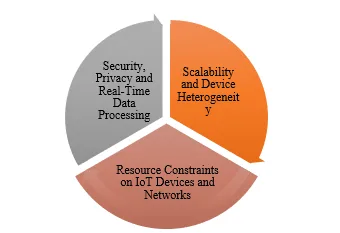
The exponential growth of internet of things (IoT) devices has posed unprecedented challenges in managing the massive data generated by real-time monitoring, automation, and analytics. Existing network infrastructures lack scalability, bandwidth, and suffer from latency problems, further making data transmission less efficient. This study surveys innovative approaches using deep learning and compressive sensing to reduce IoT data traffic. Deep learning is able to upgrade data processing by means of very effective pattern extraction and predictive modeling, while compressive sensing reduces redundancy using sparsity in data. The number of IoT devices has been growing quickly, and data generated by these devices ranges from analytics to real-time monitoring and automation. Given that the world is largely dependent on the Internet, thanks to developments like 5G and fiber optics, which enable users to access and create IoT. Data generation has skyrocketed, and solutions are very inexpensive. Despite the fact that this expansion offers numerous benefits, it severely strains network infrastructures that were not built to handle the large volume of data traffic from IoT devices. All the three together are scalable, energy-efficient, and latency-aware solutions for the IoT ecosystems. These techniques together are studied across applications such as smart cities, healthcare, and industrial automation, underlining their transformative potential. Difficulties like resource constraints, heterogeneity, and security risks are also presented and future research directions along with technological progress are included.
Keywords: Internet of things (IoT), data traffic reduction, deep learning, compressive sensing, smart cities, edge computing, data compression, signal reconstruction, machine learning, energy efficiency
[This article belongs to International Journal of Satellite Remote Sensing ]
References
1. Ouallane AA, Bahnasse A, Bakali A, Talea M. Overview of road traffic management solutions based on IoT and AI. Procedia Computer Sci. 2022; 198: 518–523. doi: 10.1016/j.procs.2021.12.279.
2. Al Neyadi E, Al Shehhi S, Al Shehhi A, Al Hashimi N, Mohammad Q, Alrabaee S. Discovering public Wi-Fi vulnerabilities using Raspberry Pi and Kali Linux. In: 2020 12th Annual Undergraduate Research Conference on Applied Computing (URC), Dubai, UAE, April 15–16, 2020. pp. 1–4.
3. Kuzovkova TA, Salutina TY, Sharavova OI. Integral assessment of the state and development potential of info-communication infrastructure for ensuring sustainable digital development. In: CEUR Workshop Proceedings. AISI 2021 – Proceedings of the International Workshop on Advances in Information Systems, Mathematical Modeling, and IT Applications in Industry, Barnaul, Russia, October 21, 2021. pp. 76–85.
4. Azab A, Khasawneh M, Alrabaee S, Choo KKR, Sarsour M. Network traffic classification: techniques, datasets, and challenges. Digital Commun Netw. 2024; 10 (3): 676–692. doi: 10.1016/j.dcan.2022.09.009.
5. Aboubakar M, Kellil M, Roux P. A review of IoT network management: current status and perspectives. J King Saud Univ – Computer Inform Sci. 2022; 34 (7): 4163–4176. doi: 10.1016/j.jksuci.2021.03.006.
6. Shafiq M, Gu Z, Cheikhrouhou O, Alhakami W, Hamam H. The rise of “internet of things”: review and open research issues related to detection and prevention of IoT‐based security attacks. Wireless Commun Mobile Comput. 2022; 1: 8669348. doi: 10.1155/2022/8669348.
7. Machidon AL, Pejović V. Deep learning for compressive sensing: a ubiquitous systems perspective. Artif Intell Rev. 2023; 56 (4): 3619–3658. doi: 10.1007/s10462-022-10259-5.
8. Noura HN, Azar J, Salman O, Couturier R, Mazouzi K. A deep learning scheme for efficient multimedia IoT data compression. Ad Hoc Netw. 2023; 138: 102998.
9. Machidon AL, Pejovic V. Deep learning techniques for compressive sensing-based reconstruction and inference – a ubiquitous systems perspective. arXiv preprint arXiv:2105.13191.
10. Zhang M, Zhang H, Fang Y, Yuan D. Learning-based data transmissions for future 6G enabled industrial IoT: a data compression perspective. IEEE Netw. 2022; 36 (5): 180–187. doi: 10.1109/MNET.109.2100384.
11. Nasif A, Othman ZA, Sani NS. The deep learning solutions on lossless compression methods for alleviating data load on IoT nodes in smart cities. Sensors. 2021; 21: 4223. doi: 10.3390/s21124223.
12. Kumar SS, Ramachandran P. Review on compressive sensing algorithms for ECG signal for IoT based deep learning framework. Appl Sci. 2022; 12: 8368. doi: 10.3390/app12168368.
13. Sadeeq MM, Abdulkareem NM, Zeebaree SR, Ahmed DM, Sami AS, Zebari RR. IoT and cloud computing issues, challenges and opportunities: a review. Qubahan Acad J. 2021; 1 (2): 1–7. doi: 10.48161/qaj.v1n2a36.
14. Zikria YB, Ali R, Afzal MK, Kim SW. Next-generation internet of things (IoT): opportunities, challenges, and solutions. Sensors. 2021; 21: 1174. doi: 10.3390/s21041174.
15. Krishna RR, Priyadarshini A, Jha AV, Appasani B, Srinivasulu A, Bizon N. State-of-the-art review on IoT threats and attacks: taxonomy, challenges and solutions. Sustainability. 2021; 13: 9463. doi: 10.3390/su13169463.
16. Zafar A, Samad F, Syed HJ, Ibrahim AO, Alohaly M, Elsadig M. An advanced strategy for addressing heterogeneity in SDN-IoT networks for ensuring QoS. Appl Sci. 2023; 13 (13): 7856. doi: 10.3390/app13137856.
17. Shah Z, Levula A, Khurshid K, Ahmed J, Ullah I, Singh S. Routing protocols for mobile internet of things (IoT): a survey on challenges and solutions. Electronics. 2021; 10 (19): 2320. doi: 10.3390/electronics10192320.
18. Rao PM, Deebak BD. Security and privacy issues in smart cities/industries: technologies, applications, and challenges. J Ambient Intell Humanized Comput. 2023; 14 (8): 10517–10553. doi: 10.1007/s12652-022-03707-1.
19. Liyakat KKS. Machine learning approach using artificial neural networks to detect malicious nodes in IoT networks. In: Udgata SK, Sethi S, Gao XZ, editors. Intelligent Systems. ICMIB 2023. Lecture Notes in Networks and Systems, vol 728. Singapore: Springer; 2024. pp. 123–134. doi: 10.1007/978-981-99-3932-9_12.
20. Nasif A, Othman ZA, Sani NS. The deep learning solutions on lossless compression methods for alleviating data load on IoT nodes in smart cities. Sensors. 2021; 21 (12): 4223.
21. Liyakat KKS. Detecting malicious nodes in IoT Networks using machine learning and artificial neural networks. In: 2023 International Conference on Emerging Smart Computing and Informatics (ESCI), Pune, India, March 1–3, 2023. pp. 1–5. doi: 10.1109/ESCI56872.2023.10099544.
22. Kasat K, Shaikh N, Rayabharapu VK, Nayak M. Implementation and recognition of waste management system with mobility solution in smart cities using internet of things. In: 2023 Second International Conference on Augmented Intelligence and Sustainable Systems (ICAISS), Trichy, India, August 23–25, 2023. pp. 1661–1665. doi: 10.1109/ICAISS58487.2023.10250690.
23. Moon A, Kim J, Zhang J, Son SW. Evaluating fidelity of lossy compression on spatiotemporal data from an IoT enabled smart farm. Computers Electron Agric. 2018; 154: 304–313.
24. Al-Qurabat AK, Mohammed ZA, Hussein ZJ. Data traffic management based on compression and MDL techniques for smart agriculture in IoT. Wireless Pers Commun. 2021; 120 (3): 2227–2258.
25. Kazi K. Modelling and simulation of electric vehicle for performance analysis: BEV and HEV electrical vehicle implementation using Simulink for e-mobility ecosystems. In: Nagpal N, Kassarwani N, Varthanan G, Siano P, editors. E-Mobility in Electrical Energy Systems for Sustainability. Hershey, PA, USA: IGI Global; 2024. pp. 295–320. doi: 10.4018/979-8-3693-2611- 4.ch014.
26. Kazi KS. Computer-aided diagnosis in ophthalmology: a technical review of deep learning applications. In: Garcia M, de Almeida R, editorials. Transformative Approaches to Patient Literacy and Healthcare Innovation. Hershey, PA, USA: IGI Global. (pp. 112–135. doi: 10.4018/979-8- 3693-3661-8.ch006.
27. Liyakat KKS, Magadum PK, Machine learning for predicting wind turbine output power in wind energy conversion systems. 15th International Conference on Advances in Computing, Control, and Telecommunication Technologies, ACT 2024, 2024, 1, pp. 2074–2080.
28. Neeraja P, Kumar RG, Kumar MS, Liyakat KKS, Vani MS. DL-based somnolence detection for improved driver safety and alertness monitoring. In: 2024 IEEE International Conference on Computing, Power, and Communication Technologies, IC2PCT 2024, Greater Noida, India, February 9–10, 2024. pp. 589–594. doi: 10.1109/IC2PCT60090.2024.10486714.
29. Das L, Garg D, Srinivasan B. Neural compression: a machine learning approach to compress high frequency measurements in smart grid. Appl Energy. 2020; 257: 113966.
30. Moon A, Kim J, Zhang J, Liu H, Son SW. Understanding the impact of lossy compressions on IoT smart farm analytics. In: 2017 IEEE International Conference on Big Data (Big Data), Boston, MA, USA, December 11–14, 2017. pp. 4602–4611.
31. Veena C, Sridevi M, Liyakat KKS, Saha B, Reddy SR, Shirisha N. HEECCNB: an efficient IoT- cloud architecture for secure patient data transmission and accurate disease prediction in healthcare systems. In: 2023 Seventh International Conference on Image Information Processing (ICIIP), Solan, India, November 22–24, 2023. pp. 407–410. doi: 10.1109/ICIIP61524.2023.10537627.
32. Rajendra Prasad K, Santoshachandra Rao K. AI in public-private partnership for IT infrastructure development, J High Technol Manage Res. 2024; 35 (1): 100496. doi: 10.1016/j.hitech.2024.
100496.
33. Putra KT, Chen HC, Prayitno, Ogiela MR, Chou CL, Weng CE, Shae ZY. Federated compressed learning edge computing framework with ensuring data privacy for PM2.5 prediction in smart city sensing applications. Sensors. 2021; 21 (13): 4586.
34. Kazi K. Machine learning (ML)-based Braille lippi characters and numbers detection and announcement system for blind children in learning In: Sart G, editor. Social Reflections of Human- Computer Interaction in Education, Management, and Economics, Hershey, PA, USA: IGI Global; 2024. pp. 16–39. doi: 10.4018/979-8-3693-3033-3.ch002.
35. Kazi KS. Artificial intelligence (AI)-driven IoT (AIIoT)-based agriculture automation. In: Satapathy S, Muduli K, editors. Advanced Computational Methods for Agri-Business Sustainability. Hershey, PA, USA: IGI Global; 2024. (pp. 72–94. doi: 10.4018/979-8-3693-3583- 3.ch005.
36. Liyakat KKS, Konnur RG. Vehicle health monitoring system (VHMS) by employing IoT and sensors. In: 15th International Conference on Advances in Computing, Control, and Telecommunication Technologies, ACT 2024, 2024. pp. 5367–5374.
37. Liyakat KKS. A novel approach on ML based palmistry. In: 15th International Conference on Advances in Computing, Control, ad Telecommunication Technologies, ACT 2024, 2024. pp. 5186–5193.
38. Liyakat KKS. IoT based boiler health monitoring for sugar industries. In: 15th International Conference on Advances in Computing, Control, ad Telecommunication Technologies, ACT 2024, 2024. pp. 5178–5185.
39. Liyakat KKS. Explainable AI in healthcare. In: Explainable Artificial Intelligence in Healthcare Systems. Hauppauge, NY, USA: Nova Science; 2024. pp. 271–284.
40. Kazi KS. Machine learning-based pomegranate disease detection and treatment. In: Zia Ul Haq M, Ali I, editors. Revolutionizing Pest Management for Sustainable Agriculture. Hershey, PA, USA: IGI Global; 2024. pp. 469–498. doi: 10.4018/979-8-3693-3061-6.ch019.
41. Ananthi J, Sengottaiyan N, Anbukaruppusamy S, Upreti K, Dubey AK. Forest fire prediction using IoT and deep learning. Int J Adv Technol Eng Exploration. 2022; 9 (87): 246–256.
42. Lin C, Han G, Qi X, Du J, Xu T, Martínez-García M. Energy-optimal data collection for unmanned aerial vehicle-aided industrial wireless sensor network-based agricultural monitoring system: a clustering compressed sampling approach. IEEE Trans Indus Inform. 2020; 17 (6): 4411–4420.
43. Vedavalli P, Ch D. A deep learning based data recovery approach for missing and erroneous data of IoT nodes. Sensors. 2022; 23 (1): 170.
44. Liyakat KK. Heart health monitoring using IoT and machine learning methods. In: Shaik A, editor. AI-Powered Advances in Pharmacology. Hershey, PA, USA: IGI Global. (pp. 257–282. doi: 10.4018/979-8-3693-3212-2.ch010.
45. Kazi KS. AI-powered-IoT (AIIoT)-based decision-making system for BP patient’s healthcare monitoring: KSK approach for BP patient healthcare monitoring. In: Aouadni S, Aouadni I, editors. Recent Theories and Applications for Multi-Criteria Decision-Making. Hershey, PA, USA: IGI Global; 2024. pp. 205–238). doi: 10.4018/979-8-3693-6502-1.ch008.
46. Kazi KS. AI-driven-IoT (AIIoT)-based decision making in drones for climate change: KSK approach. In: Aouadni S, Aouadni I, editors. Recent Theories and Applications for Multi-Criteria Decision-Making. Hershey, PA, USA: IGI Global; 2025. pp. 311–340. doi: 10.4018/979-8-3693- 6502-1.ch011.
47. Haupt J, Bajwa WU, Rabbat M, Nowak R. Compressed sensing for networked data. IEEE Signal Process Mag. 2008; 25 (2): 92–101.
48. Kazi K. Machine learning-driven-internet of medical things (ML-IoMT) based healthcare monitoring system. Soufiene BO, Chakraborty C, editors. Responsible AI for Digital Health and Medical Analytics, Hershey, PA, USA: IGI Global; 2025.
49. Ng PC, She J, Ran R. A compressive sensing approach to detect the proximity between smartphones and BLE beacons. IEEE Internet of Things J. 2019; 6 (4): 7162–7174.
50. Sarma S. Essence: Machine Learning Approaches to Scalable and Energy Efficient Sense-making for Internet-of-Things (IoT). MSc Thesis. Irvine, CA, USA: University of California, Irvine; 2015.
51. Zheng H, Guo W, Xiong N. A kernel-based compressive sensing approach for mobile data gathering in wireless sensor network systems. IEEE Trans Syst Man Cybern Syst. 2017; 48 (12): 2315–2327.
52. Kazi K. Red Deer algorithm based polycystic ovarian syndrome by using random forest classifier. Mulani A, Cengiz K, Tripathi S, editors. AI, Machine Learning, and IoT for Communication and Medical Applications. Hershey, PA, USA: IGI Global; 2025.
53. Liyakat KKS, Malicious node detection in IoT networks using artificial neural networks. In: Singh VK, Sagar AK, Nand P, Astya R, Kaiwartya O, editors. Intelligent Networks: Techniques and Applications. Boca Raton, Fl, USA: CRC Press; 2024. pp.182–197.
54. Pandey C, Angryk RA, Aydin B. Solar flare forecasting with deep neural networks using compressed full-disk HMI magnetograms. In: 2021 IEEE International Conference on Big Data (Big Data), Orlando, FL, USA, December 15–18, 2021. pp. 1725–1730.
55. Liyakat KKS. Advancing towards sustainable energy with hydrogen solutions: adaptation and challenges. In: Özsungur F, Semsari MC, Bayraktar HK, editors. Geopolitical Landscapes of Renewable Energy and Urban Growth. Hershey, PA, USA: IGI Global; 2025.
56. Liyakat KKS. Machine learning for brand protection: a review of a proactive defense mechanism. In: Khan M, Amin Ul Haq M, editors. Avoiding Ad Fraud and Supporting Brand Safety: Programmatic Advertising Solutions. Hershey, PA, USA: IGI Global; 2025.
57. Liyakat KKS. Braille-Lippi numbers and characters detection and announcement system for blind children using KSK approach: AI-driven-decision making. In: Ponnusamy S, Antari A, Jeon G, Assaf M, Sharma B, editors. Revolutionizing Education with Remote Experimentation and Learning Analytics. Hershey, PA, USA: IGI Global; 2025.
58. Liyakat KKS. AI-Driven-IoT (AIIoT) based jawar leaf disease detection: KSK approach for jawar disease detection. In: Bhatti U, Aamir A, Gulzar Y, Bazai SU, editors. Modern Intelligent Techniques for Image Processing. Hershey, PA, USA: IGI Global; 2025.
59. Liyakat KKS. AI-powered IoT (AI IoT) for decision-making in smart agriculture: KSK approach for smart agriculture. In: Hai-Jew S, editor. Enhancing Automated Decision-Making Through AI. Hershey, PA, USA: IGI Global; 2025.
60. Razzaque MA, Dobson S. Energy-efficient sensing in wireless sensor networks using compressed sensing. Sensors. 2014; 14 (2): 2822–2859.
61. Liyakat KKS. Machine learning-powered-IoT (MLIoT) for retail apparel industry. In: Tarnanidis T, Papachristou E, Karypidis M, Manda VK, editors. Sustainable Practices in the Fashion and Retail Industry. Hershey, PA, USA: IGI Global; 2025.
62. Liyakat KKS. KK approach to increase resilience in internet of things: a T-cell security concept. In: Darwish D, Charan K, editors. Analyzing Privacy and Security Difficulties in Social Media: New Challenges and Solutions. Hershey, PA, USA: IGI Global; 2025.
63. Halli UM. Nanotechnology in IoT security. J Nanosci Nanoeng Appl. 2022; 12 (3): 11–16.
64. Wale AD, Rokade D, et al. Smart agriculture system using IoT. Int J Innov Res Technol. 2019; 5 (10): 493–497.
65. Sunil Kumar M, Ganesh D, Turukmane AV, Batta U. Deep convolution neural network based solution for detecting plant diseases. J Pharm Negative Results. 2022; 13 (Special Issue I): 464–471.
66. Alsubai S, Dutta AK, Sait ARW. Hybrid deep learning-based traffic congestion control in IoT environment using enhanced arithmetic optimization technique. Alexandria Eng J. 2024; 105: 331–
340. doi: 10.1016/j.aej.2024.06.072.
67. Lydia EL, Jovith AA, Devaraj AFS, Seo C, Joshi GP. Green energy efficient routing with deep learning based anomaly detection for internet of things (IoT) communications. Mathematics. 2021; 9: 500. doi: 10.3390/math9050500.
68. Ferrag MA, Shu L, Djallel H, Choo KKR. Deep learning-based intrusion detection for distributed denial of service attack in Agriculture 4.0. Electronics. 2021; 10: 1257. doi: 10.3390/electronics
10111257.
69. Sarhan M, Layeghy S, Moustafa N, Gallagher M, Portmann M. Feature extraction for machine learning-based intrusion detection in IoT networks. Digital Commun Netw. 2024; 10 (1): 205–216. doi: 10.1016/j.dcan.2022.08.012.
70. Muthanna MSA, Muthanna A, Rafiq A, Hammoudeh M, Alkanhel R, Lynch S, Abd El-Latif AA. Deep reinforcement learning based transmission policy enforcement and multi-hop routing in QoS aware LoRa IoT networks. Computer Commun. 2022; 183: 33–50. doi: 10.1016/j.comcom.2021. 11.010.
71. Damadam S, Zourbakhsh M, Javidan R, Faroughi A. An intelligent IoT based traffic light management system: deep reinforcement learning. Smart Cities 2022; 5: 1293–1311. doi: 10.3390/smartcities5040066.
72. Selva E. Digitization, Compression and Reconstruction of a Large-Scale Radio Traffic for the Internet of Things. Doctoral Dissertation. Gif-sur-Yvette, France: Centrale Supélec; 2021.
73. Kuldeep G, Zhang Q. A novel efficient secure and error-robust scheme for internet of things using compressive sensing. IEEE Access 2021; 9: 40903–40914. doi: 10.1109/ACCESS.2021.3064700.
74. Salim A, Ismail A, Osamy WM, Khedr A. Compressive sensing based secure data aggregation scheme for IoT based WSN applications. PLoS ONE. 2021; 16 (12): e0260634. doi: 10.1371/journal.pone.0260634.
75. Azar J, Tayeh GB, Makhoul A, Couturier R. Efficient lossy compression for IoT using SZ and reconstruction with 1D U-Net. Mobile Netw Appl. 2022; 27 (3): 984–996. doi: 10.1007/s11036-
022-01918-6.
76. Vivekanand V. A Theoretical Framework for Sparse Recovery Algorithm Design and Evaluation in Compressed Sensing Perspective. Doctoral Dissertation. Thiruvananthapuram, India: Indian Institute of Space Science and Technology; 2023.
77. Zhou J, Yang J. Compressive sensing in image/video compression: sampling, coding, reconstruction, and codec optimization. Information. 2024; 15: 75. doi: 10.3390/info15020075.
78. de Oliveira MA, da Rocha AM, Puntel FE, Cavalheiro GGH. Time series compression for IoT: a systematic literature review. Wireless Commun Mobile Comput. 2023; 1: 5025255. doi: 10.1155/2023/5025255.
79. Kahdim AN, Manaa ME. Design an efficient internet of things data compression for healthcare applications. Bull Electric Eng Inform. 2022; 11 (3): 1678–1686. doi: 10.11591/eei.v11i3.3758.
80. Dantas PV, Sabino da Silva Jr W, Cordeiro LC, Carvalho CB. A comprehensive review of model compression techniques in machine learning. Appl Intell. 2024; 54: 11804–11844. doi: 10.1007/s10489-024-05747-w.
81. Xie Z, Liu L, Chen Z. Image compressed sensing: From deep learning to adaptive learning. Knowledge-Based Syst. 2024; 293: 111659. doi: 10.1016/j.knosys.2024.111659.
82. Janu D, Singh K, Kumar S. Machine learning for cooperative spectrum sensing and sharing: a survey. Trans Emerg Telecommun Technol. 2022; 33 (1): e4352. doi: 10.1002/ett.4352.
83. Heidari A, Navimipour NJ, Dag H, Talebi S, Unal M. A novel blockchain-based deepfake detection method using federated and deep learning models. Cogn Comput. 2024; 16: 1073–1091. doi: 10.1007/s12559-024-10255-7.
84. Zeng C, Xia S, Wang Z, Wan X. Multi-channel representation learning enhanced unfolding multi- scale compressed sensing network for high quality image reconstruction. Entropy. 2023; 25: 1579. doi: 10.3390/ e25121579.
85. Cheng Z, Chen B, Liu G, Zhang H, Lu R, Wang Z, Yuan X. Memory-efficient network for large- scale video compressive sensing. In: Proceedings of the IEEE/CVF Conference on Computer Vision and Pattern Recognition, Nashville, TN, USA: June 20–25, 2021. pp. 16246–16255.
86. Humayun M, Afsar S, Almufareh M, Jhanjhi N, AlSuwailem M. Smart traffic management system for metropolitan cities of Kingdom using cutting edge technologies. J Adv Transport. 2022; 2022: 4687319. doi: 10.1155/2022/4687319.
87. Chen Z, Li R, Li Y, Feng Y, Hou X, Qian X. Deep motion regularizer for video snapshot compressive imaging. IEEE Trans Comput Imaging. 2024; 10: 1519–1532.

| Volume | 02 | |
| Issue | 02 | |
| Received | 12/11/2024 | |
| Accepted | 13/11/2024 | |
| Published | 24/11/2024 | |
| Publication Time | Days |