
Kamrun Nahar,
Bobby Barua,
- Student, Department of Electrical and Electronics Engineering, Ahsanullah University of science and Technology, Dhaka, Bangladesh
- Professor, Department of Electrical and Electronics Engineering, Ahsanullah University of science and Technology, Dhaka, Bangladesh
Abstract
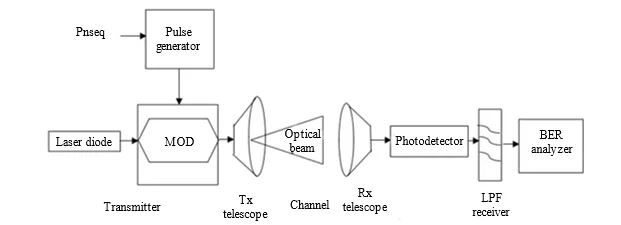
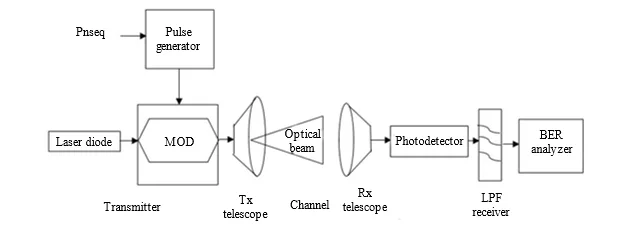
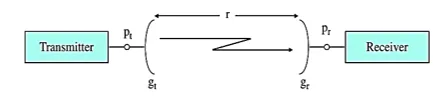
The effective method to create a link between satellites is inter-satellite communication. Data is transmitted from one side to the other via a laser in this groundbreaking method. Optical networks, which offer continuous data transport over vast distances, are networks with high bandwidth efficiency. Inter-satellite optical wireless communication (Is-OWC) is a common method to transfer high-speed data between various satellites in free space. Is-OWC networks have undoubtedly innovated satellite communications networks recently. We have assessed the Is-OWC communication link’s capability for high-speed data transfer in this work. In addition, we analyze some of the major obstacles that this technology faces and explain them. This study contrasts how various losses affect a geostationary satellite’s receiving antenna’s output power. The antenna elevation angle of an earth station needs to be determined in order to connect with satellites. Even if there are a lot of restrictions on satellite communication between the earth station and the satellite in both the uplink and downlink directions, air attenuations, rain, and noise. Therefore, some of the performance-limiting parameters, such as attenuation loss, elevation angle, pointing loss, free space path loss, divergence angle, antenna gain and Q-Factor, are identified in this work along with an attempt to examine how we might improve functionality
Keywords: Is-OWC, inter-satellite links (ISL), attenuation, pointing loss, free space path loss, elevation angle, divergence angle, antenna gain, q-factor
[This article belongs to International Journal of Satellite Remote Sensing ]
References
- Veleski M, Petrovic V, Stamenkovic Z. A satellite internal communication controller: design and implementation. In: 11th WSEAS international conference on circuits, systems, electronics, control and signal processing 2019; Montreux, Switzerland.
- Kang Z, Jiang Z. Performance evaluation and optimization of multiband phase-modulated radio over IsOWC link with balanced coherent homodyne detection. Optics Communications April 2018; 413: 152-156.
- Kürner T. Towards future THz communications systems. Terahertz science and technology. 2012 Mar;5(1):11-7.
- Chan VW. Optical satellite networks. Journal of Lightwave Technology. 2003 Nov 1;21(11):2811.
- Song HJ, Ajito K, Muramoto Y, Wakatsuki A, Nagatsuma T, Kukutsu N. 24 Gbit/s data transmission in 300 GHz band for future terahertz communications. Electronics Letters. 2012 Jul 19;48(15):953-4.
- Song H. and Nagatsuma T.Present and future of Terahertz communications. IEEE Transaction on Terahertz Science and Technology 2011; 1: 256-263.
- Alqaraghuli AJ, Abdellatif H, Jornet JM. Performance analysis of a dual terahertz/ka band communication system for satellite mega-constellations. In2021 IEEE 22nd International Symposium on a World of Wireless, Mobile and Multimedia Networks (WoWMoM) 2021 Jun 7 (pp. 316-322). IEEE.
- Antes J,Reicharty J, and Lopez-Diaz D.System concept and implementation of a mmW wireless link providing data rates up to 25Gbit/s. Electronics Letters 2013; 49:34-40.
- Prakash SA, Sumithra MG, Shankar K, Grover A, Singh M, Malhotra J. Performance investigation of spectral-efficient high speed inter-satellite optical wireless communication link incorporating polarization division multiplexing. Optical and Quantum Electronics 2021; 53: 1–15.
- Ducournau G, Szriftgiser P and Lampin JF. Waveguide-based electronic Tx/Rx for THz range applications. 16th International Radar Symposium (IRS) 2015, pp. 24-26.
- Hwu SU, deSilva KB, Jih CT. Terahertz (THz) wireless systems for space applications. In2013 IEEE Sensors Applications Symposium Proceedings 2013 Feb 19 (pp. 171-175). IEEE.
- Li Y, Chen Y. Propagation modeling and analysis for terahertz inter-satellite communications using FDTD methods. In2021 IEEE International Conference on Communications Workshops (ICC Workshops) 2021 Jun 14 (pp. 1-6). IEEE.
- Kumari G, Selwal C. Performance Optimization for High Speed WDM Based Inter-satellite Optical Wireless communication. International conference on Signal Processing, Communication, Power and Embedded System (SCOPES)-201, 2016.
- SHARMA A, NEETU. Analysis and mitigation of receiver pointing error angle on inter-Satellite Communication. (IJITR) INTERNATIONAL JOURNAL OF INNOVATIVE TECHNOLOGY AND RESEARCH 2015; 3: 2540 – 2544.
- Shatnawi AA, Warip MNM. Challenges to Inter-Satellite Communication System: A Review. International Journal of Computer Applications (0975 – 8887) 2016; 148.
- Pfennigbauer M, Walter R. Leeb, Aspelmeyer M, Jennewein T, Zeilinger A. Free-Space Optical Quantum Key Distribution Using Intersatellite Link. CNES – Intersatellite Link Workshop 2003.
- Karim SMR, Sakib S, Islam T, Ahamed FAS. A Review of Communications Satellite by Focusing on ‘Bangabandhu Satellite-1’, the First GEO Communications Satellite of Bangladesh. International Journal of Networks and Communications 2018; 8(5):123-128.
- Yuan-Ming Ding, GAO S, Shi X, Wu H. Analysis of Inter-Satellite Terahertz Communication Link. Advances in Computer Science Research 3rd International Conference on Wireless Communication and Sensor Network 2016; 44.
- Sri† IK, Srinivasulu A. Q-factor and BER Performance analysis of intersatellite optical wireless communication using 26 transponders. International Conference on Intelligent Communication and Computational Techniques (ICCT) 2017.
- Choyon AKMS, Chowdhury R, Chowdhury SMR. Optimum link distance and BER performance investigation for BPSK RF sub-carrier coherent FSO communication system under strong turbulence. International Journal Of Science & Technology research 2020; 9: ISSN 2277-8616.
- Sandalidis HG, Tsiftsis TA, Karagiannidis GK. Optical wireless communications with heterodyne detection over turbulence channels with pointing errors. Journal of Lightwave Technology 2009; 27.
- Ahmed RK, Hamd HI. Elevation angle Influence in geostationary and nongeostationary Satellite System. International Conference on Advanced Science and Engineering 2018; Kurdistan Region, Iraq.
- Dey A, Joshi LM, Chhibba R, Sharma N. A study of ionospheric effects on IRNSS/NavIC positioning at equatorial latitudes. Advances in Space Research. 2021 Dec 15;68(12):4872-83.
- Kaur S. Analysis of inter-satellite free-space optical link performance considering different system parameters. Opto-Electronics Review. 2019 Mar 1;27(1):10-3.
- Liu X. Outage behavior of a MISO wireless optical link with pointing and tracking errors. In2011 IEEE International Conference on Communications (ICC) 2011 Jun 5 (pp. 1-5). IEEE.
- M. Akhtaruzzaman, S. M. Sadakatul Bari, Syed Akhter Hossain, and Md. Mahbubur Rahman. Link budget analysis in designing a web-application tool for military X-band satellite communication. MIST International Journal of Science and Technology 2020; 8.
- Zhengsheng C, Qinghua Z, Dashuang S, Hao L, Runtao Z, Xuerui L, Jinlong C. A reference satellite selection method based on maximal elevation angle during the observation period. In2017 Forum on Cooperative Positioning and Service (CPGPS) 2017 May 19 (pp. 268-272). IEEE.
- Ippolito Jr LJ. Satellite communications systems engineering: atmospheric effects, satellite link design and system performance. John Wiley & Sons; 2017 May 1.
- Zhu L, Huang H, Cheng MM, Chen PY. Compact, flexible harmonic transponder sensor with multiplexed sensing capabilities for rapid, contactless microfluidic diagnosis. IEEE Transactions on Microwave Theory and Techniques. 2020 Jul 9;68(11):4846-54.
| Volume | 02 | |
| Issue | 02 | |
| Received | 12/11/2024 | |
| Accepted | 13/11/2024 | |
| Published | 24/11/2024 | |
| Publication Time | 12 Days |