
Nagendra Singh,
Manoj Kumar Agrawal,
- Associate Professor, Department of Mechanical Engineering, GLA University, Mathura, Uttar Pradesh, India
- Research Scholar, Department of Mechanical Engineering, Institute of Engineering and Technology, Khandari Campus, Agra, Uttar Pradesh, India
Abstract
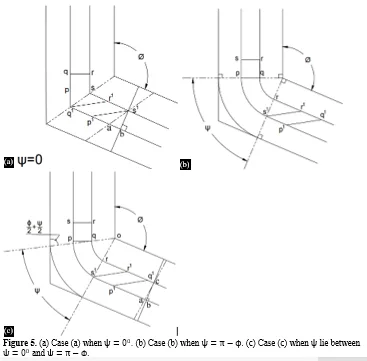
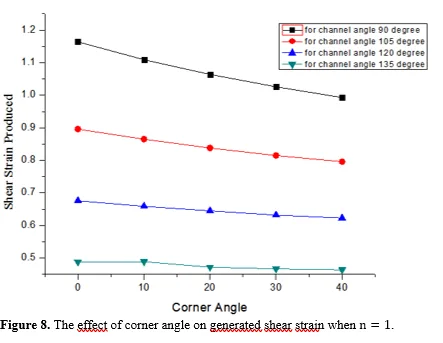
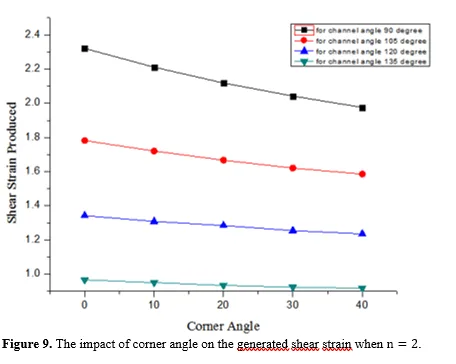
Refinement of the grain structure in bulk Materials is achieved using the Equal Channel Angular Pressing process. The material is pass through a die in this procedure that has two channels that meet at a particular angle. Finer grains are formed as a result of the material’s deformation when it passes through die. The creation of ultra-fine grains is influenced by a number of die design characteristics. The effects of processing route, corner angle, channel angle and number of passes in die design on grain refinement. After comparing the results of several parameters, it was found that is the ideal channel angle for producing the maximum shear strain, and that this strain reduces as the channel angle increases. For filling the corner gap, a corner angle of about is found to be optimal. One to two passes produce an UFG structure in the material, with homogenous equiaxed grains separated by high-angle grain boundaries. After equal channel angular pressing, a sample of AA5083 was obtained, and its mechanical properties and microstructure were assessed. Bulk crystalline materials’ ultrafine grain structure is achieved by using the most sophisticated ECAP technique, which significantly enhances the materials’ mechanical qualities. Because of the high shear strain used, this approach can refine grain to a certain amount. It has also been shown that ductility increases with strength, which is often a desired attribute.
Keywords: SPD, ECAP, microstructure, ultra-fine grain structure, mechanical properties
[This article belongs to International Journal of Manufacturing and Production Engineering ]




References
- Hu H, Zhang D, Yang M, Deng M. Grain refinement in AZ31 magnesium alloy rod fabricated by extrusion-shearing severe plastic deformation process. Trans Nonferrous Met Soc China. 2011;21:243–9.
- Rosochowski A, Olejnik L. Finite element simulation of severe plastic deformation processes. Proc Inst Mech Eng L J Mater Appl. 2007;221:187–96.
- Pan Z, Xu F, Mathaudhu S, Kecskes L, Yin W, Zhang X, et al. Microstructural evolution and mechanical properties of niobium processed by equal channel angular extrusion up to 24 passes. Acta Mater. 2012;60:2310–23.
- Li P, Xue KM, Wang X, Qian C. Refinement and consolidation of pure Al particles by equal channel angular pressing and torsion. Trans Nonferrous Met Soc China. 2014;24:1289–94.
- Faraji G, Ebrahimi M, Bushroa AR. Ultrasonic assisted tubular channel angular pressing process. Mater Sci Eng A. 2014;599:10–5.
- Kocich R, Macháčková A, Andreyachshenko V. A study of plastic deformation behaviour of Ti alloy during equal channel angular pressing with partial back pressure. Comput Mater Sci. 2015;101.
- Jafarlou D, Zalnezhad E, Ezazi A, Mardi NA, Hassan MA. The application of equal channel angular pressing to join dissimilar metals, aluminum alloy and steel, using an Ag-Cu-Sn interlayer. Mater Des. 2015;87.
- Frint S, Hockauf M, Frint P, Wagner M. Scaling up Segal’s principle of Equal-Channel Angular Pressing. Mater Des. 2016;97.
- Tohidlou E, Bertram A. Effect of initial orientation on subgrain formation in nickel single crystals during equal channel angular pressing. Mech Mater. 2017;114.
- Borodin EN, Bratov V. Non-equilibrium approach to prediction of microstructure evolution for metals undergoing severe plastic deformation. Mater Charact. 2018;141:267–78.
- Nakashima K, Horita Z, Nemoto M, Langdon TG. Influence of channel angle on the development of ultrafine grains in equal-channel angular pressing. Acta Mater. 1997;46(5):1589–99.
- Langdon TG, Furukawa M, Nemoto M, Horita Z. Using equal-channel angular pressing for refining grain size. JOM. 2000;52(4):30–3.
- Kim HS, Seo MH, Hong SI. Plastic deformation analysis of metals during equal channel angular pressing. J Mater Process Technol. 2001;113:622–6.
- Kim HS, Seo MH, Hong SI. Finite element analysis of equal channel angular pressing of strain rate sensitive metals. J Mater Process Technol. 2002;130–1:497–503.
- Segal VM. Engineering and commercialization of equal channel angular extrusion (ECAE). Mater Sci Eng A. 2004;386:269–76.
- Greger M, Kochich R, Cizek L. Grain refining of Cu and Ni-Ti shape memory alloys by ECAP processes. JAMME. 2007;20(1–2):247–50.
- Alkorta J, Gil Sevillano J. A comparison of FEM and upper-bound type analysis of equal-channel angular pressing (ECAP). J Mater Process Technol. 2003;141:313–8.
- Cao Y, Ni S, Liao X, Song M, Zhu Y. Structural evolutions of metallic materials processed by severe plastic deformation. Mater Sci Eng R Reports. 2018;133:1.
- Segal V. Review: Modes and Processes of Severe Plastic Deformation (SPD). Materials (Basel). 2018;11:1175.
- Nakashima K, Horita Z, Nemoto M, Langdon TG. Influence of channel angle on the development of ultrafine grains in equal-channel angular pressing. Acta Mater. 1998;46:1589–99.
- Luis-Pérez CJ, Luri-Irigoyen R, Gastón-Ochoa D. Finite element modelling of an Al–Mn alloy by equal channel angular extrusion (ECAE). J Mater Process Technol. 2004;153–4:846–52.
- Purcek G. Improvement of mechanical properties for Zn–Al alloys using equal-channel angular pressing. J Mater Process Technol. 2005;169:242–8.
- Olejnik L, Rosochowski A. Methods of fabricating metals for nanotechnology. Bull Polish Acad Sci Tech Sci. 2005;53(4):413–23.
- Altan BS, Purcek G, Miskioglu I. An upper-bound analysis for equal-channel angular extrusion. J Mater Process Technol. 2005;168:137–46.
- Mishra A, Richard V, Gregori F, Kad B, Asaro RJ, Meyers MA. Effect of initial grain size, die angle and pass sequence on the formation of ultrafine grain structure in Cu by ECAP. Mater Sci Forum. 2006;503–5:25–30.
- Zrník J, Dobatkin SV, Raab GI, Kovaík T. Grain refinement in carbon steel with different initial structure subjected to ECAP straining. Metal. 2009;1–7.
- Saray O. Microstructural evolution and mechanical properties of Al–40 wt.% Zn alloy processed by equal-channel angular extrusion. J Mater Process Technol. 2009;209:2488–97.
- Greger M, Vodarek V, Kander L, Cizek L. Influence of severe plastic deformation by the ECAP method on structure and properties of the P2–04BCh Steel. Arch Mater Sci Eng. 2009;37(1):13–20.
- Djavanroodi F, Ebrahimi M. Effect of die channel angle, friction and back pressure in the equal channel angular pressing using 3D finite element simulation. Mater Sci Eng A. 2010;527:1230–5.
- Balasundar I, Rao MS, Raghu T. Equal channel angular pressing die to extrude a variety of materials. 2008.
- Saravanan M, Pillai RM, Pai BC, Brahmakumar M, Ravi KR. Equal channel angular pressing of pure aluminium—an analysis. Bull Mater Sci. 2006;29(7):679–84.
- Kommel L, Hussainova I, Volobueva O. Microstructure and properties development of copper during severe plastic deformation. Mater Design. 2007;28:2121–8.
- Gurau G, Gurau C, Tanase D, Drugescu E. Severe plastic deformation an advanced method for nanostructuring shape memory alloys. Metallurgy Mater Sci. 2007;2:111–5.
- Eivani AR, Karimi Taheri A. An upper bound solution of ECAE process with outer curved corner. J Mater Process Technol. 2007;182:555–63.
- Mallikarjuna C, Shashidhara SM, Mallik US. Evaluation of grain refinement and variation in mechanical properties of equal-channel angular pressed 2014 aluminium alloy. Mater Design. 2009;30:1638–42.
- Samaee M, Najafi S, Eivani AR, Jafarian HR, Zhou J. Simultaneous improvements of the strength and ductility of fine-grained AA6063 alloy with increasing number of ECAP passes. Mater Sci Eng A. 2016.
- Dileep BP, Vitala HR, Ravi kumar V, Suraj MM. Effect of ECAP on mechanical and micro-structural properties of Al7075-Ni alloy. Mater Today Proc. 2018;5(11):25382–8.
- Bruni C, Cabibbo M, Ciccarelli D, Paoletti C. Characterization of double aluminium alloy specimens after ECAP. Proc Manuf. 2018;15:1517–24.
- Maganti NVR, Kumar KN. Effect of equal channel angular pressing process on the hardness and microstructure of copper and Al-6082 alloy: a preliminary investigation. Mater Today Proc. 2017;4(8):8400–8.
- Kim H, Seo M, Hong SI. Finite element analysis of equal channel angular pressing of strain rate sensitive metals. J Mater Process Technol. 2002;130:497–503.
- Singh N, Agrawal MK. Effect of equal channel angular pressing on strain deformation behavior of ultrafine grained during low temperature superplasticity of AA5083. Results in Engineering. 2024 Jun 1;22:102221.
- Mishra V, Singhal P. Modeling and Analysis of Die Design for Equal Channel Angular Pressing Process with Mechanical and Micro-structural Behaviour of Light Weight Materials. Journal of The Institution of Engineers (India): Series D. 2024 Aug 17:1-8.
- Singh N, Agrawal MK. Mechanical characteristics and crystallographic texture of AA5083 during Equal Channel Angular Pressing Technique. InE3S Web of Conferences 2024 (Vol. 505, p. 01002). EDP Sciences.
- Singh N, Agrawal MK. A Study on the Application of a New Design for Equal Channel Angular Pressing Die and Design Parameters. InAdvances in Machinery, Materials Science and Engineering Application X 2024 (pp. 132-139). IOS Press.
- SINGH N, AGRAWAL MK. DIE DESIGN PARAMETERS AND EFFECT OF BACK PRESSURE ON AA5083 THROUGH ECAPED TECHNIQUE. Quantum Journal of Engineering, Science and Technology. 2024 Oct 28;5(4):29-39.
- Singh N, Agrawal MK. Effect of equal channel angular pressing on strain deformation behavior of ultrafine grained during low temperature superplasticity of AA5083. Results in Engineering. 2024 Jun 1;22:102221.

| Volume | 02 | |
| Issue | 02 | |
| Received | 14/11/2024 | |
| Accepted | 21/11/2024 | |
| Published | 25/11/2024 | |
| Publication Time | 11 Days |