
Nimilita Chakraborty,
- Student, Department of Biotechnology, KIIT University,Department of Biotechnology, KIIT University, Bhubaneswar, Odisha, India
Abstract
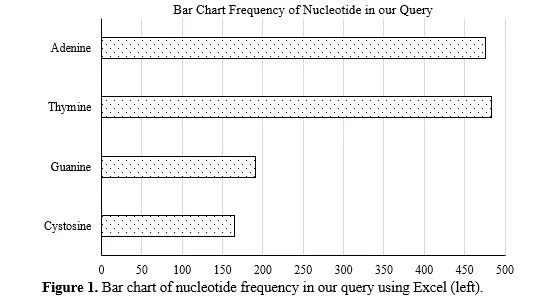
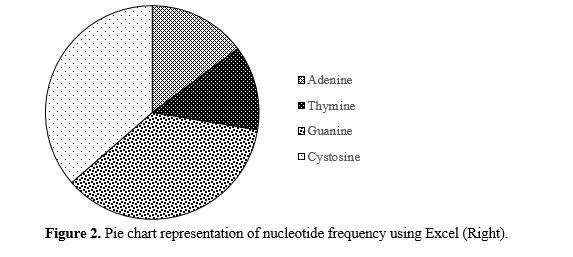
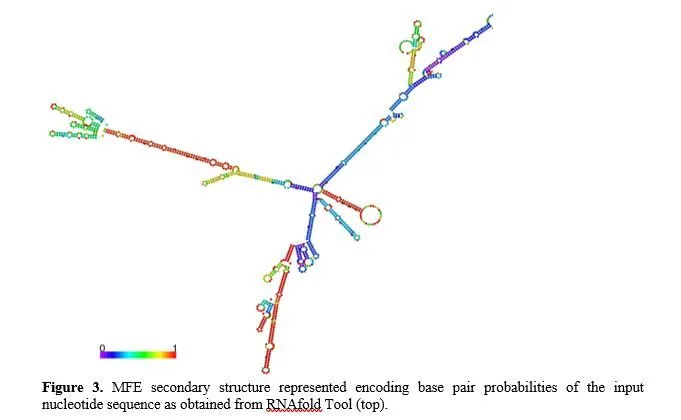
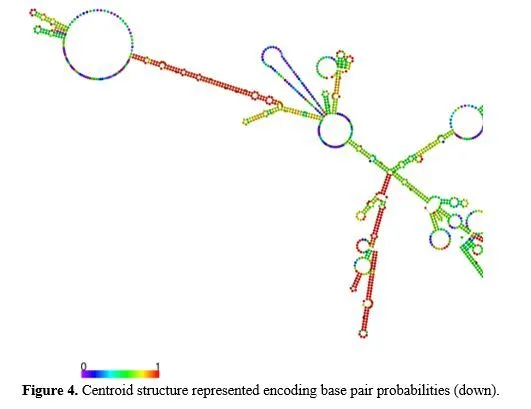
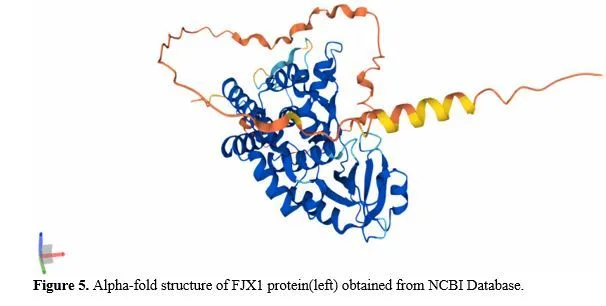
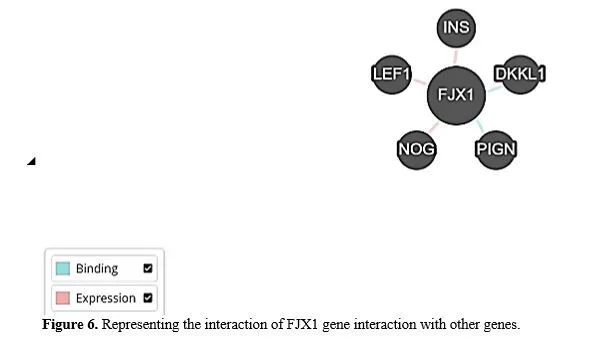
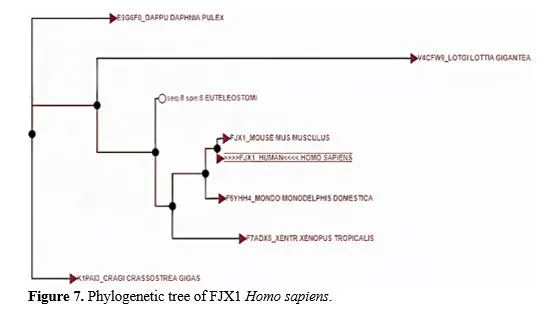
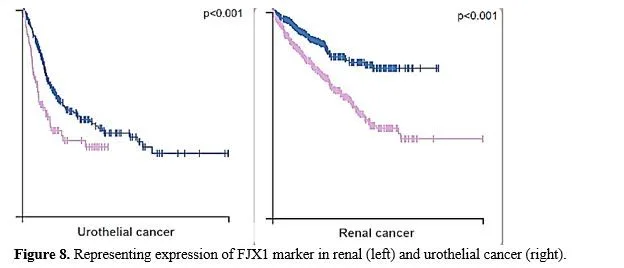
Objectives: Gene annotation helps us to deduce the structural and functional aspects of a gene that encodes for a functional protein in our body. Thus, by determining the coding sequence and gene location we can derive meaningful insights as to what these genes do in our body. In this study, an unknown gene, cancer vaccine for Homo sapiens has been studied and annotated. Methods: This study was based on a computational approach using various web interface tools to annotate an unknown gene taken from the NCBI Database. The chosen gene was structurally annotated using a GC% content calculator, visually represented using Microsoft Excel, Augustus for gene prediction, and RNAfold to determine the mRNA structure of the same gene. Functional annotation was done using BlastP, gene ontology was confirmed using the UniProt database, a phylogenetic tree was analyzed using HOGENOM database and TMHMM to visualize the transmembrane domain of the protein encoded by the gene, expression of the gene by Bgee, antibody analysis, subcellular localization, and functional analysis was accomplished using Human Protein Atlas, wolF PSORT and InterProScan respectively. Results: After completing the gene annotation, the cancer vaccine for Homo sapiens query was found to be 99.9% similar to four-jointed box protein 1 precursor [Homo sapiens] which exhibits low cancer tissue specificity and is mostly related to renal and urothelial cancer. Conclusion: The Cancer vaccine for Homo sapiens entry present in the NCBI Database, which had no annotation previously, was annotated structurally and functionally in this study. Now we can say this entry belongs to the gene coding for a four-box jointed protein-1 precursor protein which is useful for cancer diagnosis in the early stages and is related to poor prognosis of the disease. Often specific peptides are designed for FJX-1 protein which are beneficial in the treatment of cancers showing elevated expression of FJX1 proteins and are often used in the form of vaccines.
Keywords: Gene prediction, mRNA structure, cancer, vaccination, local sequence alignment, protein, transmembrane domain
[This article belongs to International Journal of Molecular Biotechnological Research ]
References
1. Moore JH, Williams SM. New strategies for identifying gene-gene interactions in hypertension. Ann Med. 2002;34(2):88–95. doi: 10.1080/07853890252953473. PMID: 12108579.
2. Mercer TR, Mattick JS. Understanding the regulatory and transcriptional complexity of the genome through structure. Genome Res. 2013;23(7):1081–8. doi: 10.1101/gr.156612.113. PMID: 23817049.
3. Puente XS, Sánchez LM, Gutiérrez-Fernández A, Velasco G, López-Otín C. A genomic view of the complexity of mammalian proteolytic systems. Biochem Soc Trans. 2005;33(Pt 2):331–4. doi: 10.1042/BST0330331. PMID: 15787599.
4. Pareek CS, Smoczynski R, Tretyn A. Sequencing technologies and genome sequencing. J Appl Genet. 2011;52(4):413–35. doi: 10.1007/s13353-011-0057-x. PMID: 21698376.
5. Ramsey J, Rasche H, Maughmer C, Criscione A, Mijalis E, Liu M, et al. Galaxy and Apollo as a biologist-friendly interface for high-quality cooperative phage genome annotation. PLoS Comput Biol. 2020;16(11):e1008214. doi: 10.1371/journal.pcbi.1008214. PMID: 33137082.
6. Afgan E, Baker D, Batut B, van den Beek M, Bouvier D, Čech M, et al. The Galaxy platform for accessible, reproducible and collaborative biomedical analyses: 2018 update. Nucleic Acids Res. 2018;46(W1):W537–44. doi: 10.1093/nar/gky379. PMID: 29790989.
7. Wang Z, Chen Y, Li Y. A brief review of computational gene prediction methods. Genomics Proteomics Bioinformatics. 2004;2(4):216–21. doi: 10.1016/s1672-0229(04)02028-5. PMID: 15901250.
8. Hoff KJ, Stanke M. Predicting genes in single genomes with AUGUSTUS. Curr Protoc Bioinformatics. 2019;65(1). doi: 10.1002/cpbi.57. PMID: 30466165.
9. Chan PP, Lowe TM. tRNAscan-SE: Searching for tRNA genes in genomic sequences. Methods Mol Biol. 2019;1962:1–14. doi: 10.1007/978-1-4939-9173-0_1.
10. Gruber AR, Lorenz R, Bernhart SH, Neuböck R, Hofacker IL. The Vienna RNA Websuite. Nucleic Acids Res. 2008;36:W70–4. doi: 10.1093/nar/gkn188. PMID: 18424795.
11. Oehmen C, Nieplocha J. ScalaBLAST: A scalable implementation of BLAST for high-performance data-intensive bioinformatics analysis. IEEE Trans Parallel Distrib Syst. 2006;17(8):740–9. doi: 10.1109/TPDS.2006.112.
12. Neumann RS, Kumar S, Shalchian-Tabrizi K. BLAST output visualization in the new sequencing era. Brief Bioinform. 2014;15(4):484–503. doi: 10.1093/bib/bbt009. PMID: 23603091.
13. Sussman JL, Lin D, Jiang J, Manning NO, Prilusky J, Ritter O, et al. Protein Data Bank (PDB): Database of three-dimensional structural information of biological macromolecules. Acta Crystallogr D Biol Crystallogr. 1998;54(Pt 6 Pt 1):1078–84. doi: 10.1107/s0907444998009378. PMID: 10089483.
14. UniProt Consortium. UniProt: A hub for protein information. Nucleic Acids Res. 2015;43(D1):D204–12. doi: 10.1093/nar/gku989. PMID: 25348405.
15. Jones P, Binns D, Chang HY, Fraser M, Li W, McAnulla C, et al. InterProScan 5: genome-scale protein function classification. Bioinformatics. 2014;30(9):1236–40. doi: 10.1093/bioinformatics/btu031. PMID: 24451626.
16. Magwanga RO, Lu P, Kirungu JN, Cai X, Zhou Z, Wang X, et al. Whole genome analysis of cyclin dependent kinase (CDK) gene family in cotton and functional evaluation of the role of CDKF4 gene in drought and salt stress tolerance in plants. Int J Mol Sci. 2018;19(9):2625. doi: 10.3390/ijms19092625. PMID: 30189594.
17. Krogh A, Larsson B, von Heijne G, Sonnhammer ELL. Predicting transmembrane protein topology with a hidden Markov model: Application to complete genomes. J Mol Biol. 2001;305(3):567–80. doi: 10.1006/jmbi.2000.4315.
18. Bastian FB, Roux J, Niknejad A, Comte A, Fonseca Costa SS, Mendes de Farias T, et al. The Bgee suite: integrated curated expression atlas and comparative transcriptomics in animals. Nucleic Acids Res. 2021 Jan 8;49(D1): D831–47. doi: 10.1093/nar/gkaa793.
19. Breitwieser FP, Lu J, Salzberg SL. A review of methods and databases for metagenomic classification and assembly. Brief Bioinform. 2019;20(4):1125–36. doi: 10.1093/bib/bbx120. PMID: 29028872.
20. Pontén F, Jirström K, Uhlen M. The Human Protein Atlas—A tool for pathology. J Pathol. 2008;216(4):387–93. doi: 10.1002/path.2440. PMID: 18853439.
21. Chai SJ, Ahmad Zabidi MM, Gan SP, Rajadurai P, Lim PVH, Ng CC, et al. An oncogenic role for four-jointed Box 1 (FJX1) in nasopharyngeal carcinoma. Dis Markers. 2019;2019:3857853. doi: 10.1155/2019/3857853. PMID: 31236144.
22. Salzberg SL. Next-generation genome annotation: We still struggle to get it right. Genome Biol. 2019;20(1):92. doi: 10.1186/s13059-019-1715-2. PMID: 31097009.

| Volume | 02 | |
| Issue | 01 | |
| Received | 19/04/2024 | |
| Accepted | 01/05/2024 | |
| Published | 20/08/2024 | |
| Publication Time | 123 Days |