
Amulya Rao T,
- Research Intern, Department of Bioinformatics, BioNome, Bengaluru, Karnatka, India
Abstract
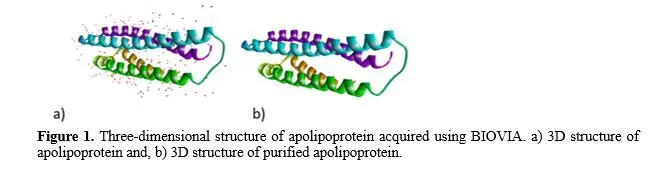
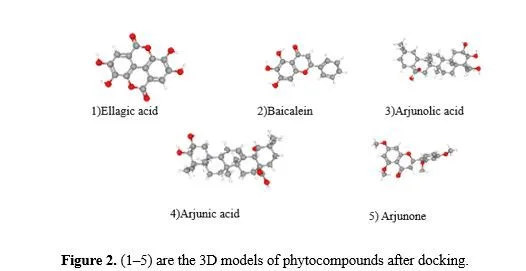
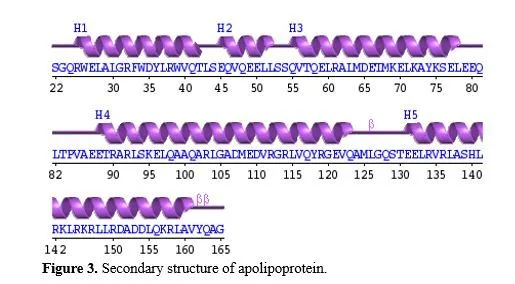
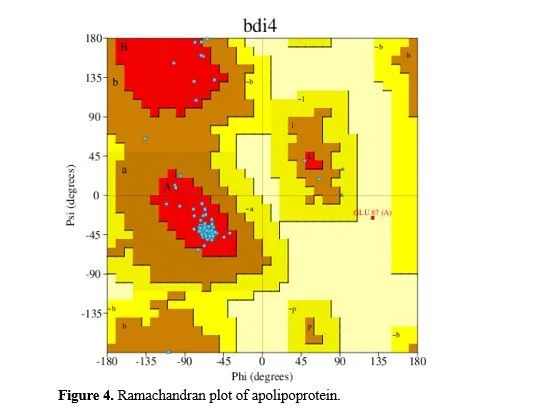
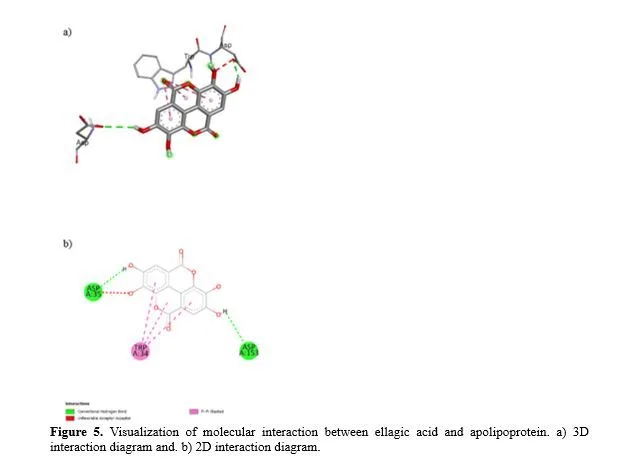
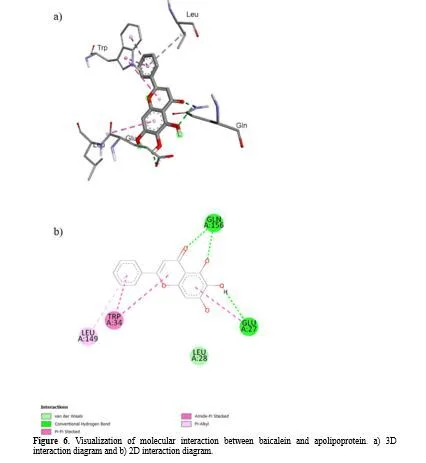
Heart disease is a serious condition that can be caused by several lifestyle changes and sometimes genetic problems. The primary protein component of apolipoprotein is the LDL receptor, which indicates that a reduction in LDL levels can reduce the risk of ischemic heart disease. Apolipoprotein levels are associated with increased levels of ischemic heart disease. Using ADMET analysis, drug likelihood prediction, and molecular docking, this work attempted to find natural chemicals from Terminalia arjuna (T. arjuna) that have several medicinal uses in Indian Ayurveda to prevent disease. The PDB database provided the 3D structure of the apolipoprotein, while the PubChem database provided 2D SDF format for the phytocompounds from T. arjuna. The Pyrx tool was used to analyse and remove the ligands with low binding affinity and was used for docking. BIOVIA Visualizer was used for visualization. The statistical distribution of the combinations of the protein’s backbone dihedral angles ϕ and ψ is displayed via Ramachandran plot analysis. Five chemicals from T. arjuna have been identified by molecular docking experiments as having the capacity to attach to the apolipoprotein. Five compounds were found to have drug-like qualities based on the ADMET profile and drug likeness prediction. According to the current study, two chemicals have distinct binding affinities and may be employed as ischemic heart disease therapeutic strategies.
Keywords: Apolipoprotein, CHD, Terminalia arjuna, ADMET, molecular docking, Pyrx tool
[This article belongs to International Journal of Bioinformatics and Computational Biology ]
References
- Institute of Medicine (US) Committee on Social Security Cardiovascular Disability Criteria. Cardiovascular Disability: Updating the Social Security Listings. Washington (DC): National Academies Press (US); 2010.
- Rasmussen KL. Plasma levels of apolipoprotein E, APOE genotype and risk of dementia and ischemic heart disease: A review. Atherosclerosis. 2016;255:145–155. doi: 10.1016/j.atherosclerosis.2016.10.037.
- Tybjaerg-Hansen A, Steffensen R, Meinertz H, Schnohr P, Nordestgaard BG. Association of mutations in the apolipoprotein B gene with hypercholesterolemia and the risk of ischemic heart disease. N Engl J Med. 1998;338(22):1577–1584. doi: 10.1056/NEJM199805283382203.
- Rasmussen KL, Tybjærg-Hansen A, Nordestgaard BG, Frikke-Schmidt R. Plasma levels of apolipoprotein E and risk of ischemic heart disease in the general population. Atherosclerosis. 2016;246:63–70. doi: 10.1016/j.atherosclerosis.2015.12.038.
- Amalraj A, Gopi S. Medicinal properties of Terminalia arjuna (Roxb.) Wight & Arn.: A review. J Tradit Complement Med. 2016;7(1):65–78. doi: 10.1016/j.jtcme.2016.02.003.
- Mahley RW, Rall Jr SC. Type III hyperlipoproteinemia (dysbetalipoproteinemia): The role of apolipoprotein E in normal and abnormal lipoprotein metabolism. In: Scriver CR, Beaudet AL, Sly WS, Valle D, editors. The Metabolic and Molecular Bases of Inherited Disease. Eighth ed. New York: McGraw-Hill; 2001. pp. 2835–e2862.
- Huang Y, Mahley RW. Apolipoprotein E: Structure and function in lipid metabolism, neurobiology, and Alzheimer’s diseases. Neurobiol Dis. 2014;72 Pt A:3–12. doi: 10.1016/j.nbd.2014.08.025
- Subramaniam S, Subramaniam R, Rajapandian S, Uthrapathi S, Gnanamanickam VR, Dubey GP. Anti- atherogenic activity of ethanolic fraction of Terminalia Arjuna bark on hypercholesterolemic rabbits. Evid Based Complement Alternat Med. 2011;2011:487916. doi: 10.1093/ecam/neq003.
- Dwivedi S, Chopra D. Revisiting Terminalia arjuna – An ancient cardiovascular drug. J Tradit Complement Med. 2014;4(4):224–231.
- Wanarase S, Chavan S, Sharma S. A molecular docking study: Targeting COVID-19 (SARS-COV-2) main protease using active phytocompounds from Terminalia Arjuna. Inn J Med Sci. 2022;10(5):9–14. doi: 10.22159/ijms.2022.v10i5.46122.
- View of computational analysis of phytocompounds present in leucas aspera to target Parkinson’s disease-causing alpha-synuclein. Innovareacademics.in. 2025.
- Mohanraj K, Karthikeyan BS, Vivek-Ananth RP, Chand RPB, Aparna SR, Mangalapandi P, et al. IMPPAT: A curated database of Indian medicinal plants, phytochemistry and therapeutics. Sci Rep. 2018;8(1):4329. doi: 10.1038/s41598-018-22631-z.
- McConkey BJ, Sobolev V, Edelman M. The performance of current methods in ligand-protein docking. Curr Sci. 2002;83(7).
- Mittal L, Kumari A, Srivastava M, Singh M, Asthana S. Identification of potential molecules against COVID-19 main protease through structure-guided virtual screening approach. J Biomol Struct Dyn. 2021;39(10):3662–3680. doi: 10.1080/07391102.2020.1768151.
- Wikipedia Contributors. ADME. Wikipedia, The Free Encyclopedia. Available at https://en.wikipedia.org/w/index. php?title=ADME&oldid=1087865915 [Accessed on August, 2022.].
- Al Azzam KM, Negim ES, Aboul-Enein HY. ADME studies of TUG-770 (a GPR-40 inhibitor agonist) for the treatment of type 2 diabetes using SwissADME predictor: In silico study. J Appl Pharm Sci, 2022;12(04):159–169.
- O’Boyle NM, Banck M, James CA, et al. Open Babel: An open chemical toolbox. J Cheminform. 2011;3:33. doi: 10.1186/1758-2946-3-33.
- Biovia, D.S. (2015) Discovery Studio Modeling Environment. Dassault Syst. Release, San Diego, 4. – References – Scientific Research Publishing Scirp.org. 2015
- Story CM. The History of Heart Disease Healthline. Healthline Media; 2018 [cited 2025 Jan 21]. Available at https://www.healthline.com/health/heart-disease/history
- Xu M, Zhao J, Zhang Y, Ma X, Dai Q, Zhi H, et al. Apolipoprotein E gene variants and risk of coronary heart disease: A meta-analysis. Biomed Res Int. 2016;2016:3912175. doi: 10.1155/2016/3912175.
- TERMINALIA ARJUNA: Overview, Uses, Side Effects, Precautions, Interactions, Dosing and Reviews. Webmd.com. 2017 [cited 2025 Jan 21]. Available at https://www.webmd.com/vitamins/ai/ingredientmono-811/terminalia-arjuna

| Volume | 03 | |
| Issue | 01 | |
| Received | 27/12/2024 | |
| Accepted | 20/01/2025 | |
| Published | 30/01/2025 | |
| Publication Time | 34 Days |