
Vignesh Gopinath,
- Student, Department of Bioinformatics, Bangalore City University, Bengaluru, Karnataka, India
Abstract
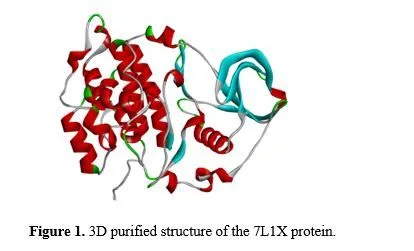
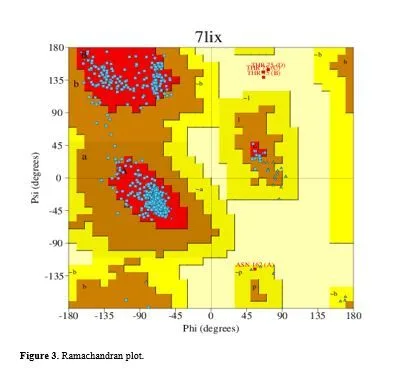
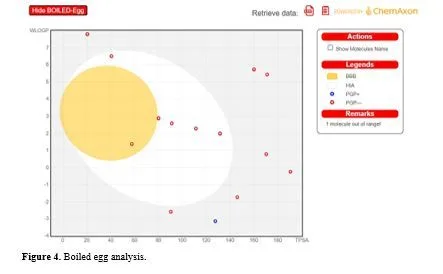
Objectives: Triple-negative breast cancer is a very dangerous form of cancer that affects mostly Hispanic and African American women above the age of 40. It represents approximately 15–20% of the global cancer incidence. This experiment aims to investigate the use of Gingko biloba in the treatment of the disease triple-negative breast cancer. Methods: We use a variety of online tools, and websites, including the Indian Medicinal Plants, Phytochemistry, and Therapeutics database, to extract the phytochemical compounds, the PubChem website to obtain the canonical SMILES, and the 2-D format is used to download the SDF files, the protein database website to download the protein files in protein database format, the Ramachandran’s Plot. This way, we can visualize that in Discovery Studio BIOVIA app. Then, the Swiss ADME website is used to find which compounds satisfy Lipinski’s rule, and the other conditions. Result: The results showed that the compounds Afzelin, D-Glucuronic acid, Gingketin, Acacetin, Quercetin, Isoginkgetin, and Genkwanin satisfy all the criteria, and could be further used in the treatment of TNBC. Conclusion: The observations suggest that the below-mentioned phytochemical compounds: Afzelin, D-Glucuronic acid, Gingketin, Acacetin, Quercetin, Isoginkgetin, and Genkwanin seem to satisfy all the conditions for it to be used in the ADME testing and analysis and can be used in the treatment of TNBC.
Keywords: Triple-negative breast cancer (TNBC), breast cancer gene-1 (BRCA), CK2 alpha kinase, Ginkgo biloba, Ramachandran’s Plot
[This article belongs to International Journal of Bioinformatics and Computational Biology ]
References
- Aysola K, Desai A, Welch C, Xu J, Qin Y, Reddy V, et al. Triple negative breast cancer–an overview. Heredit Gen Curr Res. 2013;2013(Suppl 2):001.
- Pal SK, Childs BH, Pegram M. Triple negative breast cancer: unmet medical needs. Breast Cancer Res Treat. 2011;125:627–36.
- Yadav BS, Sharma SC, Chanana P, Jhamb S. Systemic treatment strategies for triple-negative breast cancer. World J Clin Oncol. 2014;5(2):125.
- Carey L, Winer E, Viale G, Cameron D, Gianni L. Triple-negative breast cancer: disease entity or title of convenience? Nat Rev Clin Oncol. 2010;7(12):683–92.
- Sharma P. Biology and management of patients with triple-negative breast cancer. The oncologist. 2016;21(9):1050–62.
- Jia LY, Shanmugam MK, Sethi G, Bishayee A. Potential role of targeted therapies in the treatment of triple-negative breast cancer. Anti Canc Drug. 2016;27(3):147–55.
- Guney Eskiler G, Cecener G, Egeli U, Tunca B. Triple negative breast cancer: new therapeutic approaches and BRCA status. Apmis. 2018;126(5):371–9.
- Cleator S, Heller W, Coombes RC. Triple-negative breast cancer: therapeutic options. Lancet Oncol. 2007;8(3):235–44.
- Rakha EA, Chan S. Metastatic triple-negative breast cancer. Clin Oncol. 2011;23(9):587–600.
- Bianchini G, Balko JM, Mayer IA, Sanders ME, Gianni L. Triple-negative breast cancer: challenges and opportunities of a heterogeneous disease. Nat Rev Clin Oncol. 2016;13(11):674–90.
- Kren BT, Unger GM, Abedin MJ, Vogel RI, Henzler CM, Ahmed K, et al. Preclinical evaluation of cyclin dependent kinase 11 and casein kinase 2 survival kinases as RNA interference targets for triple negative breast cancer therapy. Breast Cancer Res. 2015;17:1–21.
- Morelos-Garnica LA, Guzmán-Velázquez S, Padilla-Martínez II, García-Sánchez JR, Bello M, Bakalara N, et al. In silico design and cell-based evaluation of two dual anti breast cancer compounds targeting Bcl-2 and GPER. Sci Rep. 2023;13(1):17933.
- Chen X, Wu Q, Tan L. The potential anticancer effect of Ginkgo biloba extract: a review of the literature. J Cancer Res Therap. 2020;16(5):987–993. doi:10.4103/jcrt.JCRT_342_19.
- Kim HJ, Lee JW, Kim DI. Molecular and bioinformatics approaches in exploring the therapeutic potential of Ginkgo biloba in breast cancer. Phytomedicine. 2022;100:154059. doi:10.1016/j.phymed.2021.154059.
- Shoaib TH, Ibraheem W, Abdelrahman M, Osman W, Sherif AE, Ashour A, et al. Exploring the potential of approved drugs for triple-negative breast cancer treatment by targeting casein kinase 2: insights from computational studies. PLoS One. 2023;18(8):e0289887.
- Anderson RJ, Weng Z, Campbell RK, Jiang X. Main‐chain conformational tendencies of amino acids. Prot Struct Funct Bioinform. 2005;60(4):679–89.
- Gopalakrishnan K, Sowmiya G, Sheik SS, Sekar K. Ramachandran plot on the web (2.0). Prot Pept Lett. 2007;14(7):669–71.
- Almansour NM. Triple-negative breast cancer: a brief review about epidemiology, risk factors, signaling pathways, treatment and role of artificial intelligence. Front Mol Biosci. 2022;9:836417.
- Ho BK, Brasseur R. The Ramachandran plots of glycine and pre-proline. BMC Struct Biol. 2005;5:1–1.

| Volume | 02 | |
| Issue | 02 | |
| Received | 02/06/2024 | |
| Accepted | 12/11/2024 | |
| Published | 28/12/2024 | |
| Publication Time | Days |