
Arvind Rehalia,
Kajal Kaul*,
Anil Kumar Bhardwaj,
Surinder Kaur,
Rohit Chawla,
- Associate Professor, Department of Information Technology, Bharati Vidyapeeth’s College of Engineering, New Delhi, India
- Assistant Professor, Department of Information Technology, Bharati Vidyapeeth’s College of Engineering, New Delhi, India
- Associate Professor, School of Electronics and Communication Engineering, Shri Mata Vaishno Devi University, Katra, Jammu & Kashmir, India
- Associate Professor, Department of Information Technology, Bharati Vidyapeeth’s College of Engineering, New Delhi, India
- Research Scholar, Sophisticated Analytical Instrumentation Facility (SAIF), Central Instrumentation Laboratory (CIL) and University Centre for Instrumentation and Microelectronics (UCIM), Punjab University, Chandigarh, Punjab, India
Abstract
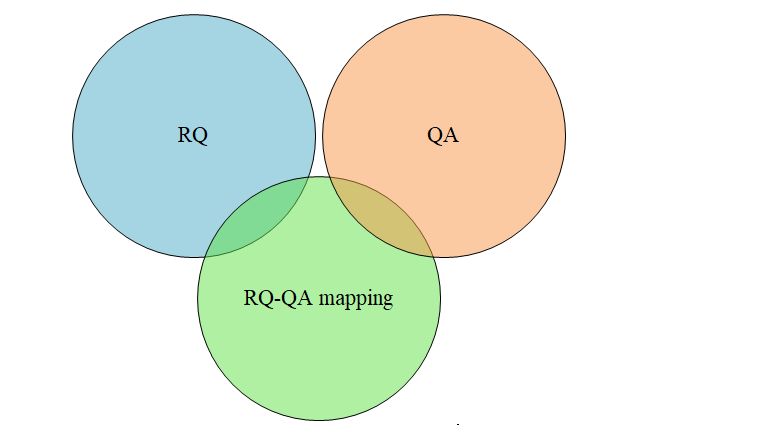
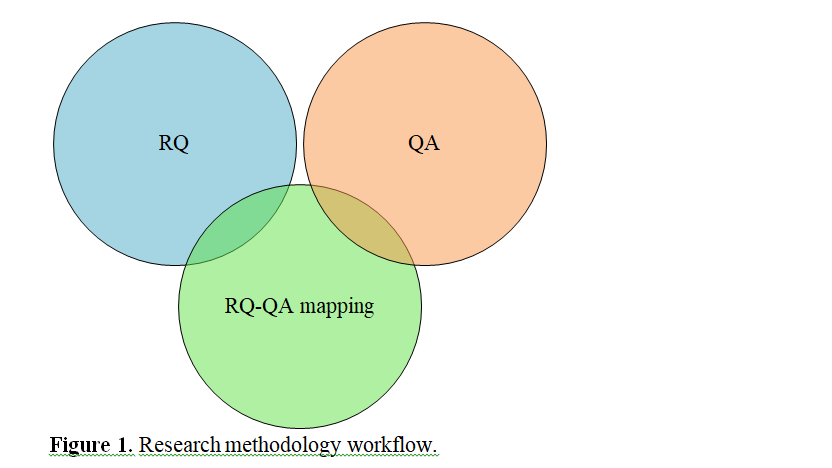
In this paper, 50 papers were reviewed to analyse the design, techniques, and applications of polymer composite systems for delivering agrochemicals against major tuberous plant pathogens, including fungi, bacteria, and nematodes. Primary tuber plant pathogens affecting yield are studied, followed by a study of control strategies. This is followed by a study of the basic properties of polymer composites, including the significance of natural and synthetic polymers. Then, the study of fillers to control the release of agrochemicals, such as fungicides, bactericides, nematicides, and biocontrol agents, is conducted. Various formulation types and strategies, such as nanoparticles, hydrogels, and seed coatings, are presented. The major tuberous plant pathogens and limitations of conventional control methods were reviewed, and polymer-based composite systems for agrochemical release were discussed throughout the paper, with examples of polymer composite formulations for pathogen control. The paper also discusses about how spatial variations in microstructural gradients such as matrix porosity and filler density help agricultural delivery performance. The research strategy is such that the mapping of Research questions to their Quality Assessment attributes was done. Also, the mapping solutions were mapped along in tabular form. Additionally, for each research paper, the core technology and Research focus area were also mapped.
Keywords: Polymer Composites, Agrochemicals, Fillers, Plant Pathogens.
[This article belongs to Special Issue under section in Journal of Polymer & Composites (jopc)]
References
1. Alan A. Recent developments of safer formulations of agrochemicals. Environmentalist. 2008;28:35–44.
2. Carvalho FP. Pesticides, environment, and food safety. Food Energy Secur. 2017;6:48–60. doi:10.1002/fes3.108.
3. de Gomes OH, et al. A socio-environmental perspective on pesticide use and food production. Ecotoxicol Environ Saf. 2020;197:110627. doi:10.1016/j.ecoenv.2020.110627.
4. Campos EVR, de Oliveira JL, Fraceto LF. Applications of controlled release systems for fungicides, herbicides, acaricides, nutrients, and plant growth hormones: A review. Adv Sci Eng Med. 2014;6:373–387. doi:10.1166/asem.2014.1538.
5. Qaiss A, Bouhfi R, Essabir H. Characterization and use of coir, almaund, apricot, argan, shell, and wood as reinforcement in the polymeric matrix in order to valorize these products. In: Hakeem RH, Jawaid M, Alothman OY, editors. Agricultural Biomass Based Potential Materials. Cham: Springer; 2015. p. 305–339.
6. Singh A, et al. Advances in controlled release pesticide formulations: Prospects to safer integrated pest management and sustainable agriculture. J Hazard Mater. 2020;385:121525. doi:10.1016/j.jhazmat.2019.121525.
7. Li N, et al. Advances in controlled-release pesticide formulations with improved efficacy and targetability. J Agric Food Chem. 2021;69:12579–12597. doi:10.1021/acs.jafc.0c05431.
8. Chevillard A, Angellier-Coussy H, Guillard V, Gontard N, Gastaldi E. Controlling pesticide release via structuring agropolymer and nanoclays based materials. J Hazard Mater. 2012;205-206:32–39. doi:10.1016/j.jhazmat.2011.11.093.
9. Neri-Badang MC, Chakraborty S. Carbohydrate polymers as controlled release devices for pesticides. J Carbohydr Chem. 2019;38:67-85. doi:10.1080/07328303.2019.1568449.
10. Luengo JM. Bioplastics from microorganisms. Curr Opin Microbiol. 2003;6:251–260. doi:10.1016/S1369-5274(03)00040-7.
11. Koller M, Maršálek L, de Sousa Dias MM, Braunegg G. Producing microbial polyhydroxyalkanoate (PHA) biopolyesters in a sustainable manner. New Biotechnol. 2017;37:24–38. doi:10.1016/j.nbt.2016.05.001.
12. Shahid S, Razzaq S, Farooq R, Nazli ZH. Polyhydroxyalkanoates: Next generation natural biomolecules and a solution for the world’s future economy. Int J Biol Macromol. 2021;166:297–321. doi:10.1016/j.ijbiomac.2020.10.187.
13. Chen GQ. Plastics completely synthesized by bacteria: Polyhydroxyalkanoates. In: Plastics from Bacteria: Natural Functions and Applications. Berlin: Springer; 2010. p. 17–37.
14. Sudesh K, Abe H. Practical Guide to Microbial Polyhydroxyalkanoates. 1st ed. Shrewsbury: iSmithers Rapra Publishing; 2010.
15. Laycock B, Halley P, Pratt S, Werker A, Lant P. The chemomechanical properties of microbial polyhydroxyalkanoates. Prog Polym Sci. 2013;38:536–583. doi:10.1016/j.progpolymsci.2012.06.003.
16. Volova TG, Shishatskaya EI, Sinskey AJ. Degradable Polymers: Production, Properties, Applications. New York: Nova Science Publishers; 2013.
17. Chen GQ, Chen XY, Wu FQ, Chen JC. Polyhydroxyalkanoates (PHA) toward cost competitiveness and functionality. Adv Ind Eng Polym Res. 2020;3:1–7. doi:10.1016/j.aiepr.2019.11.001.
18. Tarrahi R, et al. Polyhydroxyalkanoates (PHA): From production to nanoarchitecture. Int J Biol Macromol. 2020;146:596-619. doi:10.1016/j.ijbiomac.2019.12.181.
19. Israni N, Shivakumar S. Polyhydroxyalkanoates in packaging. In: Kalia VC, editor. Biotechnological Applications of Polyhydroxyalkanoates. Singapore: Springer Nature; 2019. p. 363–388.
20. Koller M, Mukherjee A. Polyhydroxyalkanoates–linking properties, applications, and end-of-life options. Chem Biochem Eng Q. 2020;34:115–129. doi:10.15255/CABEQ.2020.1819.
21. Research and Markets. Polyhydroxyalkanoate (PHA) Market by Type, Manufacturing Technology and Application. Global Forecast to 2021. Dublin: Research and Markets; 2017.
22. Adeleye AT, et al. Sustainable synthesis and applications of polyhydroxyalkanoates (PHAs) from biomass. Process Biochem. 2020;96:174–193. doi:10.1016/j.procbio.2020.05.032.
23. Elmowafy E, et al. Polyhydroxyalkanoate (PHA): Applications in drug delivery and tissue engineering. Expert Rev Med Devices. 2019;16:467–482. doi:10.1080/17434440.2019.1615439.
24. Jiang G, et al. Carbon sources for polyhydroxyalkanoates and an integrated biorefinery. Int J Mol Sci. 2016;17:1157. doi:10.3390/ijms17071157.
25. Maiti P, Batt CA, Giannelis EP. Renewable plastics: Synthesis and properties of PHB nanocomposites. Polym Mater Sci Eng. 2003;88:58–59.
26. Torres-Giner S, Montanes N, Boronat T, Quiles-Carrillo L, Balart B. Melt grafting of sepiolite nanoclay onto poly(3-hydroxybutyrate-co-4-hydroxybutyrate) by reactive extrusion with multi-functional epoxy-based styrene-acrylic oligomer. Eur Polym J. 2016;84:693–707. doi:10.1016/j.eurpolymj.2016.09.057.
27. Macedo JS, Costa MF, Travares MIB, Thirè RMSM. Preparation and characterization of composites based on polyhydroxybutyrate and waste powder from coconut fibers processing. Polym Eng Sci. 2010;50:1466-1475. doi:10.1002/pen.21669.
28. Gunning MA, Geever LM, Killion JA, Lyons JG, Higginbotham CL. Mechanical and biodegradation performance of short natural fibre polyhydroxybutyrate composites. Polym Test. 2013;32:1603–1611. doi:10.1016/j.polymertesting.2013.10.011.
29. Angelini S, Cerruti P, Immirzi B, Scarinzi G, Malinconico M. Acid-insoluble lignin and holocellulose from a lignocellulosic biowaste: Bio-fillers in poly(3-hydroxybutyrate). Eur Polym J. 2016;76:63–76. doi:10.1016/j.eurpolymj.2016.01.024.
30. Iewkittayakorn J, Khunthongkaew P, Chotigeat W, Sudesh K. Effect of microwave pretreatment on the properties of particleboard made from para rubber wood sawdust with the addition of polyhydroxyalkanoates. Sains Malays. 2017;46:1361–1367. doi:10.17576/jsm-2017-4609-02.
31. Vandi LJ, Chan CM, Werker A, Richardson D, Laycock B, Pratt S. Wood-PHA composites: Mapping opportunities. Polymers. 2018;10:751. doi:10.3390/polym10070751.
32. Melendez-Rodriguez B, Torres-Giner S, Aldureid A, Cabedo L, Lagaron JM. Reactive melt mixing of poly(3-hydroxybutyrate)/rice husk flour composites with purified biosustainably produced poly(3-hydroxybutyrate-co-3-hydroxyvalerate). Materials. 2019;12:2152. doi:10.3390/ma12132152.
33. Chen GQ. Polyhydroxyalkanoates. In: Smith R, editor. Biodegradable Polymers for Industrial Applications. Cambridge: CRC Press; 2005. p. 32–56.
34. Satyanarayana KG, Arizaga GGC, Wypych F. Biodegradable composites based on lignocellulosic fibers—An overview. Prog Polym Sci. 2009;34:982-1021. doi:10.1016/j.progpolymsci.2008.12.002.
35. Thompson DN, et al. Development of Renewable Microbial Polyesters for Cost Effective and Energy-Efficient Wood-Plastic Composites. Idaho Falls (ID): Idaho National Laboratory; 2010.
36. Gregorova A, Wimmer R, Hrabalova M, Koller M, Ters T, Mundigler N. Effect of surface modification of beech wood flour on mechanical and thermal properties of poly(3-hydroxybutyrate)/wood flour composites. Holzforschung. 2009;63:565–570. doi:10.1515/HF.2009.098.
37. Srubar WV, et al. Mechanisms and impact of fiber-matrix compatibilization techniques on the material characterization of PHBV/oak wood flour engineered biobased composites. Compos Sci Technol. 2012;72:708–715. doi:10.1016/j.compscitech.2012.01.021.
38. Chan CM, et al. Mechanical and physical stability of polyhydroxyalkanoate (PHA)-based wood plastic composites under natural weathering. Polym Test. 2019;73:214–221. doi:10.1016/j.polymertesting.2018.11.028.
39. Chan CM, et al. Understanding the effect of copolymer content on the processability and mechanical properties of polyhydroxyalkanoate (PHA)/wood composites. Compos Part A Appl Sci Manuf. 2019;214:105437. doi:10.1016/j.compositesa.2019.05.005.
40. Chan CM, et al. Insights into the biodegradation of PHA/wood composites: Micro- and macroscopic changes. Sustain Mater Technol. 2019;21:e00099. doi:10.1016/j.susmat.2019.e00099.
41. Bugnicourt E, Cinelli P, Lazzeri A, Alvarez V. Polyhydroxyalkanoate (PHA): Review of synthesis, characteristics, processing and potential applications in packaging. Express Polym Lett. 2014;8:791–808. doi:10.3144/expresspolymlett.2014.82.
42. Muizniece-Brasava S, Dukalska L. Impact of biodegradable PHB packaging composite materials on dairy product quality. LLU Raksti. 2006;16:79–87.
43. Keshavarz T, Roy I. Polyhydroxyalkanoates: Bioplastics with a green agenda. Curr Opin Microbiol. 2010;13:321–326. doi:10.1016/j.mib.2010.02.006.
44. Kanekar PP, et al. Microbial biodegradable polymer having potential application in packaging. In: Proceedings of the 1st Indo-US International Conference on Polymers for Packaging Applications; 2012; Kottayam, India.
45. Arrieta MP, López J, Hernández A, Rayón E. Ternary PLA-PHB-limonene blends intended for biodegradable food packaging applications. Eur Polym J. 2014;50:255–270. doi:10.1016/j.eurpolymj.2013.11.009.
46. Popović SZ, Lazić VL, Hromiš NM, Šuput DZ, Bulut SN. Biopolymer packaging materials for food shelf-life prolongation. In: Grumezescu AM, Holban AM, editors. Biopolymers for Food Design. London: Academic Press; 2018. p. 223-277.
47. Kalia VC, Patel SKS, Shanmugam R, Lee JK. Polyhydroxyalkanoates: Trends and advances toward biotechnological applications. Bioresour Technol. 2021;326:124737. doi:10.1016/j.biortech.2021.124737.
48. Poltronieri P, Kumar P. Polyhydroxyalkanoates (PHAs) in industrial applications. In: Martínez LMT, Kharissova OV, Kharisov BI, editors. Handbook of Ecomaterials. Cham: Springer; 2019. p. 2843–2872.
49. Tleuova AB, et al. Recent advances and remaining barriers to producing novel formulations of fungicides for safe and sustainable agriculture. J Control Release. 2020;326:468–481. doi:10.1016/j.jconrel.2020.07.035.
50. Dhananjayan V, Jayakumar S, Ravichandran B. Conventional methods of pesticide application in agricultural field and fate of the pesticides in the environment and human health. In: Rakhimol KR, Thomas S, Volova T, Jayachandran K, editors. Controlled Release of Pesticides for Sustainable Agriculture. Cham: Springer; 2020. p. 1–39.

Journal of Polymer & Composites
| Volume | 14 | |
| Special Issue | 03 | |
| Received | 15/04/2026 | |
| Accepted | 12/05/2026 | |
| Published | 12/06/2026 | |
| Publication Time | 58 Days |