
Vineet Singh,
Vibha Rani,
Ashwani Mathur,
- Ph.D. Scholar, Department of Biotechnology, Jaypee Institute of Information Technology, A-10, Sector-62, Noida-201309, Uttar Pradesh, India
- Professor, Department of Biotechnology, Jaypee Institute of Information Technology, Noida, Uttar Pradesh, India
- Professor, Department of Biotechnology, Jaypee Institute of Information Technology, Noida, Uttar Pradesh, India
Abstract
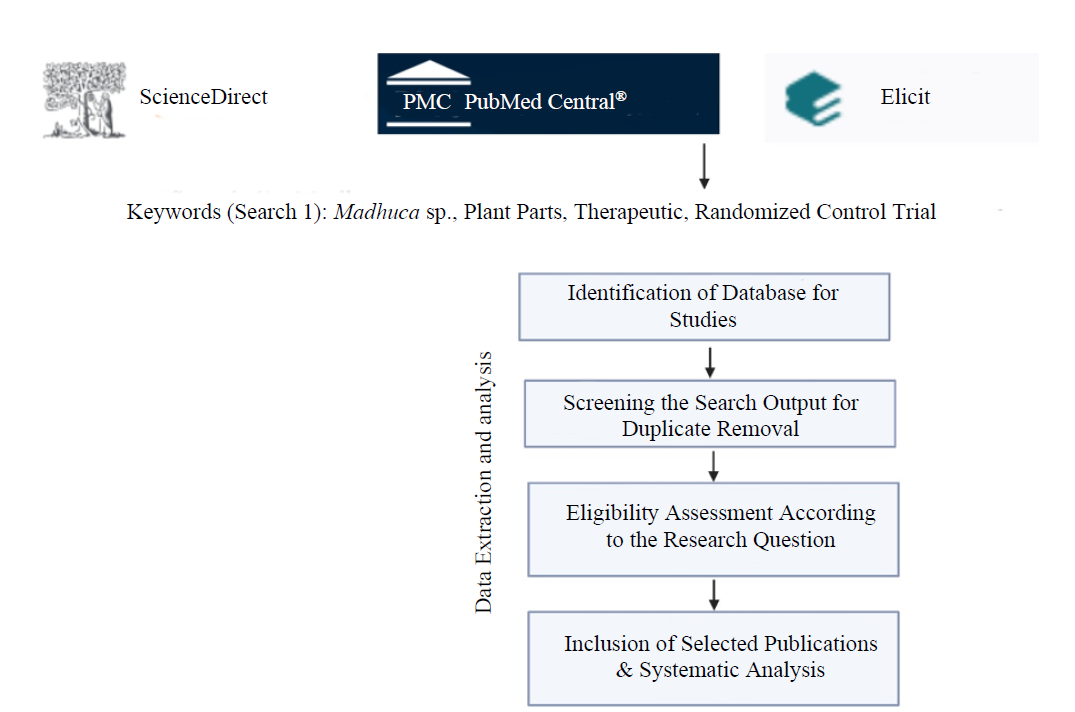
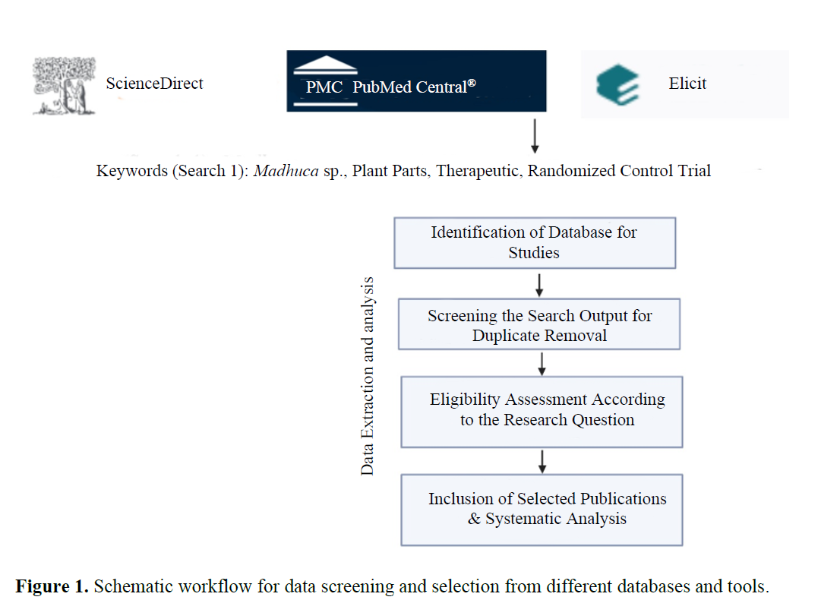
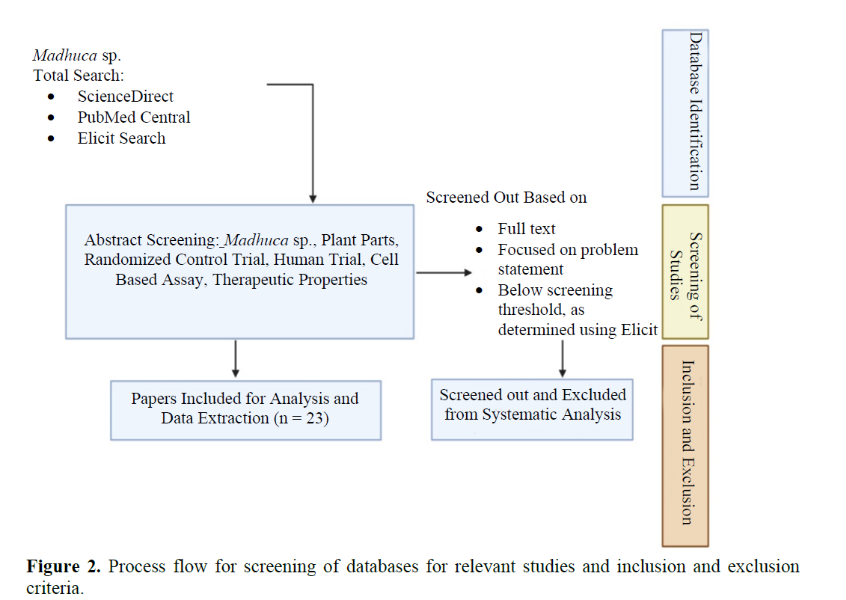
Madhuca sp., a perennial tree belonging to the Sapotaceae family, is widely distributed across South and Southeast Asia. It holds considerable value across the food, beverage, and pharmaceutical sectors. The growing interest among cultivators, agronomists, and industry stakeholders stems from the diverse bioactive potential documented across different parts of the plant, including the bark, leaves, seeds, and flowers. Traditional and emerging evidence points to a wide spectrum of pharmacological actions, ranging from antioxidant and antimicrobial effects to anticancer, hepatoprotective, nephroprotective, and neuroprotective properties, positioning the plant as a promising, low-toxicity alternative to synthetic drugs, many of which are limited by adverse effects or the development of resistance. This review consolidates and critically evaluates the existing body of research on the pharmacological properties associated with the various plant parts of Madhuca sp. A structured literature search was conducted through ScienceDirect, PubMed, and the Elicit research tool, initially identifying over a thousand potentially relevant publications. Screening followed the PRISMA framework, with most records excluded based on poor topical relevance or unavailability of full text, ultimately narrowing the pool to twenty-three studies that met the inclusion criteria for detailed analysis. The synthesis reveals part-specific pharmacological trends: bark extracts show the strongest anticancer and antioxidant activity linked to high flavonoid and tannin content; leaves display the broadest range of biological effects, including neuroprotection and antidepressant-like activity; seeds and seed oil are primarily protective against liver and kidney damage, though they also carry the greatest toxicity risk among the plant parts; and flowers exhibit moderate antioxidant, anti-inflammatory, and antimicrobial activity. Notably, all available evidence originates from preclinical, animal, or in vitro models, with no clinical trials conducted in humans to date, underscoring a critical gap that future research should address before therapeutic translation can be considered.
Keywords: Antioxidant activity, antimicrobial activity, plant extraction, anticancer activity, neuroprotection
[This article belongs to Research & Reviews : Journal of Botany ]
References
- Barycka A, Środa-Pomianek K, Gleńsk M, Rajbhandari M, Skonieczna M, Palko-Łabuz A, Wesołowska O. Madhuca longifolia bark extract as an adjunct to the treatment of colon carcinoma cells with SN-38: a synergistic combination with potent activity. Frontiers in Pharmacology. 2026 May 12;17:1804862.
- Dhoubhadel KM, Bom S, Pokherel K, Rajbhandari M. Antimicrobial, Antioxidant Activities, Phytochemical Evaluation and GC-MS Profiling of Madhuca longifolia Bark Extracts. Amrit Research Journal. 2023 Dec 31;4(1):11-20.
- Yadav S, Sharma M, Ganesh N, Srivastava S, Srivastava MM. Bioactive principle loaded gold nanoparticles as potent anti-melanoma agent: green synthesis, characterization, and in vitro bioefficacy. Asian J Green Chem. 2019;3:492-507.
- Khare, Pragati, and Noopur Khare. “Memory Enhancing Activity of Madhuca Longifolia Ethanolic Leaf Extract (Flavonoid Fraction) and its HPTLC”. International Journal of Current Pharmaceutical Research, vol. 15, no. 2, Mar. 2023, pp. 51-58, doi:10.22159/ijcpr.2023v15i2.2097.
- Ande S. Neuroprotective effects of Madhuca longifolia leaf extract and voglibose in a rotenone-induced rat model of Parkinson’s disease. Innovations Pharm Planet. 2025;13(4):10-16. Available from: https://innovationaljournals.com/index.php/ip/article/view/1108
- Simona, J.P., Saravanana, S.K., Sathiyanarayanana, J., Vidyab, R., Kumaric, U. and Princea, S.E., 2020. Pre-treatment effects against the diclofenac-induced toxicity by the aqueous leaf extract of Madhuca longifolia on female Wistar albino rats for 10 and 15 days. Asia Pacific Journal of Molecular Biology and Biotechnology, pp.132-143.
- Neha M, Suraj P, Abhinandan P, Neeta R, Ujjwala K, Shweta G. Mimicking human antidepressant activity in Swiss Albino Mice using Madhuca Longifolia. International Journal of Health Sciences. 2022(IV):1801-16
- Chakraborty S, Chaudhuri BN, Guchhait P, Das S. Antimicrobial activity of Madhuca longifolia leaf extract against multi drug resistant bacteria and its synergistic effects. Saudi J Biomed Res. 2023;8(12):198-205.
- Evaluation of Hepatoprotective Activity of the Seed Extract of Madhuca Longifolia against Carbon Tetrachloride (CCl₄)-Induced Hepatotoxicity in Experimental Animal Models. JBPR [Internet]. 2025 Dec. 8 [cited 2026 Sep. 2];14(6):6-17. Available from: https://jbpr.in/index.php/jbpr/
article/view/1382 - Simon JP, Nithiyanandam S, Katturajan R, Parthasarathy M, Namachivayam A, Bhaskarmurthy DH, Prince SE. Supplementation of Madhuca longifolia Seed oil augments diclofenac-induced organ toxicities: A biochemical and histopathological approach. Indian Journal of Biochemistry and Biophysics (IJBB). 2023 Jun 28;60(3):186-95.
- Ranjith N, Rajesh T, Ryntathiang I, Behera A, Prasad M, Dharmalingam Jothinathan MK. In silico and in vitro study prediction of the anti-inflammatory activities of identified bioactive compounds from Madhuca indica flower extract. 2025:911-925.
- Pal P, Nagori M, Makwana D, Sharma A. Phytochemical and antimicrobial activity of ethanol extract of Madhuca longifolia flowers. Pharmaceutical and Biosciences Journal. 2019 Oct 5:20-3.
- Saif M, Varma R, Kant R, Bhatiya S, Yadav JP, Mishra RP. A studies on aphrodisiac effect of madhuca longifolia (flowers) extract in male poultry. Journal of Pharmacognosy and Phytochemistry. 2018;7(2):3790-4.
- Khare P, Kishore K, Sharma DK. Acute Oral Toxicity of Bauhinia Variegata and Madhuca Longifolia in MICE. Int J Curr Pharm Sci [Internet]. 2022 Mar. 15 [cited 2026 Sep. 2];14(2):69-71. Available from: https://journals.innovareacademics.in/index.php/ijcpr/article/view/44660
- Nasiruddin M, Azadi MA. Histopathological changes in the gill, liver and intestine of Heteropneustes fossilis (Bloch) treated with extracts of different parts of the plant Madhuca indica (GF Gmel). Chittagong University Journal of Biological Sciences. 2009:119-30.
- Sudhan T, Abirami T, Gowri AM, Lenard J. Phytochemical, FTIR and GCMS analysis and antibacterial activity of methanol extract of leaf and bark of Madhuca longifolia. International Journal of Zoological Investigations. 2021;7(2):997-1008.
- Patil VA, Shirode DS. Exploring the Pharmacological Profile of Maducha longifolia. Research Journal of Pharmacology and Pharmacodynamics. 2026 Jul 10;18(3):271-6.
- Bala VC, Diwakar B, Patel AK, Kumar S. Madhuca indica leaf extract: A promising candidate for the treatment of neuroprotective effects. Adv. Pharmacol. Pharm. 2025;13(4):652-61.
- Yadav S, Sharma M, Ganesh N, Srivastava S, Srivastava MM. Anti-melanoma bio-efficacy of the plant Madhuca longifolia and its enhancement using bioactive principle loaded gold nanoparticle. Asian J. Pharm. Clin. Res. 2020;13:142-9.
- Singh M. IDDF2019-ABS-0140: Attenuation of diethylnitrosamine-induced hepatic cancer in Wistar albino rats by Madhuca longifolia extract via knockdown oxidative stress and inflammation. 2019:A53-A53.
- P Suguna Periyanayagam, Abinaya B, Mavitha S, Swetha S. An evaluation of phytochemical, in vitro antioxidant and anti-inflammatory activities of leaf and bark ethanolic extract of Madhuca longifolia. Int J Novel Res Dev. 2026;11(3):b364-b373.
- VasudhaUdupa A, Gowda B, Kumarswammy BE, Shivanna MB. The antimicrobial and antioxidant property, GC–MS analysis of non-edible oil-seed cakes of neem, madhuca, and simarouba. Bulletin of the National Research Centre. 2021 Feb 15;45(1):41.
- Agrawal S, Kulkarni GT, Sharma VN. A comparative study on the antioxidant activity of methanolic extracts of Terminalia paniculata and Madhuca longifolia. Free Radicals and Antioxidants. 2011 Oct 1;1(4):62-8.
Research & Reviews : Journal of Botany
| Volume | 15 | |
| Issue | 02 | |
| Received | 22/06/2026 | |
| Accepted | 10/07/2026 | |
| Published | 11/07/2026 | |
| Publication Time | 19 Days |