Pragati More,
Ashok More,
Ashwini Patil,
Avinash Pawar,
- Research Scholar, Department of Chemistry, Bharati Vidyapeeth (Deemed to be University), Yashwantrao Mohite College of Arts, Science and Commerce, Pune, Maharashtra, India
- Professor and HoD, Department of Civil Engineering, D. Y. Patil College of Engineering, Akurdi, SPPU, Pune, Maharashtra, India
- Assistant Professor, Department of Civil Engineering, D. Y. Patil College of Engineering, Akurdi, SPPU, Pune, Maharashtra, India
- Research Guide, Professor and HoD, Department of Chemistry, Bharati Vidyapeeth (Deemed to be University), Yashwantrao Mohite College of Arts, Science and Commerce, Pune, Maharashtra, India
Abstract
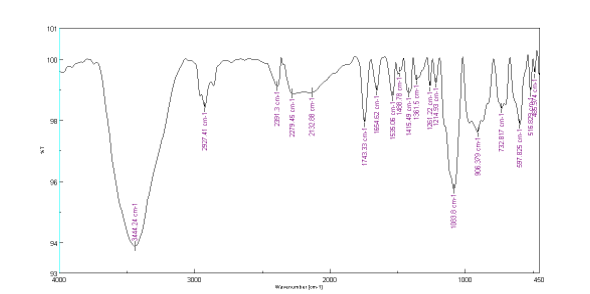
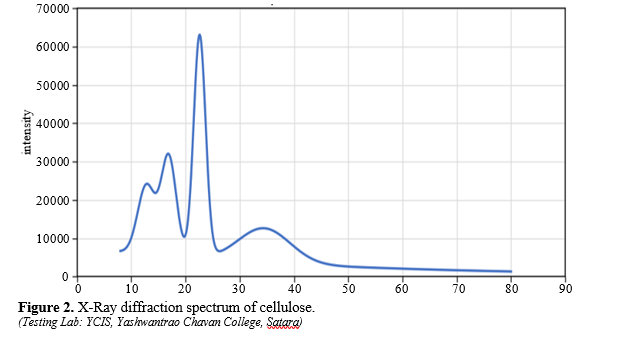
The disposal of textile effluent is responsible for serious human health concerns and above all environmental concerns to all kind of species. This indicates that there is immediate and urgent need of emerging, efficient with sustainable recycling technologies. In this paper, banana exocarp as agriculture-based waste, in terms of substrate was utilised as major raw material. The extracted cellulose from the substrate with homogeneous acetylation process, transformed into cellulose acetate (CA). Phase inversion method was used to prepare dense CA membranes. Thereafter graphene nanoparticles were incorporated in CA, which improvise affinity towards heavy metal ions, stability to dispersion and even membrane hydrophilicity. The experimental and analytical methods such as FESEM with EDS, XRD, FTIR and Contact Angle used compressive characterisation of fabricated membrane. The observations from all this analysis evaluated the structural, thermal and surface properties of casted membrane. This designed and formulated nanocomposite membrane were applied for recycling of textile effluent instead conventional process. The efficiency and performance of nano filtration was assessed for Ni²⁺, Fe²⁺, Zn²⁺ and Cu²⁺ ions. The enhanced membrane selectivity added advantage through adsorption sieving mechanisms and surface complexation with metal ions. In comparison with conventional CA membranes, the graphene nanocomposite CA membranes confirmed enhancement in removal efficiency of heavy metals from wastewater, achieving rejection rates of up to approximately 93% for Ni²⁺ and Fe²⁺. The combined effect of CA and Graphene attributed to the improved version of Cellulose Acetate Graphene Nanocomposite Membrane. Overall, the findings indicate that cellulose acetate membranes derived from banana exocarp and modified with graphene offered a sustainable and effective solution as emerging treatment technology. In addition, these membranes exhibited superior antifouling characteristics and maintained stable permeate flux during operation
Keywords: Cellulose acetate, banana exocarp, cellulose acetate graphene nanocomposite membrane, heavy metal removal, textile effluent
[This article belongs to Journal of Polymer & Composites ]
References
1. Tohamy R, Ali SS, Li F, et al. 2022, A critical review on the treatment of dye-containing wastewater, Journal of Water Process Engineering, 45, 102485, https://doi.org/10.1016/j.jwpe.2021.102485.
2. Verma A, Dash RR, Bhunia P, 2022, Chemical coagulation/flocculation technologies for dye removal, Journal of Environmental Chemical Engineering, 10, 107017, https://doi.org/10.1016/j.jece.2022.107017.
3. Jaishankar M, Mathew BB, Shah MS, et al., 2018, Toxicity, mechanism and health effects of heavy metals, Interdisciplinary Toxicology, 11(2), 117–124, https://doi.org/10.2478/intox-2018-0009.
4. Tchounwou PB, Yedjou CG, Patlolla A, et al. 2019, Heavy metal toxicity and the environment, EXS, 101, 133–164 https://doi.org/10.1007/978-3-7643-8340-4_6.
5. Fu F, Wang Q, 2017, Removal of heavy metal ions from wastewaters: A review, Journal of Environmental Management, 92, 407–418, https://doi.org/10.1016/j.jenvman.2010.11.011.
6. Sharma G, Kumar A, Naushad M, et al., 2021, Advances in technologies for heavy metal removal, Journal of Cleaner Production, 286, 124907, https://doi.org/10.1016/j.jclepro.2020.124907.
7. Crini G, Lichtfouse E, 2019, Advantages and disadvantages of wastewater treatment techniques, Environmental Chemistry Letters, 17, 145–155, https://doi.org/10.1007/s10311-018-0785-9.
8. Liu ., Wang Z, Li X, 2020, Membrane technologies for wastewater treatment and reuse, Science of the Total Environment, 745, 140982, https://doi.org/10.1016/j.scitotenv.2020.140982.
9. Saleh T A, Gupta V K, 2022, Nanomaterials for water purification applications, Environmental Science: Nano, 9, 1–22. https://doi.org/10.1039/D1EN00917B.
10. Zhang H, Li Y, Wang J, 2021, Fouling mechanisms and control strategies in polymeric membranes, Water Research, 188, 116534, https://doi.org/10.1016/j.watres.2020.116534.
11. Gohil JM, Ray P, Patel R, 2019, Cellulose acetate membranes for separation processes: A review, Separation and Purification Reviews, 48(3), 1–21, https://doi.org/10.1080/15422119.2018.1479623.
12. Nunes SP, Peinemann KV, 2020, Membrane technology in sustainable water treatment, Advanced Materials Interfaces, 7(13), 2000140, https://doi.org/10.1002/admi.202000140
13. Kumar M, Gupta R, Monda, P, 2022. Agricultural waste-derived cellulose materials for sustainable water purification, Carbohydrate Polymers, 287, 119321, https://doi.org/10.1016/j.carbpol.2022.119321.
14. Singh R, Patel H, Kumar A, 2024, Sustainable membrane fabrication using biomass-derived polymers, Journal of Environmental Management, 351, 119620, https://doi.org/10.1016/j.jenvman.2023.119620.
15. Darbari B, Sharma P, Singh K, 2021, Nanocomposite membranes for water purification: Recent advances and challenges, Journal of Environmental Chemical Engineering, 9(5), 106-134, https://doi.org/10.1016/j.jece.2021.106134.
16. Kumar S., Singh N., Yadav V., 2023, Polymer nanocomposite membranes for heavy metal removal: Recent trends, Chemosphere, 313, 137514, https://doi.org/10.1016/j.chemosphere.2022.137514.
17. Zareei F, Vatanpour V, Khataee A, 2022, TiO₂ – based nanocomposite membranes for wastewater treatment, Separation and Purification Technology, 281, 119899, https://doi.org/10.1016/j.seppur.2021.119899.
18. Nasrollahi N, Vatanpour V, Aber, S, 2019, Surface modification of membranes using TiO₂ nanoparticles for antifouling performance, Desalination, 451, 21–43, https://doi.org/10.1016/j.desal.2018.04.018.
19. Ghernaout D, 2018, Advanced coagulation for wastewater treatment: Review, Desalination and Water Treatment, 120, 1–16, https://doi.org/10.5004/dwt.2018.22493.
20. Abdelrasoul A, Doan H, Lohi A, 2020, Fouling in membrane filtration and remediation methods, Membranes, 10(11), 334, https://doi.org/10.3390/membranes10110334.
21. Silva MA, Amorim MP, 2021, Morphology and water flux of CA membranes, Carbohydrate Polymers, 254, 117407, https://doi.org/10.1016/j.carbpol.2020.117407.

Journal of Polymer & Composites
| Volume | 14 | |
| Issue | 04 | |
| Received | 23/04/2026 | |
| Accepted | 29/05/2026 | |
| Published | 09/06/2026 | |
| Publication Time | 47 Days |