Syed Ibtisam Nafis,
Abhijit Pandit,
- Assistant Professor, Department of Management and commerce, Brainware University Kolkata, West Bengal, India
- Associate Professor, Department of Management and commerce, Brainware University Kolkata, West Bengal, India
Abstract
Marketing strategies have progressively shifted toward sustainability, fundamentally transforming the polymer composites sector. Green positioning focuses on showcasing a product’s environmental advantages, whereas circular economy strategies emphasize reuse, recycling, and waste reduction. These approaches have gained considerable interest amid rising consumer demand for eco-conscious products and stricter environmental regulations. Sustainable polymer composites contribute to lower carbon emissions and improved resource management. Such materials are particularly valuable in sectors where ecological footprint and durability are critical. By enabling recycling and repurposing through circular models, polymer composites extend product lifespans and reduce waste. Fiber-reinforced polymer (FRP) composites have long been applied in structural roles due to their lightweight nature, high strength, corrosion resistance, ease of processing, and lower environmental impact when responsibly sourced. Incorporating green marketing and circular economy elements, such as bio-based reinforcements and closed-loop systems, significantly enhances sustainability, brand appeal, and overall performance.
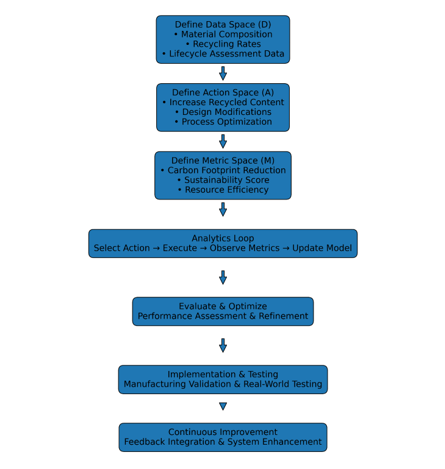
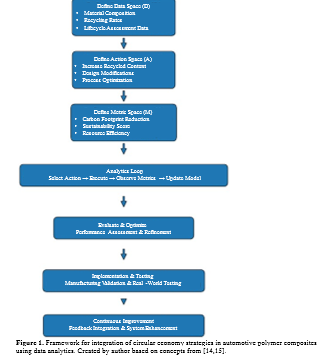
Implementing sustainability-driven marketing in the polymer composites sector offers both opportunities and challenges. This can be viewed in two dimensions: the growing demand for green products driven by consumer sustainability priorities, and the transition from linear to circular systems, which requires advancements in recycling technologies, cost management, supply chain transformation, and integration with conventional marketing practices. This paper outlines the current landscape of sustainability-driven marketing in the polymer composites field. It explores recent developments highlighting the potential of these materials to transform key sectors such as automotive, construction, packaging, and renewable energy. The study addresses major implementation challenges, including supply chain alignment, consumer awareness, and regulatory compliance. It further discusses emerging market trends, future projections, and anticipated environmental benefits. Through a comprehensive review and a case study on circular economy strategies in automotive polymer composites, this paper provides practical guidance on adopting green positioning and circular economy tactics, thereby promoting innovation and superior ecological outcomes across diverse industries.
Keywords: Sustainability-driven marketing, Green positioning, Circular economy, Polymer composites, Eco-friendly materials, Resource efficiency
[This article belongs to Journal of Polymer & Composites ]
References
1. Das TK, Jesionek M, Ali MD, Ganguly S, Poater A. Advancing sustainability: circular economy strategies for fibrous polymer composites. Cleaner Mater. 2026;19:100381. doi:10.1016/j.clema.2026.100381.
2. Elser I, Buchmeiser MR. Toward sustainable fiber-reinforced polymer composites. Macromol Mater Eng. 2024;309(9):2400013. doi:10.1002/mame.202400013.
3. Shanmugam V, Mensah RA, Försth M, Sas G, Restás Á, Addy C, et al. Circular economy in biocomposite development: state-of-the-art, challenges and emerging trends. Compos Part C Open Access. 2021;5:100138. doi:10.1016/j.jcomc.2021.100138.
4. Collias DI. Introduction—circular economy of polymers and recycling technologies. ACS Symp Ser. 2021;1391:1-15. doi:10.1021/bk-2021-1391.ch001.
5. Dasgupta A, Sen B, Karthikeyan A. Entropy-TOPSIS-based material selection for sustainable polymer composite: an MCDM framework promoting circular economy. J Elastomers Plast. 2025;57(3):456-478. doi:10.1177/00952443251331171.
6. Abu-Zurayk R, Khalaf A, Alnairat N, Waleed H, Bozeya A, Abu-Dalo D, et al. Green polymer nanocomposites: bridging material innovation with sustainable industrial practices. Front Mater. 2025;12:1701086. doi:10.3389/fmats.2025.1701086.
7. Grand View Research. Natural fiber composites market size, share & trends analysis report by raw material, by matrix, by application, by region, and segment forecasts, 2026-2033. 2026. Available from: https://www.grandviewresearch.com/industry-analysis/natural-fiber-composites-market.
8. Ahmed R, Manik KH, Nath A, Shohag JR, Mim JJ, Hossain N. Recent advances in sustainable natural fiber composites: environmental benefits, applications and future prospects. Mater Today Sustain. 2025;32:101220. doi:10.1016/j.mtsust.2025.101220.
9. Oladele IO. Sustainable polymer and polymer based composite materials for extreme conditions and demanding applications – a review on pushing boundaries in materials science. Hybrid Adv. 2025;7:100234. doi:10.1016/j.hybadv.2025.100234.
10. Podara C, Stefanidou M, Vaimakis T. Recent trends of recycling and upcycling of polymers and composites: a comprehensive review. Recycling. 2024;9(3):37. doi:10.3390/recycling9030037.
11. Karademir C. Development of sustainable polymer composites containing waste glass and natural fibers for strengthening purposes. Polymers (Basel). 2025;17(4):890. doi:10.3390/polym17040890.
12. Aidoo EK. Thermomechanical properties of sustainable polymer composites incorporating agricultural wastes. J Manuf Mater Process. 2025;9(2):456. doi:10.3390/jmmp9020456.
13. GlobeNewswire. Top 10 growth opportunities in the polymers and composites market in 2025. 2025. Available from: https://www.globenewswire.com/news-release/2025/01/15/2823456/
0/en/Top-10-Growth-Opportunities-in-the-Polymers-and-Composites-Market-in-2025.html.
14. Wilbon PA, Chu F, Tang C. Progress in renewable polymers from natural terpenes, terpenoids and rosin. Macromol Rapid Commun. 2013;34(1):8-37. doi:10.1002/marc.201200740.
15. Gandini A, Lacerda TM, Carvalho AJF, Trovatti E. Progress of polymers from renewable resources: furans, vegetable oils and polysaccharides. Chem Rev. 2016;116(3):1637-1669. doi:10.1021/acs.chemrev.5b00264.
16. Delidovich I, Hausoul PJJ, Deng L, Pfützenreuter R, Rose M, Palkovits R. Alternative monomers based on lignocellulose and their use for polymer production. Chem Rev. 2016;116(3):1637-1669. doi:10.1021/acs.chemrev.5b00354.
17. Oladele IO, Omotosho TF, Adediran AA. Polymer-based composites: an indispensable material for present and future applications. Int J Polym Sci. 2021;2021:8835710. doi:10.1155/2021/8835710.
18. Khalid MY, Arif ZU, Noroozi R, Zolfagharian A, Bodaghi M. 4D printing of shape memory polymer composites: a review on fabrication techniques, applications and future perspectives. J Manuf Process. 2022;81:759-797. doi:10.1016/j.jmapro.2022.07.056.
19. Mirabedini A, Ang A, Nikzad M, Fox B, Lau KT, Hameed N. Evolving strategies for producing multiscale graphene-enhanced fiber-reinforced polymer composites for smart structural applications. Adv Sci. 2020;7(20):2001125. doi:10.1002/advs.202001125.
20. Palaniappan M, Palanisamy S, Murugesan TM, Alrasheedi NH, Ataya S, Tadepalli S, et al. Novel ficus retusa L. aerial root fiber: a sustainable alternative for synthetic fibres in polymer composites reinforcement. Biomass Convers Biorefin. 2024;14(12):13456-13470. doi:10.1007/s13399-023-04567-8.
21. Palaniappan M, Palanisamy S, Khan R, Alrasheedi NH, Tadepalli S, Murugesan TM, et al. Synthesis and suitability characterization of microcrystalline cellulose from citrus x sinensis sweet orange peel fruit waste based biomass for polymer composite applications. J Polym Res. 2024;31(5):145. doi:10.1007/s10965-024-03612-3.
22. Ayrilmis N, Kanat G, Yildiz Avsar E, Palanisamy S, Ashori A. Utilizing waste manhole covers and fibreboard as reinforcing fillers for thermoplastic composites. J Reinf Plast Compos. 2024;43(5-6):278-292. doi:10.1177/07316844231198765.
23. Palaniappan M, Palanisamy S, Vijayananth K, Murugesan TM, Palaniappan M, Santulli C. The prospects of natural fiber composites: a brief review. Int J Lightweight Mater Manuf. 2024;7(2):145-158. doi:10.1016/j.ijlmm.2023.11.003.
24. Grand View Research. Biocomposites market size & share | industry report, 2033. 2025. Available from: https://www.grandviewresearch.com/industry-analysis/biocomposites-market.
25. Smithers. Sustainable plastics and composites market report. 2025. Available from: https://www.smithers.com/services/market-reports/plastics/sustainable-plastics-and-composites.
26. Manickaraj K, Ramamoorthi R, Sathish S, Johnson Santhosh A. Value-added utilization of agricultural wastes in biocomposite production: Characteristics and applications. Ann N Y Acad Sci. 2025;1549(1):72-91. doi:10.1111/nyas.15368.
27. Palanisamy S, Kalimuthu M, Dharmalingam S, Alavudeen A, Nagarajan R, Ismail SO, et al. Effects of fiber loadings and lengths on mechanical properties of Sansevieria cylindrica fiber reinforced natural rubber biocomposites. Mater Res Express. 2023;10:085503. doi:10.1088/2053-1591/acefb0.
28. Palaniappan M, Palanisamy S, Murugesan TM, Tadepalli S, Khan R, Ataya S, et al. Influence of washing with sodium lauryl sulphate (SLS) surfactant on different properties of ramie fibres. BioResources. 2024;19(2):2609-2625. doi:10.15376/biores.19.2.2609-2625.
29. Ramasubbu R, Kayambu A, Palanisamy S, Ayrilmis N. Mechanical properties of epoxy composites reinforced with Areca catechu fibers containing silicon carbide. BioResources. 2024;19(2):2353-2370. doi:10.15376/biores.19.2.2353-2370.
30. Ayrilmis N, Kanat G, Yildiz Avsar E, Palanisamy S, Ashori A. Utilizing waste manhole covers and fibreboard as reinforcing fillers for thermoplastic composites. J Reinf Plast Compos. 2024. doi:10.1177/07316844241238507.
31. Mylsamy B, Aruchamy K, Shanmugam SKM, Palanisamy S, Ayrilmis N. Improving performance of composites: Natural and synthetic fibre hybridisation techniques in composite materials – A review. Mater Chem Phys. 2025;334:130439. doi:10.1016/j.matchemphys.2025.130439.

Journal of Polymer & Composites
| Volume | 14 | |
| Issue | 03 | |
| Received | 09/03/2026 | |
| Accepted | 18/03/2026 | |
| Published | 13/05/2026 | |
| Publication Time | 65 Days |