Manzar Ali,
Sayed Shah Alam,
Shehanshah Wali Moazzam,
- Assistant Professor, Department of Ilmul Jarahat (General Surgery), University College of Unani of Tonk, Chara, Rajasthan, India
- H.O.D, Department of Ilmul Jarahat (General Surgery), University College of Unani of Tonk, Chara, Rajasthan, India
- Assistant Professor, Department of Moalajat, University College of Unani of Tonk, Charai, Rajasthan, India
Abstract
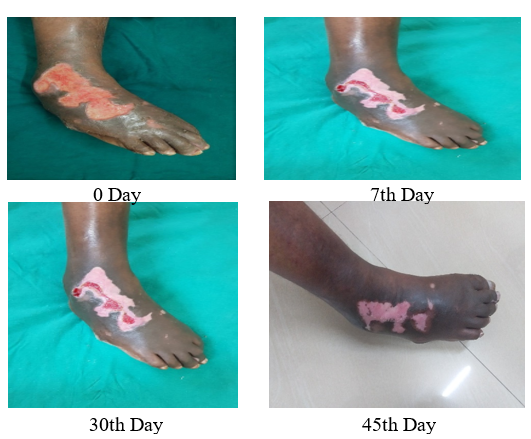
Background and Aim: A non-healing ulcer (Qurooh-e-Aseerul-Indemal) of the foot is characterized by a persistent deterioration of the epidermal and dermal layers of the skin on the foot, continuing for more than six weeks without showing signs of recovery. Non-healing ulcers represent a significant global health challenge, markedly affecting patient well-being and imposing a considerable burden on their families. Global prevalence ranges between 1.9% to 13.1%, while in India, the incidence is 4.5 cases per 1,000 people. The prevalence of non-healing ulcers is expected to increase, driven by the growing incidence of risk factors such as atherosclerosis, tobacco use, obesity, diabetes, and old age. The high incidence of non-healing ulcers and the lack of affordable treatments underscore the need to evaluate Unani medicine as a potential therapeutic option. In Unani medicine, non-healing ulcers can be managed with formulations that possess jali (detergent), hemostatic, mundamil-e-qurooh (cicatrizant), mujaffif (desiccant), daaf-e-taaffun (antiseptic), muhallil (anti-inflammatory) and mumbit-e-lahem (flesh grower) actions. Experimental Procedure: This case report describes a 50-year-old female patient with non-healing ulcers on both lower limbs, treated with topical Unani formulation composed of Kundur (Boswellia serrata), Anzaroot (Astragalus sarcocolla), Gulnar (Punica granatum), and Zarawand (Aristolochia rotunda). Results and Conclusion: The left lower limb wound achieved complete healing in 31 days, while the right one healed within 40 days of therapy. This study highlights the efficacy of Unani formulations as a promising alternative to conventional therapies for non-healing ulcers.
Keywords: Anzaroot, Gulnar, Kundur, non-healing ulcers, Unani formulation, zarawand
[This article belongs to Research & Reviews : A Journal of Unani, Siddha and Homeopathy ]
References
- Chalimidi KR, Kumar Y, Anand Kini U. Efficacy of collagen particles in chronic non healing ulcers. J Clin Diagn Res. 2015;9(6):PC01–3.
- Arzani A. Tibbe Akbar. Delhi: Idara Kitabul Shifa; 1890. p. 410, 464, 492.
- Ibn Sina. Al Qanoon Fit Tib. New Delhi: Idara Kitabul Shifa; 2007. p. 54–55, 104–105.
- Agale SV. Chronic leg ulcers: Epidemiology, aetiopathogenesis. 2013;2013.
- Suthar M, Gupta S, Bukhari S, Ponemone V. Treatment of chronic non-healing ulcers using autologous platelet rich plasma: A case series. J Biomed Sci. 2017;24(1):1–10.
- Bowling FL, Rashid ST, Boulton AJ. Preventing and treating foot complications associated with diabetes mellitus. Nat Rev Endocrinol. 2015;11(10):606–16.
- Amin N, Doupis J. Diabetic foot disease: From the evaluation of the “foot at risk” to the novel diabetic ulcer treatment modalities. World J Diabetes. 2016;7(7):153.
- Frykberg RG. Diabetic foot ulcers: Current concepts. J Foot Ankle Surg. 1998;37(5):440–6.
- Alexiadou K, Doupis J. Management of diabetic foot ulcers. Diabetes Ther. 2012;3(1):1–15.
- Shaw JE, Boulton AJ. The pathogenesis of diabetic foot problems: An overview. Diabetes. 1997;46(Suppl 2):S58–61.

Research & Reviews : A Journal of Unani, Siddha and Homeopathy
| Volume | 13 | |
| Issue | 01 | |
| Received | 10/11/2025 | |
| Accepted | 09/01/2026 | |
| Published | 10/01/2026 | |
| Publication Time | 61 Days |