
R. Hema,
S. Subbulakshmi,
N. Noorunnisa,
M. Nagarajan,
M. Sundararajan,
- Associate Professor, ECE, Bharath Institute of Higher Education and Research, Chennai, Tamil Nadu, India
- Assistant Professor, ECE, Bharath Institute of Higher Education and Research, Chennai, Tamil Nadu, India
- Ph.D Scholar, ECE, Bharath Institute of Higher Education and Research, Chennai, Tamil Nadu, India
- Associate Professor, ECE, Bharath Institute of Higher Education and Research, Chennai, Tamil Nadu, India
- Vice-Chancellor, Bharath Institute of Higher Education and Research, Chennai, Tamil Nadu, India
Abstract
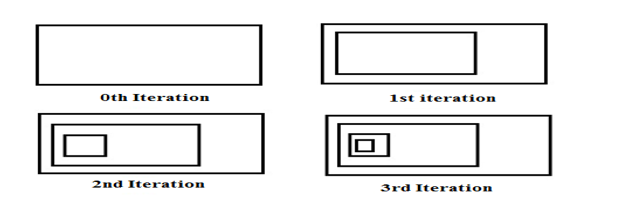
Polymer–ceramic composite substrates play a crucial role in determining the electromagnetic performance, mechanical stability, and thermal reliability of radio-frequency devices. In this work, a polymer-based composite substrate is systematically investigated for its suitability in compact IoT and RFID antenna applications. A fractal-structured antenna is employed as a functional test platform to evaluate the dielectric behavior, impedance characteristics, and radiation efficiency of the composite substrate. Novelty of the proposed reader antenna is built on a modified fractal tree structure, where the angle between the two twigs is halved with each iteration. This design allows for a greater electrical length within a fixed physical space, enabling the structure to be miniaturized. The proposed substrate, based on flame-retardant glass-fiber-reinforced epoxy (FR-4), offers a balanced combination of relative permittivity (εᵣ ≈ 4.4), low dielectric loss (tan δ ≈ 0.012), mechanical robustness, and cost-effective manufacturability. The influence of polymer composite thickness, dielectric constant, and loss tangent on antenna bandwidth, gain, and axial-ratio bandwidth is systematically analyzed using electromagnetic simulations (CST Microwave Studio) and experimental validation (Vector Network Analyzer). Results demonstrate that the FR-4 polymer–ceramic composite substrate significantly enhances impedance matching, electrical length, and radiation performance, achieving a peak gain of 5.7 dBi at 3.5 GHz with improved axial-ratio bandwidth (ARBW) of 2.1 GHz. The study highlights the critical role of polymer composite substrate engineering in optimizing RF performance for low-cost, mechanically stable, and thermally reliable IoT and RFID systems. Additionally, the substrate exhibits stable performance under practical fabrication tolerances and environmental conditions, indicating its suitability for mass-produced wireless devices. Comparative analysis with conventional substrates confirms superior trade-offs between performance, cost, and durability. The proposed approach provides valuable design guidelines for integrating polymer–ceramic composite substrates into next-generation compact, broadband, and circularly polarized antennas.
Keywords: Polymer–ceramic composites, FR-4 epoxy substrate, dielectric properties, electromagnetic characterization, IoT devices, RFID substrates, fractal geometry, substrate engineering
[This article belongs to Special Issue under section in Journal of Polymer & Composites (jopc)]
References
- Prasanna, V. Rakesh, and M. R. Ahmed, “Multiband circularly polarized microstrip reader antenna for RFID applications,” in Proceedings of the 2nd International Conference on Green Computing and Internet of Things (ICGCIoT), Noida, India, 2018, pp. 64–67.
- Nasimuddin and X. Qing, “Wideband circularly polarized UHF RFID reader antenna,” in Proceedings of the 2018 IEEE International Conference on Service Operations and Logistics, and Informatics (SOLI), Shanghai, China, 2018, pp. 127–130.
- Parthiban, “Fixed UHF RFID reader antenna design for practical applications: A guide for antenna engineers with examples,” IEEE Journal of Radio Frequency Identification, vol. 3, no. 3, pp. 191–204, Sept. 2019.
- Parthiban, B. C. Seet, and X. J. Li, “Display frame UHF RFID antenna for museums,” in Proceedings of the 2018 IEEE Asia-Pacific Conference on Antennas and Propagation (APCAP), Carmel Valley, CA, USA, 2018, pp. 532–533.
- Pan and Y. Dong, “Circularly polarized stack Yagi RFID reader antenna,” IEEE Antennas and Wireless Propagation Letters, vol. 19, no. 7, pp. 1053–1057, July 2020.
- Sun, D. Wang, Q. Liu, T. He, and W. Feng, “The design of end-fire antenna for radio frequency identification (RFID),” in Proceedings of the 2018 International Workshop on Antenna Technology (iWAT), Nanjing, China, 2018, pp. 1–4.
- Yao, X. Ren, Y. Liang, J. Yu, and X. Chen, “Multipolarized reader antenna with periodic units based on electric field coupling for UHF RFID near-field applications,” IEEE Transactions on Antennas and Propagation, vol. 67, no. 8, pp. 5265–5271, Aug. 2019.
- A. S. Tajin and K. R. Dandekar, “Pattern reconfigurable UHF RFID reader antenna array,” IEEE Access, vol. 8, pp. 187365–187372, 2020
- Hema, K. Subbulakshmi, and S. Arulselvi, “IoT based gas detection in home environment,” International Journal of Engineering and Advanced Technology, vol. 8, no. 6 (Special Issue 2), pp. 332–335, June 2019.
- Sundararajan and R. Hema, “Electrophoretic coating of gold nano-energy particles on fabricated arsenic III electro-feeler,” Journal of Green Engineering, vol. 10, no. 11, pp. 10484–10497, Nov. 2020.
- Hema and M. Sundararajan, “Augmented reality on user-friendly maneuver for hunting arsenic toxicant,” in Lecture Notes in Networks and Systems, vol. 204, Springer, 2021, pp. 697–713.
- Chitra, G. Valarmathi, M. Sundararajan, R. Hema, and K. Sivasankari, “Fabrication of arsenic III nano sensor after optimizing by glassy carbon electrode,” in Proceedings of the 2022 1st International Conference on Computer, Power and Communications (ICCPC), New Delhi, India, 2022, pp. 179–186
- Subbulakshmi, G. Valarmathi, R. Hema, S. Prakash, K. Kalaivani, and M. Sundararajan, “A memristive IoT-based device exhibiting third-dimensional order co-existing chaotic behavior for information processing,” in Proceedings of the 2024 International Conference on Communication, Computing and Internet of Things (IC3IoT), Chennai, India, 2024, pp. 1–6.
- Hema, S. Subbulakshmi, B. Veera Jyothi, R. Gurulakshmi, M. Vignesh, and M. Blessy Queen Mary, “Smart automated irrigation through IoT technology,” in Proceedings of the 2024 5th International Conference on Smart Electronics and Communication (ICOSEC), Tiruchirapalli, India, 2024, pp. 833–838.
- K. Kim, “Viscoelastic effect of FR-4 material on packaging stress development,” IEEE Transactions on Advanced Packaging, vol. 30, no. 3, pp. 411–420, Aug. 2007.
- Karuppiah, G., Kuttalam, K. C., Palaniappan, M., Santulli, C., & Palanisamy, S. (2020). Multiobjective Optimization of Fabrication Parameters of Jute Fiber/Polyester Composites with Egg Shell Powder and Nanoclay Filler. Molecules, 25(23), 5579, 2020, doi.10.3390/25235579
- Santulli, C., Palanisamy, S., & Kalimuthu, M. (2022). Pineapple fibers, their composites and applications. In Plant Fibers, their Composites, and Applications (pp. 323–346). Elsevier. https://doi.org/10.1016/b978-0-12-824528-6.00007-2
- Goutham, E. R. S., Hussain, S. S., Muthukumar, C., Krishnasamy, S., Kumar, T. S. M., Santulli, C., Palanisamy, S., Parameswaranpillai, J., & Jesuarockiam, N. (2023). Drilling Parameters and Post-Drilling Residual Tensile Properties of Natural-Fiber-Reinforced Composites: A Review. Journal of Composites Science, 7(4), 136. https://doi.org/10.3390/jcs704013

Journal of Polymer & Composites
| Volume | 14 | |
| Special Issue | 01 | |
| Received | 27/12/2025 | |
| Accepted | 06/02/2026 | |
| Published | 16/02/2026 | |
| Publication Time | 51 Days |