Zainab Mahdi Jasim Al-Saygh,
- Assistant Lecturer, Department of Biology, Faculty of Education for Girls, University of Kufa, , Iraq
Abstract
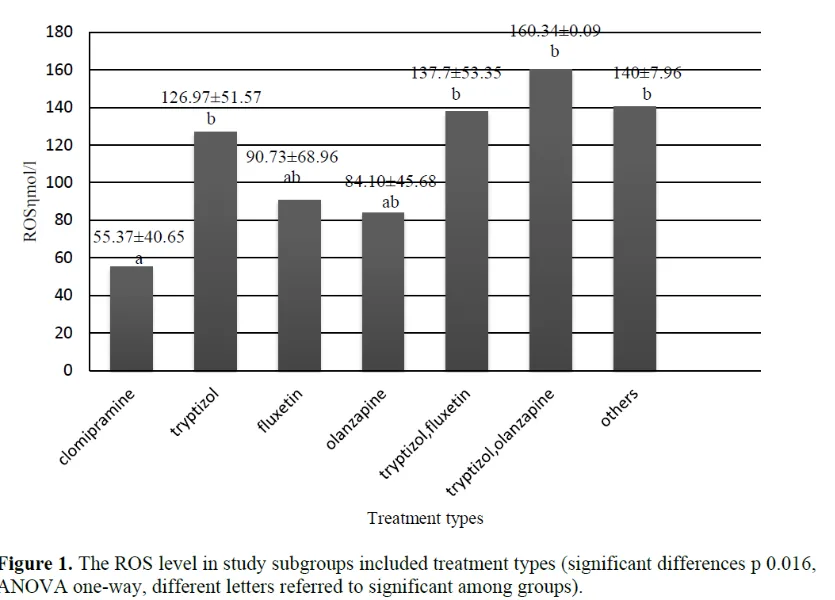
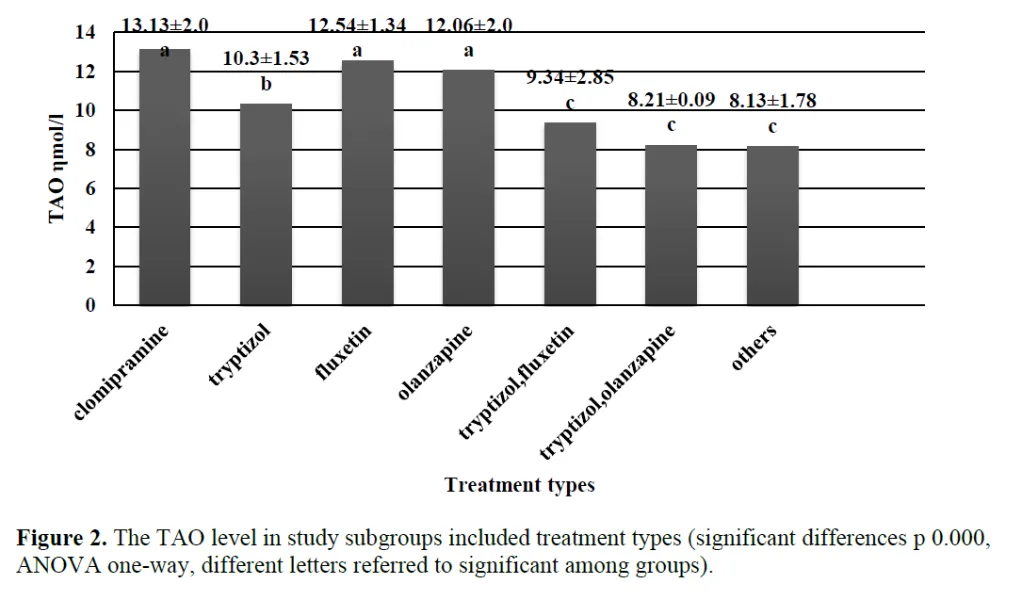
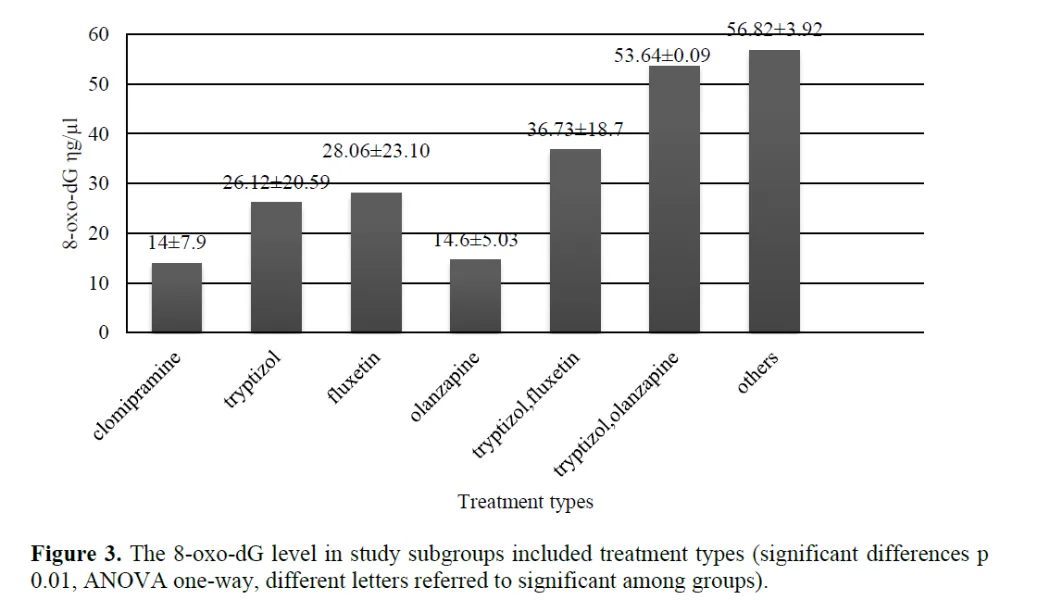
Oxidative stress and DNA oxidation is a main target of different medications side effect, the current work aims to evaluate the potential role of anti-depressed medications in DNA oxidation in depression disorder cases, reactive oxygen species (ROS), total antioxidant (TAO) and 8-oxo deoxyguanine (8-oxo-dG) were detected in depressed disorder cases that treated with different medications included clomipramine, tryptizol, fluxetin, olanzapine, tryptizol with fluxetin, tryptizol with olanzapine and other types of medication. The results found significant differences in ROS and TAO (p 0.000), non-significant changes in 8-oxo-dG (p 0.649). In addition to non-sig in age (p 0.081) and sig changes in BMI (p 0.035) between cases and control groups. The ROS levels in subgroups showed significant changes (p 0.016), the cases treated with tryptizol and olanzapine have high level of ROS (160.34 ± 0.09), other types of medication have high level of ROS also (140 ± 7.96), then the cases tryptizol and fluxetin have (137.7 ± 53.35). The TAO have significant differences (p 0.000) among study subgroups clomipramine has high level of TAO (13.13 ± 2.0), tryptizol (10.3 ± 1.54), tryptizol with olanzapine have low level of TAO (8.21 ± 0.09) and other types have (8.13 ± 1.78), the 8-oxo-dG showed significant differences (p 0.01). The high level of 8-oxo-dG was observed in other medications (56.82 ± 3.92), then tryptizol with fluxetin (53.64 ± 0.09), low levels of oxidations were seen in clomipramine and olanzapine (14 ± 7.9, 14.6 ± 5.03). From the present outputs, we can conclude that clomipramine and olanzapine have antioxidant activity and a low effect in DNA oxidation
Keywords: potential role, anti-depressed medications, DNA oxidation , ROS, TAO, depression disorder cases
[This article belongs to Research and Reviews : A Journal of Life Sciences ]
References
- Cipriani A, Zhou X, Del Giovane C, Hetrick SE, Qin B, Whittington C, Coghill D, Zhang Y, Hazell P, Leucht S, Cuijpers P. Comparative efficacy and tolerability of antidepressants for major depressive disorder in children and adolescents: a network meta-analysis. Lancet. 201627;388(10047):881–890.
- Wang L, Wang R, Liu L, Qiao D, Baldwin DS, Hou R. Effects of SSRIs on peripheral inflammatory markers in patients with major depressive disorder: a systematic review and meta-analysis. Brain Behav Immun. 2019;79:24–38.
- Østergaard L, Jørgensen MB, Knudsen GM. Low on energy? An energy supply-demand perspective on stress and depression. Neurosci Biobehav Rev. 2018;94:248–270.
- Kraus C, Castrén E, Kasper S, Lanzenberger R. Serotonin and neuroplasticity–links between molecular, functional and structural pathophysiology in depression. Neurosci Biobehav Rev. 2017;77:317–326.
- Pilar-Cuéllar F, Vidal R, Díaz A, Castro E, dos Anjos S, Pascual-Brazo J, Linge R, Vargas V, Blanco H, Martínez-Villayandre B, Pazos Á. Neural plasticity and proliferation in the generation of antidepressant effects: hippocampal implication. Neural Plast. 2013;2013(1):537265.
- Fakouri NB, Hou Y, Demarest TG, Christiansen LS, Okur MN, Mohanty JG, Croteau DL, Bohr VA. Toward understanding genomic instability, mitochondrial dysfunction and aging. FEBS J. 2019;286(6):1058–1073.
- Schumacher B, Pothof J, Vijg J, Hoeijmakers JH. The central role of DNA damage in the ageing process. Nature. 2021;592(7856):695–703.
- Nunomura A, Lee HG, Zhu X, Perry G. Consequences of RNA oxidation on protein synthesis rate and fidelity: implications for the pathophysiology of neuropsychiatric disorders. Biochem Soc Trans. 2017;45(5):1053–1066.
- Castellani RJ, Nunomura A, Rolston RK, Moreira PI, Takeda A, Perry G, Smith MA. Sublethal RNA oxidation as a mechanism for neurodegenerative disease. Int J Mol Sci. 2008;9(5):789–806.
- Blackburn EH, Greider CW, Szostak JW. Telomeres and telomerase: the path from maize, Tetrahymena and yeast to human cancer and aging. Nat Med. 2006;12(10):1133–1138.
- Pousa PA, Souza RM, Melo PH, Correa BH, Mendonça TS, Simões-e-Silva AC, Miranda DM. Telomere shortening and psychiatric disorders: a systematic review. Cells. 2021;10(6):1423.
- Leone M, Kuja-Halkola R, Leval A, D’Onofrio BM, Larsson H, Lichtenstein P, Bergen SE. Association of youth depression with subsequent somatic diseases and premature death. JAMA Psychiatry. 2021;78(3):302–310.
- Archer G, Kuh D, Hotopf M, Stafford M, Richards M. Association between lifetime affective symptoms and premature mortality. JAMA Psychiatry. 2020;77(8):806–813.
- Copeland WE, Keen R, Tong G, Shanahan L. Negative life events and emotional symptoms from ages 2 to 30 years. JAMA Network Open. 2024;7(8):e2429448.
- Jimenez-Fernandez S, Gurpegui M, Diaz-Atienza F, Pérez-Costillas L, Gerstenberg M, Correll CU. Oxidative stress and antioxidant parameters in patients with major depressive disorder compared to healthy controls before and after antidepressant treatment: results from a meta-analysis. J Clin Psychiatry. 2015;76(12):13705.
- Cumurcu BE, Ozyurt H, Etikan I, Demir S, Karlidag R. Total antioxidant capacity and total oxidant status in patients with major depression: impact of antidepressant treatment. Psychiatry Clin Neurosci. 2009;63(5):639–645.
- Gerö D, Szoleczky P, Suzuki K, Módis K, Oláh G, Coletta C, Szabo C. Cell-based screening identifies paroxetine as an inhibitor of diabetic endothelial dysfunction. Diabetes. 2013;62(3):953–964.
- Lopez-Vilchez I, Diaz-Ricart M, Navarro V, Torramade S, Zamorano-Leon J, Lopez-Farre A, Galan AM, Gasto C, Escolar G. Endothelial damage in major depression patients is modulated by SSRI treatment, as demonstrated by circulating biomarkers and an in vitro cell model. Transl Psychiatry. 2016;6(9):e886.
- Tutakhail A, Nazari QA, Khabil S, Gardier A, Coudore F. Muscular and mitochondrial effects of long-term fluoxetine treatment in mice, combined with physical endurance exercise on treadmill. Life Sci. 2019;232:116508.
- Palta P, Samuel LJ, Miller III ER, Szanton SL. Depression and oxidative stress: results from a meta-analysis of observational studies. Psychosomat Med. 2014;76(1):12–19.
- Ahmadimanesh M, Abbaszadegan MR, Morshedi Rad D, Moallem SA, Mohammadpour AH, Ghahremani MH, Farid Hosseini F, Behdani F, Akhondpour Manteghi A, Jowsey P, Shabani Behbahani F. Effects of selective serotonin reuptake inhibitors on DNA damage in patients with depression. J Psychopharmacol. 2019;33(11):1364–1376.
- Black CN, Bot M, Scheffer PG, Penninx BW. Oxidative stress in major depressive and anxiety disorders, and the association with antidepressant use; results from a large adult cohort. Psychol Med. 2017;47(5):936–948.
- Köhler-Forsberg K, Jorgensen A, Dam VH, Stenbæk DS, Fisher PM, Ip CT, Ganz M, Poulsen HE, Giraldi A, Ozenne B, Jørgensen MB. Predicting treatment outcome in major depressive disorder using serotonin 4 receptor PET brain imaging, functional MRI, cognitive-, EEG-based, and peripheral biomarkers: a neuropharm open label clinical trial protocol. Front Psychiatry. 2020;11:641.
- Kathem SH, Al-Jumail AA, Noor-Aldeen M, Najah N, Ali Khalid D. Measuring depression and anxiety prevalence among Iraqi healthcare college students using hospital anxiety and depression scale. Pharm Pract (Granada). 2021;19(2).
- Tripathi R, Alqahtani SS, Meraya AM, Makeen HA, Tripathi P, Pancholi SS. Evaluation of depression, anxiety, and stress among university healthcare students. J Appl Pharm Sci. 2022;12(10):78–87.
- Al-Hamzawi AO, Bruffaerts R, Bromet EJ, AlKhafaji AM, Kessler RC. The epidemiology of major depressive episode in the Iraqi general population. PloS One. 2015;10(7):e0131937.
- Jawad MA, Al-Terehi MN, Enad HA, Kareem TJ, Lazim AI. Estimation the oxidative stress state in depression disorders patients. Clin Schizophr Relat Psychoses. 2021;15.
- Al-Terehi MN, Kadhim AJ, Mohsen IH, Alsaffar MF, Atiyah S, Hasan SY, Hamad DA, Bustani GS, Abdullah SA, Ramadhan RS. Association of 8-Oxo-2’-Deoxyguanosine, hOGG1 Ser326Cys gene polymorphism with reactive oxygen species in depression patients. Clin Schizophr Relat Psychoses. 2021;15.
- Tsuboi H, Tatsumi A, Yamamoto K, Kobayashi F, Shimoi K, Kinae N. Possible connections among job stress, depressive symptoms, lipid modulation and antioxidants. J Affective Disord. 2006;91(1):63–70.
- Ozcan ME, Gulec M, Ozerol E, Polat R, Akyol O. Antioxidant enzyme activities and oxidative stress in affective disorders. Int Clin Psychopharmacol. 2004;19(2):89–95.
- Del Rio D, Stewart AJ, Pellegrini N. A review of recent studies on malondialdehyde as toxic molecule and biological marker of oxidative stress. Nutr Metab Cardiovasc Dis. 2005;15(4):316–328.
- Vieira EL, Mendes-Silva AP, Ferreira JD, Bertola L, Barroso L, Vieira M, Teixeira AL, Diniz BS. Oxidative DNA damage is increased in older adults with a major depressive episode: A preliminary study. J Affective Disord. 2021;279:106–110.
- Jackson SP, Bartek J. The DNA-damage response in human biology and disease. Nature. 2009;461(7267):1071–1078.
- Bernardini L, Barbosa E, Charão MF, Goethel G, Muller D, Bau C, Steffens NA, Santos Stein C, Moresco RN, Garcia SC, Souza Vencato M. Oxidative damage, inflammation, genotoxic effect, and global DNA methylation caused by inhalation of formaldehyde and the purpose of melatonin. Toxicol Res. 2020;9(6):778–789.
- López-Otín C, Blasco MA, Partridge L, Serrano M, Kroemer G. Hallmarks of aging: An expanding universe. Cell. 2023;186(2):243–278.
- Jorgensen A, Krogh J, Miskowiak K, Bolwig TG, Kessing LV, Fink-Jensen A, Nordentoft M, Henriksen T, Weimann A, Poulsen HE, Jorgensen MB. Systemic oxidatively generated DNA/RNA damage in clinical depression: associations to symptom severity and response to electroconvulsive therapy. J Affective Disord. 2013;149(1-3):355–362.
- Jorgensen A, Köhler-Forsberg K, Henriksen T, Weimann A, Brandslund I, Ellervik C, Poulsen HE, Knudsen GM, Frokjaer VG, Jorgensen MB. Systemic DNA and RNA damage from oxidation after serotonergic treatment of unipolar depression. Transl Psychiatry. 2022;12(1):204.
- Munkholm K, Poulsen HE, Kessing LV, Vinberg M. Elevated levels of urinary markers of oxidatively generated DNA and RNA damage in bipolar disorder. Bipolar Disord. 2015;17(3):257–268.
- Fanibunda SE, Deb S, Maniyadath B, Tiwari P, Ghai U, Gupta S, Figueiredo D, Weisstaub N, Gingrich JA, Vaidya AD, Kolthur-Seetharam U. Serotonin regulates mitochondrial biogenesis and function in rodent cortical neurons via the 5-HT2A receptor and SIRT1–PGC-1α axis. Proc Natl Acad Sci U.S.A. 2019;116(22):11028–11037.
- Ruddell RG, Mann DA, Ramm GA. The function of serotonin within the liver. J Hepatol. 2008;48(4):666–675.
- Jorgensen A, Broedbaek K, Fink-Jensen A, Knorr U, Soendergaard MG, Henriksen T, Weimann A, Jepsen P, Lykkesfeldt J, Poulsen HE, Jorgensen MB. Increased systemic oxidatively generated DNA and RNA damage in schizophrenia. Psychiatry Res. 2013;209(3):417–423.
- Poulsen HE, Nadal LL, Broedbaek K, Nielsen PE, Weimann A. Detection and interpretation of 8-oxodG and 8-oxoGua in urine, plasma and cerebrospinal fluid. Biochim Biophys Acta Gen Subj. 2014;1840(2):801–818.
- Jorgensen A, Krogh J, Miskowiak K, Bolwig TG, Kessing LV, Fink-Jensen A, Nordentoft M, Henriksen T, Weimann A, Poulsen HE, Jorgensen MB. Systemic oxidatively generated DNA/RNA damage in clinical depression: associations to symptom severity and response to electroconvulsive therapy. J Affective Disord. 2013;149(1–3):355–362.
- Villa RF, Ferrari F, Gorini A, Brunello N, Tascedda F. Effect of desipramine and fluoxetine on energy metabolism of cerebral mitochondria. Neurosci. 2016;330:326–334.
- Herbet M, Szumełda I, Piątkowska-Chmiel I, Gawrońska-Grzywacz M, Dudka J. Beneficial effects of combined administration of fluoxetine and mitochondria-targeted antioxidant at in behavioural and molecular studies in mice model of depression. Behav Brain Res. 2021;405:113185.

Research and Reviews : A Journal of Life Sciences
| Volume | 15 | |
| Issue | 01 | |
| Received | 15/01/2025 | |
| Accepted | 17/01/2025 | |
| Published | 18/01/2025 | |
| Publication Time | 3 Days |