
Suhas Sreehari,
- Student, Department of Biotechnology, B.M.S. College of Engineering, Bengaluru, Karnataka, India
Abstract
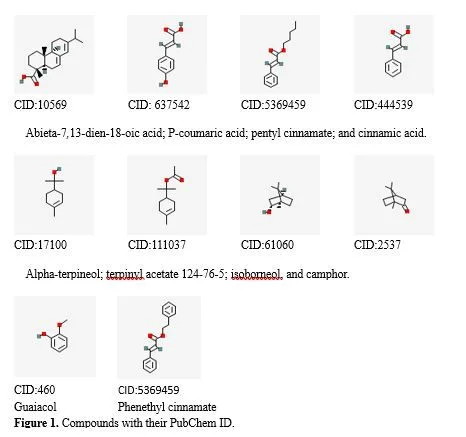
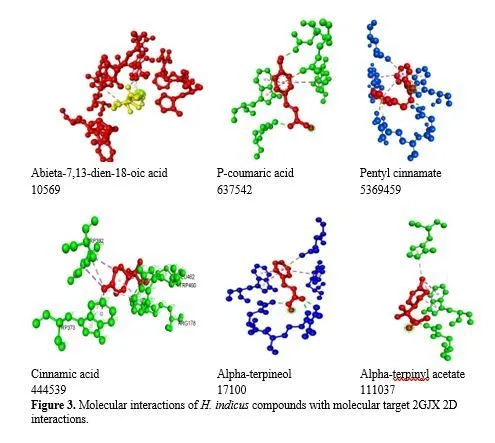
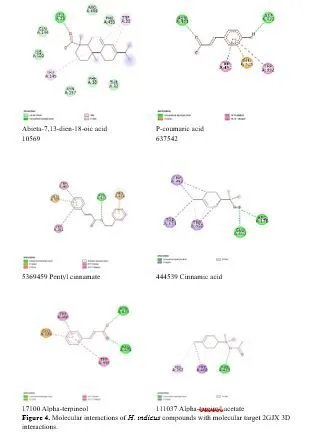
This research aimed to study the effects of the plant Anantmul (Hemidesmus indicus) in the treatment of Tay-Sachs disease using molecular docking studies. Tay-Sachs disease is a neurodegenerative autosomal recessive disorder caused due to accumulation of the molecule GM2 ganglioside which is caused due to lack of enzyme Beta Hexosaminidase which breaks down GM2 Ganglioside. Anantmul (Hemidesmus indicus) is a an ayurvedic plant used in the Indian subcontinent that has many medicinal uses, such as anti-cancer, anti-diabetic, anti-inflammatory, etc. using IMPATT software about 110 phytochemicals were discovered in Anantmul, then using SWISS Absorption, Distribution, Metabolism, and Excretion about 45 compounds were screened based on the Lipinski’s rule. Then they were further screened based on toxicity using ProTox software down to 11 compounds. These 11 compounds were selected for molecular docking analysis on the protein Hexosaminidase to study their interaction and binding energy. Out of these, the top 6 compounds with the highest binding energy were taken for visualization. The compound with the highest binding energy was found to be Abieta-7,13-dien-18-oic acid with a binding energy of –7.4.
Keywords: Tay-Sachs disease, molecular docking, beta-hexosaminidase, GM2 ganglioside, Lipinski’s rule
[This article belongs to International Journal of Bioinformatics and Computational Biology ]
References
- Solovyeva VV, Shaimardanova AA, Chulpanova DS, Kitaeva KV, Chakrabarti L, Rizvanov AA. New approaches to Tay-Sachs disease therapy. Front Physiol. 2018;9:1663.
- Aneja V, Suthar A, Verma S, Kalkunte S. Phyto-pharmacology of Hemidesmus indicus. Pharmacog Rev. 2008;2(3):143.
- Mohanraj K, Karthikeyan BS, Vivek-Ananth RP, Chand RB, Aparna SR, Mangalapandi P, et al. IMPPAT: a curated database of Indian medicinal plants, phytochemistry and therapeutics. Sci Rep. 2018;8(1):4329.
- Aparna SR, Mangalapandi P. IMPPAT: a curated database of Indian medicinal plants, phytochemistry and therapeutics. 2018;8(1):4329.
- Laskowski RA, Jabłońska J, Pravda L, Vařeková RS, Thornton JM. PDBsum: structural summaries of PDB entries. Prot Sci. 2018;27(1):129–34.
- Burley SK, Berman HM, Kleywegt GJ, Markley JL, Nakamura H, Velankar S. Protein data bank (PDB): the single global macromolecular structure archive. Prot Crystall Meth Protoc. 2017;627–41.
- Dallakyan S, Olson AJ. Small-molecule library screening by docking with PyRx. Chem Biol Meth Protoc. 2015;243–50.
- Daina A, Michielin O, Zoete V. SwissADME: a free web tool to evaluate pharmacokinetics, drug-likeness and medicinal chemistry friendliness of small molecules. Sci Rep. 2017;7(1):42717.
- Xiong J, Hong ZL, Xu P, Zou Y, Yu SB, Yang GX, et al. Ent-abietane diterpenoids with anti-neuroinflammatory activity from the rare chloranthaceae plant Chloranthus oldhamii. Organ Biomol Chem. 2016;14(20):4678–89.
- Daroi PA, Dhage SN, Juvekar AR. P-coumaric acid mitigates lipopolysaccharide induced brain damage via alleviating oxidative stress, inflammation and apoptosis. J Pharm Pharmacol. 2022;74(4):556–64.
- Alipour HR, Yaghmaei P, Ahmadian S, Ghobeh M, Ebrahim-Habibi A. A study on alpha-terpineol in Alzheimer’s disease with the use of rodent in vivo model, restraint stress effect and in vitro amyloid beta fibrils. Brazil J Pharmaceut Sci. 2022;58:e19090.
- Huang S, Liu W, Li Y, Zhang K, Zheng X, Wu H, et al. Design, synthesis, and activity study of cinnamic acid derivatives as potent antineuroinflammatory agents. ACS Chem Neurosci. 2021;12(3):419–29.
- Chowdhury S, Kumar S. Alpha-terpinyl acetate: a natural monoterpenoid from Elettaria cardamomum as multi-target directed ligand in Alzheimer’s disease. J Funct Food. 2020;68:103892.

| Volume | 02 | |
| Issue | 02 | |
| Received | 21/11/2024 | |
| Accepted | 02/12/2024 | |
| Published | 28/12/2024 | |
| Publication Time | Days |