Mohammed Abrar,
- Student, Department of Bioinformatics, BioNome, Bengaluru, Karnataka, India
Abstract
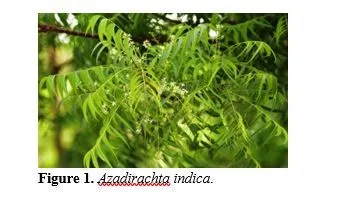
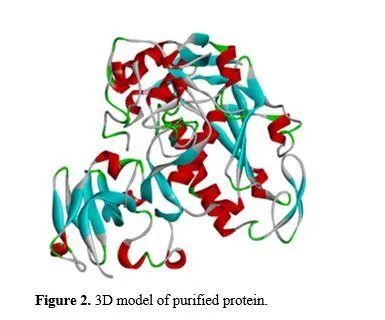
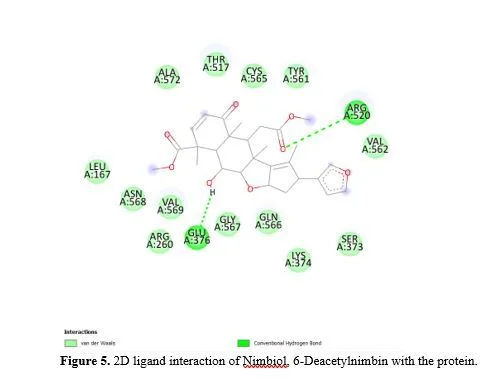
Objectives: Millions of people worldwide suffer from the parasite disease visceral leishmaniasis. Determine the naturally occurring active ingredients in Azadirachta indica, which are employed as a disease-prevention agent and have several uses in medicine. To choose the best ligand to use as a medication, absorption, distribution, metabolism, and excretion (ADME) studies and molecular docking are employed. Methods: To obtain the GP63 protein, the Protein Data Bank (PDB) database was accessed. The IMPPAT database was utilised to obtain phytocompounds. The pharmacokinetic characteristics of these drugs were evaluated using in silico ADME analysis. PyRx is used for molecular docking. Results: Molecular docking analysis revealed promising interactions between the selected Azadirachta indica phytocompound and the GP63 protein, indicating its potential as inhibitor of Leishmania parasite virulence. 6-Deacetylnimbin demonstrated significant binding affinity with GP63, warranting further investigation. Furthermore, the phytocompound exhibited favourable pharmacokinetic properties, suggesting their suitability for drug development. Conclusion: The phytocompound 6-Deacetylnimbin exhibits a promising binding affinity with the GP63 protein, making it a potential therapeutic candidate for the treatment of visceral leishmaniasis.
Keywords: Azadirachta indica, visceral leishmaniasis, GP63, phytocompound, molecular docking, ADMET analysis
[This article belongs to International Journal of Genetic Modifications and Recombinations ]
References
1. Mathison BA, Bradley BT. Review of the clinical presentation, pathology, diagnosis, and treatment of leishmaniasis. Lab Med. 2023;54(4):363–371. doi: 10.1093/labmed/lmac134.
2. Reimão JQ, Coser EM, Lee MR, Coelho AC. Laboratory diagnosis of cutaneous and visceral leishmaniasis: Current and future methods. Microorganisms. 2020;8(11):1632. doi: 10.3390/microorganisms8111632.
3. Reithinger R, Dujardin J-C, Louzir H, Pirmez C, Alexander B, Brooker S. Cutaneous leishmaniasis. Lancet Infect Dis. 2007;7(9):581–596. doi: 10.1016/s1473-3099(07)70209-8.
4. Amato VS, Tuon FF, Bacha HA, Neto VA, Nicodemo AC. Mucosal leishmaniasis. Acta Trop. 2008;105(1):1–9. doi: 10.1016/j.actatropica.2007.08.003.
5. Costa CHN, Chang K-P, Costa DL, Cunha FVM. From infection to death: An overview of the pathogenesis of visceral leishmaniasis. Pathogens. 2023;12(7):969. doi: 10.3390/pathogens12070969.
6. Chauhan P, Shukla D, Chattopadhyay D, Saha B. Redundant and regulatory roles for Toll-like receptors inLeishmaniainfection. Clin Exp Immunol. 2017;190(2):167–186. doi: 10.1111/cei.13014.
7. Nylén S, Sacks D. Interleukin-10 and the pathogenesis of human visceral leishmaniasis. Trends Immunol. 2007;28(9):378–384. doi: 10.1016/j.it.2007.07.004.
8. Freitas-Junior LH, Chatelain E, Kim HA, Siqueira-Neto JL. Visceral leishmaniasis treatment: What do we have, what do we need and how to deliver it? Int J Parasitol Drugs Drug Resist. 2012;2:11–19. doi: 10.1016/j.ijpddr.2012.01.003.
9. Mazire P, Agarwal V, Roy A. Road‐map of pre‐clinical treatment for Visceral Leishmaniasis. Drug Dev Res. 2022;83(2):317–327. doi: 10.1002/ddr.21907.
10. Bharat P, Sagar R, Sulav R, Ankit P. Investigations of antioxidant and antibacterial activity of leaf extracts of Azadirachta indica. Afr J Biotechnol. 2015;14(46):3159–3163. doi: 10.5897/ajb2015.14811.
11. Parvez MK, Tabish Rehman M, Alam P, Al-Dosari MS, Alqasoumi SI, Alajmi MF. Plant-derived antiviral drugs as novel hepatitis B virus inhibitors: Cell culture and molecular docking study. Saudi Pharm J. 2019;27(3):389–400. doi: 10.1016/j.jsps.2018.12.008.
12. Olwenyi OA, Asingura B, Naluyima P, Anywar GU, Nalunga J, Nakabuye M, et al. In-vitro Immunomodulatory activity of Azadirachta indica A.Juss. Ethanol: Water mixture against HIV associated chronic CD4+ T-cell activation/ exhaustion. BMC Complement Med Ther. 2021;21(1). doi: 10.1186/s12906-021-03288-0.
13. Faccin-Galhardi LC, Ray S, Lopes N, Ali I, Espada SF, dos Santos JP, et al. Assessment of antiherpetic activity of nonsulfated and sulfated polysaccharides from Azadirachta indica. Int J Biol Macromol. 2019;137:54–61. doi: 10.1016/j.ijbiomac.2019.06.129.
14. Tiwari V, Darmani NA, Yue BYJT, Shukla D. In vitro antiviral activity of neem (Azardirachta indica L.) bark extract against herpes simplex virus type‐1 infection. Phytother Res. 2010;24(8):1132–1140. doi: 10.1002/ptr.3085.
15. Chagas ACS, Vieira LS, Freitas AR, Araújo MRA, Araújo-Filho JA, Araguão WR, et al. Anthelmintic efficacy of neem (Azadirachta indica A. Juss) and the homeopathic product Fator Vermes® in Morada Nova sheep. Vet Parasitol. 2008;151(1):68–73. doi: 10.1016/j.vetpar.2007.10.003.
16. Dayakar A, Chandrasekaran S, Veronica J, Sundar S, Maurya R. In vitro and in vivo evaluation of anti-leishmanial and immunomodulatory activity of Neem leaf extract in Leishmania donovani infection. Exp Parasitol. 2015;153:45–54. doi: 10.1016/j.exppara.2015.02.011.
17. Shrefller WG, Burns JM Jr, Badaró R, Ghalib HW, Button LL, McMaster WR, et al. Antibody responses of visceral leishmaniasis patients to gp63, a major surface glycoprotein ofLeishmaniaspecies. J Infect Dis. 1993;167(2):426–430. doi: 10.1093/infdis/167.2.426.
18. Laskowski RA, Jabłońska J, Pravda L, Vařeková RS, Thornton JM. PDBsum: Structural summaries of PDB entries. Protein Sci. 2018;27(1):129–134. doi: 10.1002/pro.3289.
19. Mohanraj K, Karthikeyan BS, Vivek-Ananth RP, Chand RPB, Aparna SR, Mangalapandi P, et al. IMPPAT: A curated database of Indian Medicinal Plants, Phytochemistry And Therapeutics. Sci Rep. 2018;8(1). doi: 10.1038/s41598-018-22631-z.
20. Daina A, Michielin O, Zoete V. SwissADME: a free web tool to evaluate pharmacokinetics, drug-likeness and medicinal chemistry friendliness of small molecules. Sci Rep. 2017;7(1). doi: 10.1038/srep42717.
21. Nendza M, Müller M. Screening for low aquatic bioaccumulation (1): Lipinski’s ‘Rule of 5’ and molecular size. SAR QSAR Environ Res 2010;21(5–6):495–512. doi: 10.1080/1062936x.2010.502295.
22. Ready P. Epidemiology of visceral leishmaniasis. Clin Epidemiol. 2014;147. doi: 10.2147/clep.s44267.
23. Chen X, Li H, Tian L, Li Q, Luo J, Zhang Y. Analysis of the physicochemical properties of acaricides based on lipinski’s rule of five. J Comput Biol. 2020;27(9):1397–1406. doi: 10.1089/cmb.2019.0323.
24. Sharma S, Sharma A, Gupta U. Molecular docking studies on the anti-fungal activity of Allium sativum (garlic) against mucormycosis (black fungus) by BIOVIA Discovery studio visualizer 21.1.0.0. Research Square. 2021. doi: 10.21203/rs.3.rs-888192/v1.
25. Abalaka, Oyewole, Kolawole. Antibacterial activities of Azadirachta Indica against some bacterial pathogens. Adv Life Sci. 2012;2(2):5–8. doi: 10.5923/j.als.20120202.02.
26. Muhammad S, Fatima N. In silico analysis and molecular docking studies of potential angiotensin-converting enzyme inhibitor using quercetin glycosides. Pharmacogn Mag. 2015;11(42):123. doi: 10.4103/0973-1296.157712.
27. Alves F, Bilbe G, Blesson S, Goyal V, Monnerat S, Mowbray C, et al. Recent development of visceral leishmaniasis treatments: Successes, pitfalls, and perspectives. Clin Microbiol Rev. 2018;31(4). doi: 10.1128/cmr.00048-18.
28. Kumar R, Bhatia M, Pai K. Role of cytokines in the pathogenesis of visceral leishmaniasis. Clin Lab. 2017;63(10/2017). doi: 10.7754/clin.lab.2017.170404.
29. Loganathan T, Barathinivas A, Soorya C, Balamurugan S, Nagajothi TG, Ramya S, et al. Physicochemical, Druggable, ADMET Pharmacoinformatics and Therapeutic Potentials of Azadirachtin – a Prenol Lipid (Triterpenoid) from Seed Oil Extracts of Azadirachta indica A. Juss. J Drug Deliv Ther. 2021;11(5):33–46. doi: 10.22270/jddt.v11i5.4981.
30. Tiwari N, Kumar A, Singh AK, Bajpai S, Agrahari AK, Kishore D, et al. Leishmaniasis control: limitations of current drugs and prospects of natural products. In: Discovery and Development of Therapeutics from Natural Products Against Neglected Tropical Diseases. Elsevier; 2019. pp. 293–350.
31. Wijnant GJ, Dumetz F, Dirkx L, Bulté D, Cuypers B, Van Bocxlaer K, et al. Tackling drug resistance and other causes of treatment failure in leishmaniasis. Frontiers in Tropical Diseases. 2022;3:837460.
32. Tiwari N, Gedda MR, Tiwari VK, Singh SP, Singh RK. Limitations of current therapeutic options, possible drug targets and scope of natural products in control of leishmaniasis. Mini Rev Med Chem. 2017;18(1). doi: 10.2174/1389557517666170425105129.
33. Faccin-Galhardi LC, Aimi Yamamoto K, Ray S, Ray B, Carvalho Linhares RE, Nozawa C. The in vitro antiviral property of Azadirachta indica polysaccharides for poliovirus. J Ethnopharmacol. 2012;142(1):86–90. doi: 10.1016/j.jep.2012.04.018.
34. Pramanik A, Paik D, Pramanik PK, Chakraborti T. Serine protease inhibitors rich Coccinia grandis (L.) Voigt leaf extract induces protective immune responses in murine visceral leishmaniasis. Biomed Pharmacother. 2019;111:224–235. doi: 10.1016/ j.biopha.2018. 12.053.
| Volume | 02 | |
| Issue | 02 | |
| Received | 15/05/2024 | |
| Accepted | 08/11/2024 | |
| Published | 24/12/2024 | |
| Publication Time | Days |