
Open Access
Ankit Tyagi,
Peeyush Vats,
Rekha Nair,
Sangram Keshari Das,
Manish Bhandari,
Amit Meena,
- Associate Professor, Department of Mechanical Engineering, Poornima College of Engineering, Jaipur, Rajasthan, India
- Professor, Department of Mechanical Engineering, Poornima College of Engineering, Jaipur, Rajasthan, India
- Professor, Department of Chemistry, Poornima College of Engineering, Jaipur, Rajasthan, India
- Assistant Professor, School of Electrical & Electronics Engineering, VIT Bhopal University, BhopalSchool of Electrical & Electronics Engineering, VIT Bhopal University, Bhopal, Madhya Pradesh, India
- Assistant Professor, Department of Mechanical Engineering, MBM University, Jodhpur, Rajasthan, India
- Assistant Professor, Department of Mechanical Engineering, MBM University, Jodhpur, Rajasthan, India
Abstract
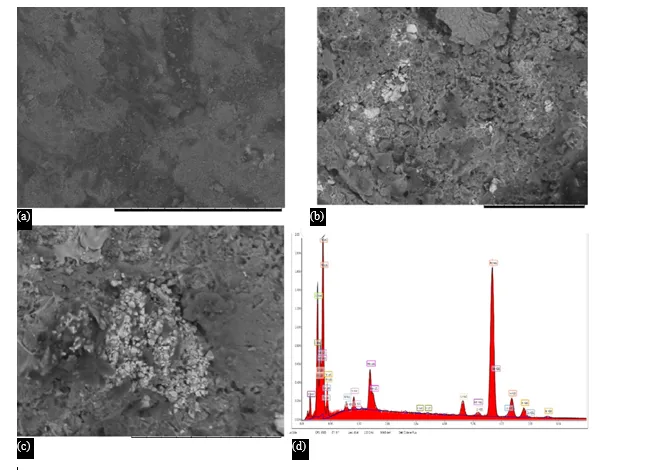
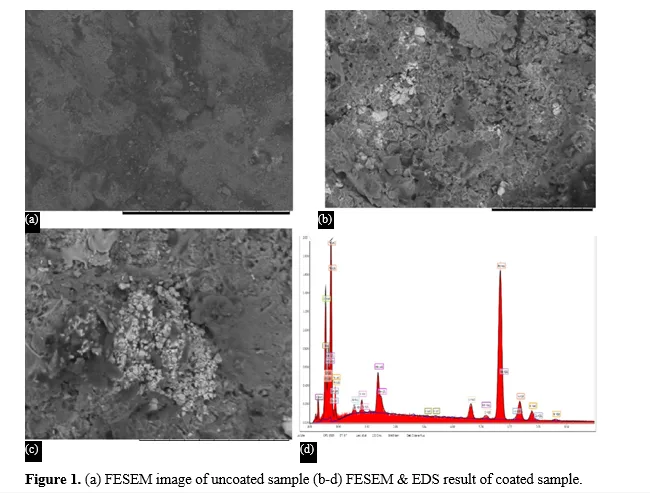
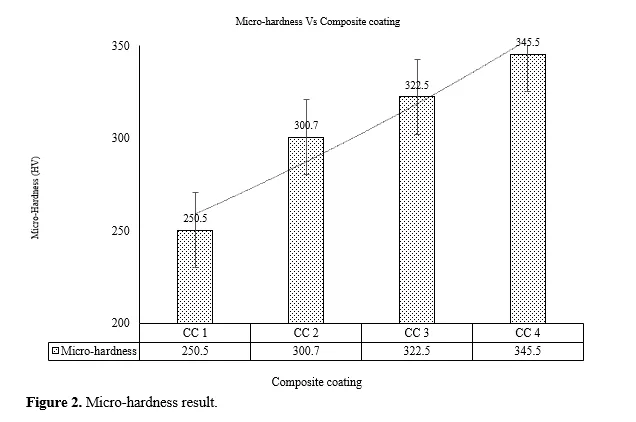
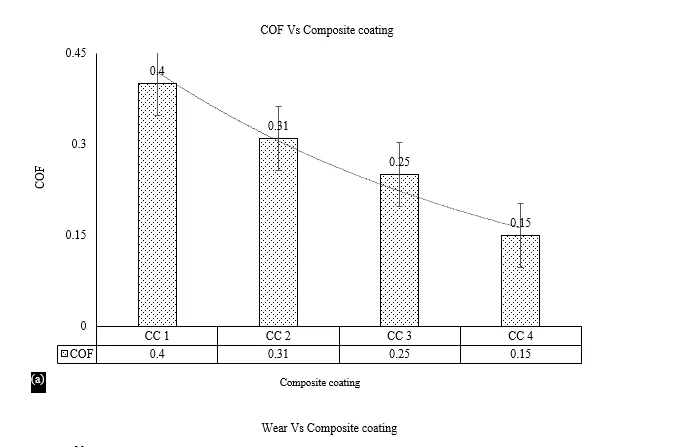
The author effectively created a composite coating with enhanced durability utilizing the HVOF technique in this investigation. The automobile business has encountered fierce worldwide rivalry, rapid technical breakthroughs, and strict regulatory regulations in recent year.. Producers of lubricants, gasoline additives, and worldwide original equipment manufacturers (OEMs) are striving to address the difficulties presented by changing consumer preferences and emerging energy conservation and environmental protection regulations. We have successfully created and analyzed composite coatings by the HVOF method, with the goal of improving resistance to wear. The existence of composite coating on steel was verified by FESEM and EDS, demonstrates the presence of a composite coating, characterized by the aggregation of composite particles and an uneven surface structure, as well as the occurrence of porous imperfections and also demonstrating favourable mechanical characteristics such as micro-hardness, as well as outstanding tribological performance. This study has the potential to uncover new uses for composite coatings on steel substrates, namely in areas that require enhanced mechanical strength, resistance to corrosion, and increased performance in friction and wear. The present study was investigated using FESEM, micro-hardness and tribo-meter testing. These composite phases demonstrated excellent mechanical qualities, such as high micro-hardness, and exceptional tribological performance, including low coefficient of friction and high wear resistance. The composite coating was subjected to testing at various temperatures (60, 120, 180°C). The researchers noted that the micro-hardness of the composite coating increased as the temperature rose, which was attributed to the development of oxide and carbide layers within the composite coating. The wear testing findings revealed that the composite coating exhibits lowest COF (0.15), and 30 μm wear at 180°C temperature.
Keywords: Composite; composite coating; micro-hardness; wear resistance; wear test
[This article belongs to Special Issue under section in Journal of Polymer & Composites (jopc)]
References
- Bell JC. Gasoline engine valve train design evolution and the anti wear requirements of motor oils. J Engine Tribol Proc Inst Mech Eng J 1998; 212(J4):243–57.
- Tung SC, Gaob H. Tribological characteristics and surface interaction between piston ring coatings and a blend of energy-conserving oils and ethanol fuels. Wear 2003; 255: 1276–85.
- Coy RC. Practical applications of lubrication models in engines. New dir tribology, MEP; 1997. p. 197–209.
- Skjoedt M, Butts R, Assanis DN, Bohac SV. Effects of oil properties on spark ignition gasoline engine friction. Tribol Int 2008; 41: 556–63.
- Drozdz et al., Chromium-based oxidation-resistant coatings for the protection of engine valves in automotive vehicles, Materials and Technology, 51 (2017) 603–607
- Gawel et. al, Oxidation resistance of valve steels covered with thin SiC coatings, obtained by RF CVD, Corrosion Science 145 (2018) 16–25
- Kapsiz M, Durat M, Ficici F (2011) Friction and wear studies between cylinder liner and piston ring pair using Taguchi design method. Adv Eng Softw, 2011; 42; 595–603.
- Yan J, He Z, Wang Y, et al. Microstructure and wear resistance of plasma-sprayed molybdenum coating reinforced by MoSi2 particles. J Therm Spray Technol. 2016; 25; 1322–1329.
- Zhou W, Zhou K, Deng C, et al. Hot corrosion behavior of HVOF-sprayed Cr3C2-WC-NiCoCrMo coating. Ceram Int. 2017. doi:10.1016/j.ceramint.2017.04.109 10.
- Tyagi A., Murtaza Q., Walia, RS., Pandey SM., Characterization and parametric optimization of tribological properties of Mo blend composite coating, Material Research Express, (Accepted, 2019).
- Ankit Tyagi, SM Pandey, Qasim Murtaza, R.S. Walia, Mohit Tyagi, “Tribological behavior of composite coating for piston ring applications using Taguchi approach”, Materials Today: Proceedings, (Accepted, 2019).
- Shailesh Mani Pandey, Qasim Murtaza, R. S. Walia, Study of dry wear behavior and morphological characteristic of 60%Mo-20%NiCr-10%CrC-10%Mo+Fe based alloy coating by atmospheric plasmaspray technique, Advances in Materials and Processing Technologies, DOI: 10.1080/2374068X.2017.1334997.
- Obert P, Muller T, Fu.er HJ, et al. The influence of oil supply and cylinder liner temperature on friction, wear and scuffing behavior of piston ring cylinder liner contacts – a new model test. Tribol Int. 2016; 94; 306–314.
- Hong S, Wu Y, Wang B, et al. The effect of temperature on the dry sliding wear behavior of HVOF sprayed nanostructured WC-CoCr coatings. Ceram Int. 2017; 43; 458–462.
- Priyan MS, Hariharan P. Wear and corrosion resistance of Fe-based coatings by HVOF sprayed on gray cast-iron for automotive application. Tribol Ind. 2014; 36; 394–405. 16.
- Tyagi A., Walia, RS., Murtaza Q., Tribological behavior of temperature dependent environment friendly thermal CVD diamond coating, Diamonds and Related Materials, 96 (2019) 148–159.
- Ankit Tyagi, R.S. Walia, Qasim Murtaza, Shailesh Mani Pandey, Pawan Tyagi, Bharat Bajaj, A critical review of Diamond like Composite Coating for Wear Resistance Applications, International Journal of Refractory Metals & Hard Materials, 2019; 78; 107–122.
- Manninen, F. Ribeiro, A. Escudeiro, T. Polcar, S. Carvalho, A. Cavaleiro, Influence of Ag content on mechanical and tribological behavior of DLC coatings, Surf. Coat. Technol. 2013; 232:440–446.
- Casiraghi, A. Ferrari, J. Robertson, Raman spectroscopy of hydrogenated amorphous composites, Phys. Rev. 2005; B 72: 085401.
- Wu, X.D. Lan, Y. Liu, F. Li, W.D. Zhang, Z.J. Chen, X.F. Zai, H. Zeng, Fabrication, tribological and corrosion behaviors of detonation gun sprayed Fe-based metallic glass coating, Trans. Nonferrous Metals Soc. China, 2016; 26 (6); 1629–1637.

Journal of Polymer & Composites
| Volume | 13 | |
| Special Issue | 01 | |
| Received | 03/09/2024 | |
| Accepted | 21/09/2024 | |
| Published | 07/11/2024 | |
| Publication Time | 65 Days |