A. Anandha Keerthana,
- Research Intern, Department of Bioinformatics, Bionome, Bengaluru, Karnataka, India
Abstract
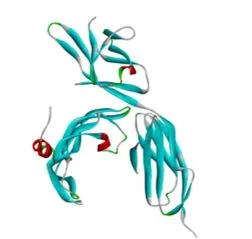
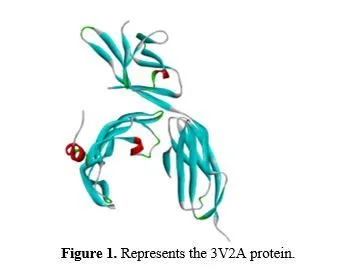
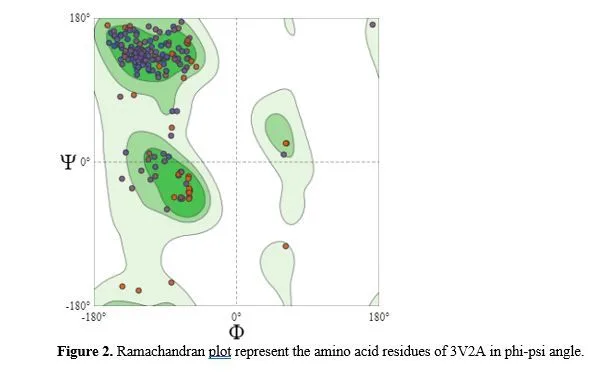
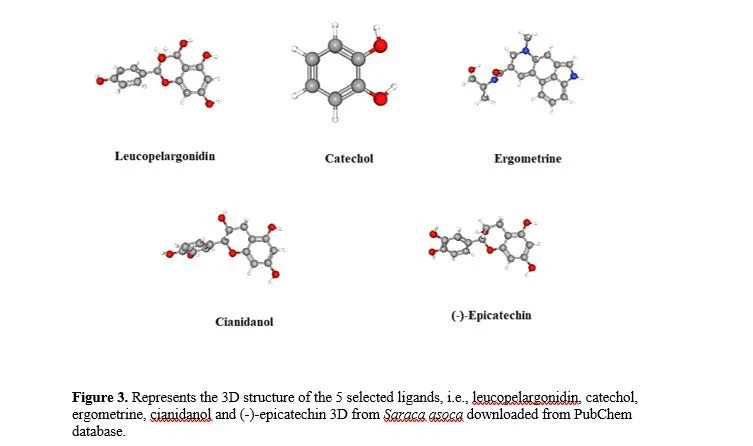
Objective: One of the top five cancers that causes death in women is ovarian cancer, with increases awareness till date the rate of survival is unpredictable. Even though there are advance treatments introduced, chemotherapy is most suggested to the ovarian cancer patients but the rate of relapses increased and the tumors get resistant towards the drugs. This present study is to evaluate the interaction of phytocompounds from Saraca asoca an Indian medicinal plant with VEGF protein that is essential for metastasis of the tumor cells by docking studies. Methods: The In-silico study involved retrieval of phytocompounds of Saraca asoca from IMPPAT database and analysed for the pharmacokinetic properties by ADME analysis. These phytocompounds are evaluated with the target 3V2A protein by PyRx and BIOVIA Discovery studio to deduct the binding affinity of the ligand and protein. Result: Among the 11 phytocompounds after the ADME and docking results showed that (–)–epicatechin was ideal phytocompound for 3V2A protein associated with ovarian cancer. Conclusion: (-)-epicatechin can be a promising alternative for ovarian cancer treatment further research to be done to analysis their effect.
Keywords: Ovarian cancer, VEGF, Saraca asoca, ADME and molecular docking
[This article belongs to International Journal of Molecular Biotechnological Research ]
References
- Book BU. Ovarian Cancers: Evolving Paradigms in Research and Care. Ovarian Cancers: Evolving Paradigms in Research and Care. Washington DC: The National Academic press; 2016. 1–396.
- Knapp RC. Reflections on ovarian cancer: A 33-year experience. Gynecol Oncol. 1994;54(2):124–129. doi:10.1006/gyno.1994.1180.
- Shafabakhsh R, Asemi Z. Quercetin: a natural compound for ovarian cancer treatment. J Ovarian Res. 2019;12:1–9. doi:10.1186/s13048-019-0530-4.
- Mesiano S, Ferrara N, Jaffe RB. Role of vascular endothelial growth factor in ovarian cancer: inhibition of ascites formation by immunoneutralization. Am J Pathol. 1998;153(4):1249–1256. doi:10.1016/S0002-9440(10)65669-6.
- Masoumi MS, Amini A, Morris DL, Pourgholami MH. Significance of vascular endothelial growth factor in growth and peritoneal dissemination of ovarian cancer. Cancer and Metastasis Rev. 2012;31:143–162. doi:10.1007/s10555-011-9337-5.
- Quental MV, Pereira MM, Silva FA, Coutinho JA, Freire MG. Aqueous biphasic systems comprising natural organic acid-derived ionic liquids. Separations. 2022;9(2):46. doi:10.3390/separations9020046.
- Shield K, Ackland ML, Ahmed N, Rice GE. Multicellular spheroids in ovarian cancer metastases: Biology and pathology. Gynecol Oncol. 2009;113(1):143–148. doi:10.1016/j.ygyno.2008.11.032.
- Rahimi N. VEGFR-1 and VEGFR-2: two non-identical twins with a unique physiognomy. Front Biosci. 2006;11:818–829. doi:10.2741/1839.
- Mukherjee S, Abdalla M, Yadav M, Madhavi M, Bhrdwaj A, Khandelwal R, et al. Structure-based virtual screening, molecular docking, and molecular dynamics simulation of VEGF inhibitors for the clinical treatment of ovarian cancer. J Mol Model. 2022;28(4):100. doi:10.1007/s00894-022-05081-3.
- Capozzi VA, Rosati A, Turco LC, Sozzi G, Riccò M, Chiofalo B, et al. Surgery vs. chemotherapy for ovarian cancer recurrence: what is the best treatment option. Gland Surg. 2020;9(4):1112–1117. doi:10.21037/gs-20-326.
- Anastasia P. Intraperitoneal chemotherapy for ovarian cancer. Oncol Nursing Forum. 2012;39(4):346.
- Wu J, Zhou T, Wang Y, Jiang Y, Wang Y. Mechanisms and advances in anti-ovarian cancer with natural plants component. Mol. 2021;26(19):5949. doi:10.3390/molecules26195949.
- Dharshini AD, Elumalai P, Raghunandhakumar S, Lakshmi T, Roy A. Evaluation of anti-cancer activity of Saraca asoca flower extract against lung cancer cell line. J Pharm Res Int. 2021;33:423–431. doi:10.9734/jpri/2021/v33i62a35617.
- Waterhouse A, Bertoni M, Bienert S, Studer G, Tauriello G, Gumienny R, et al. SWISS-MODEL: homology modelling of protein structures and complexes. Nucleic Acids Res. 2018;46(W1):W296–303. doi:10.1093/nar/gky427.
- Durán-Iturbide NA, Díaz-Eufracio BI, Medina-Franco JL. In silico ADME/Tox profiling of natural products: A focus on BIOFACQUIM. ACS Omega. 2020;5(26):16076–16084. doi:10.1021/acsomega.0c01581.
- Kim S, Bolton EE. PubChem: A Large-Scale Public Chemical Database for Drug Discovery. In: Dainan A, Przewosny M, Zoete V, editors. National Center for Biotechnology Information, National Library of Medicine, National Institutes of Health. Open Access Databases and Datasets for Drug Discovery. Weinheim, Germany: Wiley-VCH Verlag GmbH & Co. KGaA; 2023. doi:10.1002/9783527830497.ch2.
- Shakoor B, Yaqoob N, Shafiq N, Bin Jardan YA, Nafidi HA, Bourhia M. In Silico ADME/Tox profiling of mushroom secondary metabolites. ChemistrySelect. 2024;9(4):e202304312. doi:10.1002/slct.202304312.
- Asirvatham RD, Hwang DH, Prakash RL, Kang C, Kim E. Pharmacoinformatic investigation of silymarin as a potential inhibitor against Nemopilema nomurai jellyfish metalloproteinase toxin-like protein. Int J Mol Sci. 2023;24(10):8972. doi:10.3390/ijms24108972.
- Ferrari IV, Patrizio P. Development and validation molecular docking analysis of human serum albumin (HSA). BioRxiv. 2021. doi:10.1101/2021.07.09.451789.
- Rais J, Jafri A, Siddiqui S, Tripathi M, Arshad M. Phytochemicals in the treatment of ovarian cancer. Front Biosci. 2017;9(1):67–75. doi:10.2741/e786.
- Haque A, Baig GA, Abdulelah Saleh Alshawli, Khalid, Hafeez BB, Tripathi MK, et al. Interaction Analysis of MRP1 with Anticancer Drugs Used in Ovarian Cancer: In Silico Approach. Life. 2022;12(3):383. doi:10.3390/life12030383.
- Pai S, Roy S, Hegde S, Hegde H, SunilSatyappa Jalalpure, MalleswaraRao Peram. Resolving identification issues of Saraca asoca from its adulterant and commercial samples using phytochemical markers. Pharmacogn Mag. 2017;13(50):S266–S272. doi:10.4103/pm.pm_417_16.
- Smitha GR, Thondaiman V. Reproductive biology and breeding system of Saraca asoca (Roxb.) De Wilde: a vulnerable medicinal plant. Springerplus. 2016;5(1). doi:10.1186/s40064-016-3709-9.
- Vasconcelos P, Seito LN, Luiz, Clélia Akiko Hiruma-Lima, Cláudia Helena Pellizzon. Epicatechin used in the treatment of intestinal inflammatory disease: An analysis by experimental models. Evid Based Complement Alternat Med. 2012;2012:1–12. doi:10.1155/2012/508902.
- Escandón RA, Del Campo M, López-Solis R, Obreque-Slier E, Toledo H. Antibacterial effect of kaempferol and (−)- epicatechin on Helicobacter pyroli. Eur Food Res Technol. 2016;242:1495–1502. doi:10.1007/s00217-016-2650-z.
- Pereyra-Vergara F, Olivares-Corichi IM, Perez-Ruiz AG, Luna-Arias JP, García-Sánchez JR. Apoptosis induced by (−)-epicatechin in human breast cancer cells is mediated by reactive oxygen species. Mol. 2020;25(5):1020. doi:10.3390/molecules25051020.
- Shay J, Elbaz HA, Lee I, Zielske SP, Malek MH, Hüttemann M. Molecular mechanisms and therapeutic effects of (−)‐epicatechin and other polyphenols in cancer, inflammation, diabetes, and neurodegeneration. Oxid Med Cell Longev. 2015;2015(1):181260. doi:10.1155/2015/181260.

| Volume | 02 | |
| Issue | 02 | |
| Received | 03/09/2024 | |
| Accepted | 04/11/2024 | |
| Published | 18/11/2024 | |
| Publication Time | 76 Days |