Amit Shishodia,
- Student, Department of Mechanical Engineering, Noida International University, Ghaziabad, Uttar Pradesh, India
Abstract
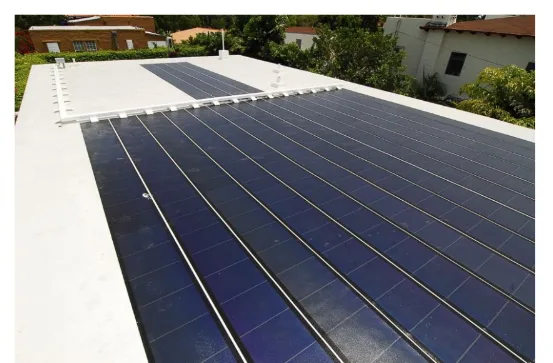
The desire for renewable energy solutions and the rising demand for energy worldwide have driven important developments in hybrid photovoltaic-thermal systems. Photovoltaic-thermal systems provide the advantages of both thermal energy collection and electrical energy generation as they integrate photovoltaic and thermal collectors into a single module. However, a number of variables, including system architecture, material choice, cooling systems, and ambient circumstances, affect how well they function. The goal of this article is to present a thorough overview of the important design techniques and technical developments for photovoltaic-thermal system performance optimization. Recent advancements in absorber materials, cooling strategies, and hybrid configurations are highlighted in particular, along with new studies on how to increase efficiency using spectrum splitting, nanotechnology, and sophisticated manufacturing techniques. The need for sustainable and renewable energy solutions is greater than ever as the world’s energy consumption rises. Because it is abundant and environmentally friendly, solar energy is one of the most promising renewable energy solutions. Solar thermal collectors, which collect solar heat, and solar photovoltaic (PV) systems, which turn sunlight into electricity, have become popular energy-producing technologies. All of these technologies, however, have drawbacks when used in isolation. PV systems lose efficiency when the temperature of the solar cells rises, notwithstanding their effectiveness in converting sunlight into power. Conversely, thermal collectors are not able to produce energy, but they are good at absorbing heat.
Keywords: Photovoltaic, thin-film PV modules, concentrator photovoltaics, air-based thermal collectors, phase change materials
[This article belongs to Journal of Refrigeration, Air conditioning, Heating and ventilation ]
References
1. Al-Shamani AN, Sopian K, Mat S, Hasan HA, Abed AM, Ruslan MH. Experimental studies of rectangular tube absorber photovoltaic thermal collector with various types of nanofluids under the tropical climate conditions. Energy Convers Manag. 2016; 124: 528–542. Doi: 10.1016/j.enconman.2016.07.007. 2. Bhattarai S, Oh JH, Euh SH, Kafle GK, Kim DH. Simulation and model validation of sheet and tube type photovoltaic thermal solar system and conventional solar collecting system in transient states. Sol Energy Mater Sol Cells. 2012; 103: 184–193. Doi: 10.1016/j.solmat.2012.04.019. 3. Dubey S, Tiwari GN. Thermal modeling of a combined system of photovoltaic thermal (PV/T) solar water heater. Sol Energy. 2008; 82 (7): 602–612. Doi: 10.1016/j.solener.2008.01.007. 4. Gaur A, Tiwari GN. Analytical expressions for temperature dependent electrical efficiencies of thin film BIOPVT systems. Appl Energy. 2015; 146: 442–452. Doi: 10.1016/j.apenergy.2015.01.082. 5. Ürge-Vorsatz D, Cabeza LF, Serrano S, Barreneche C, Petrichenko K. Heating and cooling energy trends and drivers in buildings. Renew Sustain Energy Rev. 2015; 41: 85–98. Doi: 10.1016/j.rser.2014.08.039. 6. Thakare MS, Priya GK, Ghosh PC, Bandyopadhyay S. Optimization of photovoltaic–thermal (PVT) based cogeneration system through water replenishment profile. Sol Energy. 2016; 133: 512–523. Doi: 10.1016/j.solener.2016.03.082. 7. Vera JT, Laukkanen T, Sirén K. Multi-objective optimization of hybrid photovoltaic–thermal collectors integrated in a DHW heating system. Energy Build. 2014; 74: 78–90. Doi: 10.1016/j.enbuild.2014.01.042. 8. Preet S, Bhushan B, Mahajan T. Experimental investigation of water based photovoltaic/thermal (PV/T) system with and without phase change material (PCM). Sol Energy. 2017; 155: 1104–1120. Doi: 10.1016/j.solener.2017.05.014. 9. Zhang X, Zhao X, Smith S, Xu J, Yu X. Review of R&D progress and practical application of the solar photovoltaic/thermal (PV/T) technologies. Renew Sustain Energy Rev. 2012; 16 (8): 599– 617. Doi: 10.1016/j.rser.2011.08.026. 10. Raja AA, Huang Y. Novel parabolic trough solar collector and solar photovoltaic/thermal hybrid system for multi-generational systems. Energy Convers Manag. 2020; 211: 112750. Doi: 10.1016/j.enconman.2020.112750.

| Volume | 11 | |
| Issue | 02 | |
| Received | 07/08/2024 | |
| Accepted | 11/09/2024 | |
| Published | 19/09/2024 | |
| Publication Time | Days |