Bhoora Ram,
Shrikant Verma,
- Research Scholar, Department of Physics, Poornima University Jaipur, Rajasthan, India
- Associate Professor, Department of Physics, Poornima University Jaipur, Rajasthan, India
Abstract
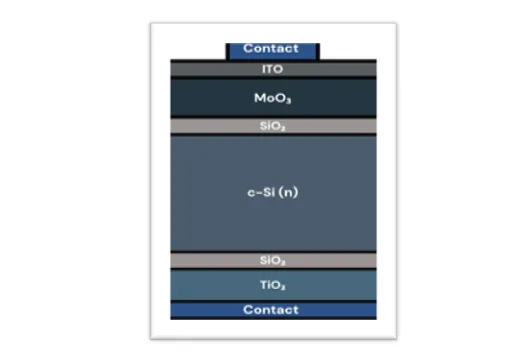
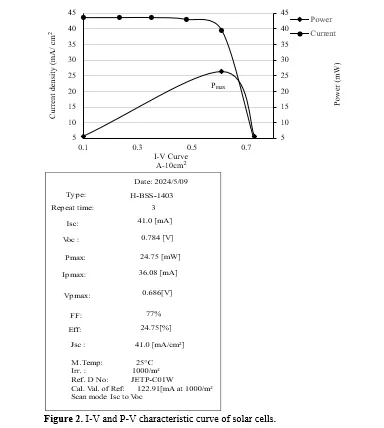
Fossil fuels are running out, which is contributing to greenhouse gas emissions and climate change due to the world’s growing energy demand. Renewable energy, which is environmentally friendly, is crucial for balancing the demand and supply of energy in our society.The non-traditional energy source with the fastest rate of growth is solar cells, which use photovoltaic technology to convert sunlight into electrical power.Conjugated polymers and large molecules are used in polymer solar cell technology to provide flexible, lightweight, affordable, and ecologically safe solar cells that help produce renewable energy and lower carbon dioxide emissions.Employing semiconductors, transition metal oxides serve as charge extraction inter layers in bulk heterojunction polymer solar cells, which combine a conjugate donor polymer containing a methanofullerene receptor, present a promising technique witha efficiency exceeding 19% and increased performance.Good ohmic connections between donors and acceptors are formed by both of n- & p-type transitional metal oxides in polymer solar cells, according to its transparency in the visual and infrared spectra. Despite the emergence of new varieties of solar cells, crystalline silicon cells continue to dominate the photovoltaic solar cell market, requiring additional research to improve their efficiency.Using heterocontact back structure technology, the heterojunction thin layer solar cell design with interfaces of molybdenum trioxide and titanium oxide attains an efficiency of 25% and has potential up to 28.4%. This article presents recent results on transition metal oxide synthesis, characterization, and device performance of polymer &silicon solar cells, aiming to provide cost-effective energy to society.
Keywords: Transition- metal oxides (TMOs), interfaces, holetransport layers (HTL), electron transport layers (ETL),C-Si solar cells, polymer solar cells (PSCs).
[This article belongs to Journal of Polymer & Composites ]

References
- Zhu L, Zhang M, Xu J, Li C, Yan J, Zhou G, Zhong W, Hao T, Song J, Xue X, Zhou Z. Single-junction organic solar cells with over 19% efficiency enabled by a refined double-fibril network morphology. Nature Materials. 2022 Jun;21(6):656-63.
- Liao Z, Hu D, Tang H, Huang P, Singh R, Chung S, Cho K, Kumar M, Hou L, Chen Q, Yu W. 18.42% efficiency polymer solar cells enabled by terpolymer donors with optimal miscibility and energy levels. Journal of Materials Chemistry A. 2022;10(14):7878-87.
- You J, Dou L, Yoshimura K, Kato T, Ohya K, Moriarty T, Emery K, Chen CC, Gao J, Li G, Yang Y. A polymer tandem solar cell with 10.6% power conversion efficiency Nat. Commun. 2013;4(1):1-0.
- Chen CC, Chang WH, Yoshimura K, Ohya K, You J, Gao J, Hong Z, Yang Y. An efficient triple‐junction polymer solar cell having a power conversion efficiency exceeding 11%. Advanced materials. 2014 Aug;26(32):5670-7.
- Yang Y, Chen W, Dou L, Chang WH, Duan HS, Bob B, Li G, Yang Y. High-performance multiple-donor bulk heterojunction solar cells. Nature photonics. 2015 Mar;9(3):190-8.
- Janssen R. Introduction to polymer solar cells. Departments of Chemical Engineering & Chemistry and Applied Physics, Eindhoven University of Technology, The Netherlands. 2005.
- Chen S, Manders JR, Tsang SW, So F. Metal oxides for interface engineering in polymer solar cells. Journal of Materials Chemistry. 2012;22(46):24202-12.
- Shrotriya, V., Li, G., Yao, Y., Chu, C.W. and Yang, Y., 2006. Transition metal oxides as the buffer layer for polymer photovoltaic cells. Applied Physics Letters, 88(7).
- Kim J, Kim H, Kim G, Back H, Lee K. Soluble transition metal oxide/polymeric acid composites for efficient hole-transport layers in polymer solar cells. ACS Applied Materials & Interfaces. 2014 Jan 22;6(2):951-7.
- Wang X, Perzon E, Delgado JL, de la Cruz P, Zhang F, Langa F, Andersson M, Inganäs O. Infrared photocurrent spectral response from plastic solar cell with low-band-gap polyfluorene and fullerene derivative. Applied physics letters. 2004 Nov 22;85(21):5081-3.
- Wang X, Perzon E, Oswald F, Langa F, Admassie S, Andersson MR, Inganäs O. Enhanced photocurrent spectral response in low‐bandgap polyfluorene and C70‐derivative‐based solar cells. Advanced Functional Materials. 2005 Oct;15(10):1665-70.
- Perzon E, Wang X, Zhang F, Mammo W, Delgado JL, de la Cruz P, Inganäs O, Langa F, Andersson MR. Design, synthesis and properties of low band gap polyfluorenes for photovoltaic devices. Synthetic metals. 2005 Sep 22;154(1-3):53-6.
- Zhang F, Perzon E, Wang X, Mammo W, Andersson MR, Inganäs O. Polymer solar cells based on a low‐bandgap fluorene copolymer and a fullerene derivative with photocurrent extended to 850 nm. Advanced Functional Materials. 2005 May;15(5):745-50.
- Kim Y, Cook S, Choulis SA, Nelson J, Durrant JR, Bradley DD. Organic photovoltaic devices based on blends of regioregular poly (3-hexylthiophene) and poly (9, 9-dioctylfluorene-co-benzothiadiazole). Chemistry of Materials. 2004 Nov 16;16(23):4812-8.
- Koetse MM, Sweelssen J, Hoekerd KT, Schoo HF, Veenstra SC, Kroon JM, Yang X, Loos J. Efficient polymer: polymer bulk heterojunction solar cells. Applied Physics Letters. 2006 Feb 20;88(8).
- Halls JJ, Arias AC, MacKenzie JD, Wu W, Inbasekaran M, Woo EP, Friend RH. Photodiodes based on polyfluorene composites: influence of morphology. Advanced Materials. 2000 Apr;12(7):498-502.
- Arias AC, MacKenzie JD, Stevenson R, Halls JJ, Inbasekaran M, Woo EP, Richards D, Friend RH. Photovoltaic performance and morphology of polyfluorene blends: a combined microscopic and photovoltaic investigation. Macromolecules. 2001 Aug 14;34(17):6005-13.
- Mehmood H, Nasser H, Tauqeer T, Turan R. Numerical analysis of dopant‐free asymmetric silicon heterostructure solar cell with SiO2 as passivation layer. International Journal of Energy Research. 2020 Oct 25;44(13):10739-53.
- Glatzel T, Hoppe H, Sariciftci NS, Lux-Steiner MC, Komiyama M. Kelvin probe force microscopy study of conjugated polymer/fullerene organic solar cells. Japanese journal of applied physics. 2005 Jul 26;44(7S):5370.
- Park Y, Choong V, Gao Y, Hsieh BR, Tang CW. Work function of indium tin oxide transparent conductor measured by photoelectron spectroscopy. Applied physics letters. 1996 May 6;68(19):2699-701.
- Snaith HJ, Greenham NC, Friend RH. The origin of collected charge and open‐circuit voltage in blended polyfluorene photovoltaic devices. Advanced Materials. 2004 Sep 16;16(18):1640-5.
- Beek WJ, Wienk MM, Janssen RA. Hybrid polymer solar cells based on zinc oxide. Journal of Materials Chemistry. 2005;15(29):2985-8.
- Quist PA, Slooff LH, Donker H, Kroon JM, Savenije TJ, Siebbeles LD. Formation and decay of charge carriers in hybrid MDMO-PPV: ZnO bulk heterojunctions produced from a ZnO precursor. Superlattices and Microstructures. 2005 Oct 1;38(4-6):308-16.
- Olson DC, Piris J, Collins RT, Shaheen SE, Ginley DS. Hybrid photovoltaic devices of polymer and ZnO nanofiber composites. Thin solid films. 2006 Feb 1;496(1):26-9.
- Peiró AM, Ravirajan P, Govender K, Boyle DS, O’Brien P, Bradley DD, Nelson J, Durrant JR. Hybrid polymer/metal oxide solar cells based on ZnO columnar structures. Journal of Materials Chemistry. 2006;16(21):2088-96.
- Ravirajan P, Peiró AM, Nazeeruddin MK, Graetzel M, Bradley DD, Durrant JR, Nelson J. Hybrid polymer/zinc oxide photovoltaic devices with vertically oriented ZnO nanorods and an amphiphilic molecular interface layer. The Journal of Physical Chemistry B. 2006 Apr 20;110(15):7635-9.
- Bach U, Lupo D, Comte P, Moser JE. WeissöRtel, F.; Salbeck, J.; Spreitzer, H.; Grä, M. Solid-State Dye-Sensitized Mesoporous TiO2 Solar Cells with High Photon-to-Electron Conversion Efficiencies. Nature. 1998;395:583-5.
- Sanyal S, Dutta S, Ju M, Mallem K, Panchanan S, Cho EC, Cho YH, Yi J. Hole Selective Contacts: A Brief Overview. Current Photovoltaic Research. 2019;7(1):9-14.
- Schmidt J., Peibst R., and Brendel R., “Surface passivation of crystalline silicon solar cells: present and future.” Solar Energy Materials and Solar Cells. 2018 Dec 1;187: 39–54.
- Scirè D., Macaluso R., Mosca., Casaletto M.P., Isabella O., Zeman M., Crupiet I., “Transition metal oxides as selective contacts for c-Si solar cells”. Nano Research, December 2021, 11-5974/O4.
- Taguchi, M.; Kawamoto, K.; Tsuge, S.; Baba, T.; Sakata, H.; Morizane, M.; Uchihashi, K.; Nakamura, N.; Kiyama, S.; Oota, O. HITTM, “High-efficiency crystalline Si cells with novel structure.” Prog. Photovolt. Res. Appl. 2000, 8, 503–513.
- Ibarra Michel J, Dréon J, Boccard M, Bullock J, Macco B. Carrier‐selective contacts using metal compounds for crystalline silicon solar cells. Progress in Photovoltaics: Research and Applications. 2023 Apr;31(4):380-413.
- Vijayan R.A., Masilamani S., Kailasam S., Shivam K., Deenadhayalan B., VaradharajaperumalM.. “Study of surface passivation and charge transport barriers in DASH solar cell. IEEE Journal of Photovoltaics”. 2019 Jul 18, 9(5):1208-16. DOI: 10.1109/JPHOTOV.2019.2926624
- Wang G., Zhang C., Sun H., “Understanding and design of efficient carrier-selective contacts for solar cells”, AIP Advances 11, November 2021,11, 115026 ,https://doi.org/10.1063/5.0063915
- Wang Y., Zhang ST., Li L., Yang X., Lu L., Li D., “Dopant‐free passivating contacts for crystalline silicon solar cells: Progress and prospects”. EcoMat. 2023 Feb, 5(2):e12292.. https://doi.org/10.1002/eom2.12292
- Wilson G.M.; Al-Jassim, M.; Metzger, W.K.; Glunz, S.W.; Verlinden, P.; Xiong, G.; Mansfield, L.M.; Stanbery, B.J.; Zhu, K.; Yan, Y. “The 2020 photovoltaic technology roadmap.” J. Phys. D. Appl. Phys. 2020, 53, 493001.
- Wong T.K.S., Pei K., “Double Hetero-junction Crystalline Silicon Solar Cells From Doped Silicon to Dopant-Free Passivating Contacts”, Photonics, July 2022., 9(7) , 477-509. https://doi.org/10.3390/photonics9070477
- Wu, C.; Wang, K.; Batmunkh, M.; Bati, A.S.; Yang, D.; Jiang, Y.; Hou, Y.; Shapter, J.G.; Priya, S. “Multifunctional nanostructured materials for next generation photovoltaics.” Nano Energy 2020, 70, 104480.
- Yamaguchi, M.; Takamoto, T.; Araki, K.; Ekins-Daukes, N. “Multi-junction III-V solar cells: Current status and future potential.” Sol. Energy 2005, 79, 78–85.
- Yan D., Cuevas A., Phang SP., Wan Y., Macdonald D., “23% efficient p-type crystalline silicon solar cells with hole-selective passivating contacts based on physical vapor deposition of doped silicon films”. Applied Physics Letters. 2018 Aug 6;113(6). https://doi.org/10.1063/1.5037610
- Yoshikawa K., Kawasaki H., Yoshida W., “Silicon heterojunction solar cell with interdigitated back contacts for a photo-conversion efficiency over 26%”, Nature Energy., March 2017,2, 17032-17040. DOI: 10.1038/nenergy.2017.32
- Yu C., Xu S., Yao J., Han S., “Recent advances in and new perspectives on crystalline silicon solar cells with carrier-selective passivation contacts”. Crystals. 2018 Nov 15, 8(11):430. doi:10.3390/cryst8110430
- Zeng Y, Peng CW, Hong W, Wang S, Yu C, Zou S, Su X. “Review on metallization approaches for highefficiency silicon heterojunction solar cells”. Transactions of Tianjin University. 2022 Oct;28(5):358- 73.https://doi.org/10.1007/s12209-022-00336-9
- Zhao Y., Procel P., Han C., Cao L., Yang G., Özkol E., Alcañiz A., Kovačević K., Limodio G., Santbergen R., Smets A., “Strategies for realizing high-efficiency silicon heterojunction solar cells” Solar Energy Materials and Solar Cells. 2023 Aug 15, 258:112413.DOI 10.1016/j.solmat.2023.11241
- Brabec CJ, Winder C, Sariciftci NS, Hummelen JC, Dhanabalan A, van Hal PA, Janssen RA. A low‐bandgap semiconducting polymer for photovoltaic devices and infrared emitting diodes. Advanced Functional Materials. 2002 Oct 16;12(10):709-12.
- Colladet K, Nicolas M, Goris L, Lutsen L, Vanderzande D. Low-band gap polymers for photovoltaic applications. Thin Solid Films. 2004 Mar 22;451:7-11.
- Zhou Q, Hou Q, Zheng L, Deng X, Yu G, Cao Y. Fluorene-based low band-gap copolymers for high performance photovoltaic devices. Applied Physics Letters. 2004 Mar 8;84(10):1653-5.
- Campos LM, Campos LM, Tontcheva A, Günes S, Sonmez G, Neugebauer H, Sariciftci NS, Wudl F. Extended photocurrent spectrum of a low band gap polymer in a bulk heterojunction solar cell. Chemistry of materials. 2005 Aug 9;17(16):4031-3.
- Gnida P, Amin MF, Pająk AK, Jarząbek B. Polymers in High-efficiency solar cells: The latest reports. Polymers. 2022 May 11;14(10):1946.

Journal of Polymer & Composites
| Volume | 12 | |
| Issue | 05 | |
| Received | 09/07/2024 | |
| Accepted | 27/07/2024 | |
| Published | 01/08/2024 | |
| Publication Time | Days |