Open Access
Dr. Pradnya Chaudhari,
Dr. Shashikiran N.D,
Dr. Sachin gugawad,
Dr. Namrata Gaonkar,
Dr. Swapnil Taur,
Dr. Savita Hadakar,
- PG Student, Dept. of Paedodontics, School of Dental Sciences, Krishna Vishwa Vidyapeeth Deemed to be University, Karad, Maharashtra, India
- Dean, Head, Dept. of Paedodontics, School of Dental Sciences, Krishna Vishwa Vidyapeeth Deemed to be University, Karad, Maharashtra, India
- Associate Professor, Dept. of Paedodontics, School of Dental Sciences, Krishna Vishwa Vidyapeeth Deemed to be University, Karad, Maharashtra, India
- Associate Professor, Dept. of Paedodontics, School of Dental Sciences, Krishna Vishwa Vidyapeeth Deemed to be University, Karad, Maharashtra, India
- Assistant Professor, Dept. of Paedodontics, School of Dental Sciences, Krishna Vishwa Vidyapeeth Deemed to be University, Karad, Maharashtra, India
- Assistant Professor, Dept. of Paedodontics, School of Dental Sciences, Krishna Vishwa Vidyapeeth Deemed to be University, Karad, Maharsahtra, India
Abstract
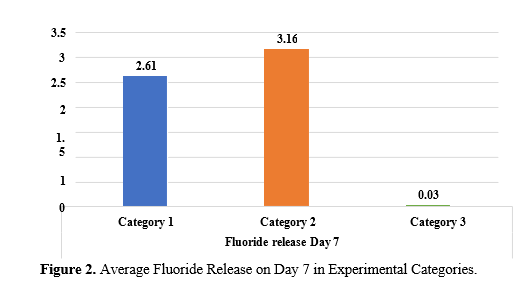
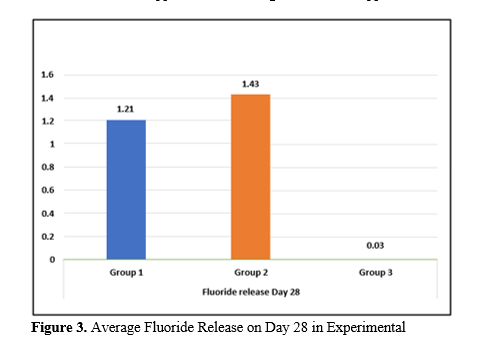
The demand for dental composites with enhanced properties has led to the development of bioactive smart composites aimed at addressing multiple aspects of restorative dentistry. This in vitro investigation aimed to conduct a comparative assessment of the antibacterial effectiveness, bioactivity, fluoride release, and microleakage properties of various bioactive smart composites. Bioactive smart composites are emerging dental materials designed to promote remineralization and inhibit bacterial growth, thereby enhancing the longevity of dental restorations. Five different bioactive smart composites were evaluated for their antibacterial activity against common oral pathogens, bioactivity in simulated body fluid, fluoride release kinetics, and microleakage potential using standardized laboratory tests. Others demonstrated enhanced bioactivity, promoting apatite formation on the composite surface. Fluoride release profiles differed, with certain composites releasing fluoride ions steadily over time, potentially aiding in caries prevention. Results revealed significant variations in antibacterial effectiveness, bioactivity, fluoride release profiles, and microleakage resistance among the tested composites. Understanding the performance characteristics of bioactive smart composites is crucial for informed decision-making in restorative dentistry and optimizing the clinical outcomes of dental restorations.
Keywords: Bioactive smart composites, Nanoparticles, bioactivity, fluoride release, microleakage, dental materials
[This article belongs to Special Issue under section in Journal of Polymer & Composites (jopc)]


References
- Lamont RJ, & Egland PG. Dental Caries. Molecular Medical Microbiology, 2015; 945–55. doi:10.1016/b978-0-12-397169-2.00052-4.
- Bali RK, Mathur VB, Talwar PP, Channa HB. National Oral Health Survey & Fluoride Mapping. New Delhi: Dental Council of India; 2002.
- Zero DT, Fontana M, Martínez-Mier EA, Ferreira-Zandoná A, Ando M, González-Cabezas C, Bayne S.The Biology, Prevention, Diagnosis and Treatment of Dental Caries. The Journal of the American Dental Association. 2009;140:25S–34S.
- BOWEN RL. Properties of a silica reinforced polymer for dental restorations. J. Am. Dent. Assoc. 1963;66:57-64.
- Mc CABE JF. Developments in composite resins. Br. Dent. J. 1984;157:440-4.
- CRAIG RG. Chemistry, composition and properties of composite resins, Dent. Clin. North Am. 1981;25:219-39.
- Martin SS. Dental Composites: A Comprehensive Review. The Academy of Dental Learning and OSHA Training, LLC. Publication Date: October 2012 Updated Date: July 2017.
- Najma Hajira NSW, Meena N. GIOMER- The Intelligent Particle (New Generation Glass Ionomer Cement). Int J Dent Oral Health 2015;2(4).
- American Dental Association. ACE Panel Report: Bioactive Materials. ADA website. https://www.ada.org/en/publications/ada- news/2018-archive/june/ace-panel-report-focuses-on- bioactivematerials. Accessed October 10, 2019.
- Gregg AH. Bioactive Bulk Composite Satisfies Esthetic Demands While Protecting Against Restoration Failure. Compendium. 2019 Nov;40(10).
- Satoshi I. Antibacterial properties of resin composites and dentin bonding systems. Dental Materials. 2003;19:449–57.
- Ke Z, Ning Z, Michael DW, Mark AR, Yuxing B, Hockin HK. Bioactive dental composites and bonding agents having remineralizing and antibacterial characteristics. Dent Clin North Am. 2017 Oct;61(4):669–
- Li P, Ohtsuki C, Kokubo T, Nakanishi K, Soga N, et al. Effects of ions in aqueous media on hydroxyapatite induction by silica gel and its relevance to bioactivity of bioactive glasses and glassceramics. J Appl Biomater. 1993;4: 221-9.
- Gururaj M, Shetty R, Nayak M, Shetty S, Kumar CNV. Fluoride releasing and Uptake Capacities of Esthetic Restorations. J Contemp Dent Pract 2013;14(5): 887-891.
- Kremer E. A., Chen Y., Suzuki K., Nagase H., Gorski J. P. Hydroxyapatite induces autolytic degradation and inactivation of matrix metalloproteinase 1 and 3. J. Bone. Miner. Res. 1998;13:1890–902. 10.1359/jbmr.1998.13.12.1890
- Kaushik M, Yadav M. MARGINAL MICROLEAKAGE PROPERTIES OF ACTIVA BIOACTIVE RESTORATIVE AND NANOHYBRID COMPOSITE RESIN USING TWO DIFFERENT ADHESIVES IN NON-CARIOUS CERVICAL LESIONS – AN IN VITRO STUDY. Journal of the West African College of Surgeons. 2017; 7:1-14.
- Ghazal D, Koheil S, Mehesen M. MICROLEAKAGE OF A RECENT TYPE OF BIOACTIVE RESTORATIVE MATERIALS (ACTIVA) (IN VITRO STUDY). Alexandria Dental Journal, 2020. doi: 10.21608/adjalexu.2020.21395.1031
- Garoushi S, Vallittu PK, Lassila L. Characterization of fluoride releasing restorative dental materials. Dent Mater J. 2018 Mar 30;37(2):293-300. doi: 10.4012/dmj.2017-161. Epub 2017 Dec 27. PMID: 29279547

Journal of Polymer & Composites
| Volume | 12 | |
| Special Issue | 03 | |
| Received | 02/04/2024 | |
| Accepted | 13/05/2024 | |
| Published | 08/07/2024 | |
| Publication Time | Days |