Abhimanyu Chauhan,
Chakresh Kumar Jain,
- Research Scholar, Department of Biotechnology, Jaypee Institute of Information Technology, Uttar Pradesh, India
- Associate Professor, Department of Biotechnology, Jaypee Institute of Information Technology, Uttar Pradesh, India
Abstract
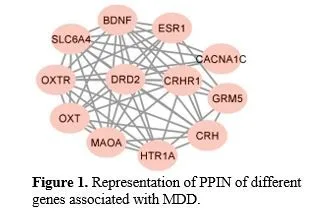
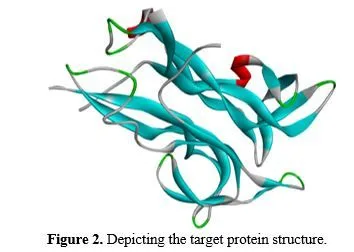
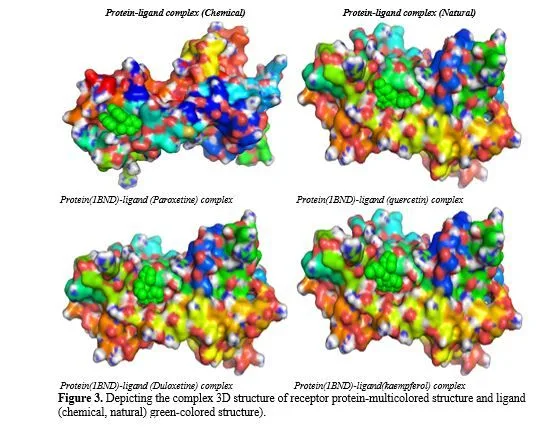
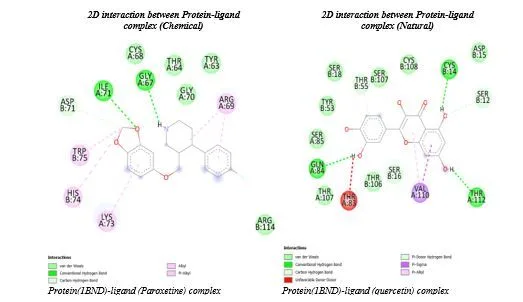
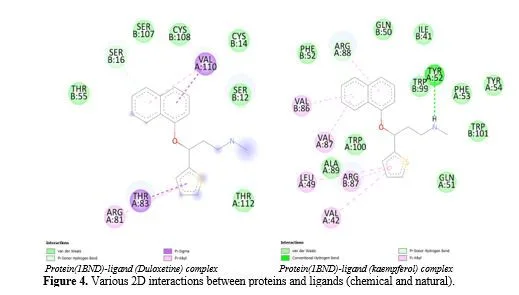
Major depressive disorder (MDD), a globally discussed mental health condition, has drawn significant attention because of its unique and intricate nature. This is marked by the enduring presence of negative emotions stemming from a lack of interest, diminished self-esteem, and excessive rumination. Despite the widespread availability of various antidepressant medications, their effectiveness is hindered by low response rates, prolonged treatment durations, and the prevalence of side effects, such as headaches, dizziness, insomnia, and oversleeping. This underscores the pressing need for alternative therapeutic approaches. In this study, a network biology approach was employed to identify the candidate genes associated with MDD. Among the identified genes, brain-derived neurotrophic factor (BDNF) has emerged as a potential target for further investigation. BDNF was subjected to molecular docking studies that utilized various drugs that are commonly prescribed for MDD treatment. Notably, the drug Paroxetine and Duloxetine demonstrated a superior docking score of -9.3 kcal/mol and -8.7 kcal/mol. To expand our exploration of plant-derived natural compounds (phytochemicals), we investigated substances from Brahmi (Bacopa monnieri), Shatavari (Asparagus racemosus), Ash Gourd (Benincasa hispida), and Marijuana (Cannabis). Phytochemicals such as Quercitin, Kaempferol (from Shatavari), and Dronabinol (from Marijuana) exhibited compelling docking scores of -10.6 kcal/mol, -9.9 kcal/mol and -9.6 kcal/mol respectively. These findings suggest the potential of natural compounds as effective alternatives to synthetic drugs. Furthermore, ADMET (Absorption, Distribution, Metabolism, Excretion, and Toxicity) properties and 2D structures of these phytochemicals were analyzed to assess their pharmacokinetic profiles and potential toxicity. This comprehensive analysis underscores the potential of phytochemicals as alternative therapeutic agents for MDD, and emphasizes the importance of further research in this area for the development of effective treatments in mental health.
Keywords: Drugs, natural compounds, molecular docking, MDD, marijuana
[This article belongs to Research and Reviews : Journal of Computational Biology ]

References
- Ferrari AJ, Charlson FJ, Norman RE, Patten SB, Freedman G, Murray CJL, Vos T, Whiteford HA. Burden of depressive disorders by country, sex, age, and year: Findings from the global burden of disease study 2010. PLoS Med. 2013;10. DOI: 10.1371/journal.pmed.1001547. PubMed: 24223526.
- World Health Organization. (2023). Depressive disorder (depression) [online]. World Health Organization: Geneva. Available from: https://www.who.int/news-room/fact-sheets/detail/depression
- Kong X, Wang C, Wu Q, Wang Z, Han Y, Teng J, Qi X. Screening and identification of key biomarkers of depression using bioinformatics. Sci Rep. 2023;13:4180. DOI: 10.1038/s41598-023-31413-1. PubMed: 36914737.
- Lam RW, McIntosh D, Wang J, Enns MW, Kolivakis T, Michalak EE, Sareen J, Song WY, Kennedy SH, MacQueen GM, Milev RV, Parikh SV, Ravindran AV, CANMAT Depression Work Group. Canadian Network for Mood and Anxiety Treatments (CANMAT) 2016 Clinical Guidelines for the Management of Adults with Major Depressive Disorder: Section 1. Disease Burden and Principles of Care. Can J Psychiatry. 2016;61:510–23. DOI: 10.1177/0706743716659416. PubMed: 27486151.
- Ormel J, Oldehinkel AJ, Nolen WA, Vollebergh W. Psychosocial disability before, during, and after a major depressive episode: A 3-wave population-based study of state, scar, and trait effects. Arch Gen Psychiatry. 2004;61:387–92. DOI: 10.1001/archpsyc.61.4.387. PubMed: 15066897.
- Vahia VN. Diagnostic and statistical manual of mental disorders 5: A quick glance. Indian J Psychiatry. 2013;55:220–3. DOI: 10.4103/0019-5545.117131. PubMed: 24082241.
- Fries GR, Saldana VA, Finnstein J, Rein T. Molecular pathways of major depressive disorder converge on the synapse. Mol Psychiatry. 2023;28:284–97. DOI: 10.1038/s41380-022-01806-1. PubMed: 36203007.
- Cui L, Li S, Wang S, Wu X, Liu Y, Yu W, Wang Y, Tang Y, Xia M, Li B. Major depressive disorder: Hypothesis, mechanism, prevention and treatment. Signal Transduct Target Ther. 2024;9:30. DOI: 10.1038/s41392-024-01738-y. PubMed: 38331979.
- Basar Mhd A, Hosen Mhd F, Kumar Paul B, Hasan Mhd R, Shamim SM, Bhuyian T. Identification of drug and protein–protein interaction network among stress and depression: A bioinformatics approach. Informatics Med Unlocked. 2023;37:101174. DOI: 10.1016/j.imu.2023.101174.
- Chandre R, Upadhyay BN, Murthy Khhvssn. Clinical evaluation of Kushmanda Ghrita in the management of depressive illness. Ayu. 2011;32:230–3. DOI: 10.4103/0974-8520.92592. PubMed: 22408308.
- Wang X, Ren X, Li B, Yue J, Liang L. Applying modularity analysis of PPI networks to sequenced organisms. Virulence. 2012;3:459–63. DOI: 10.4161/viru.21104. PubMed: 23076246.
- Rao VS, Srinivas K, Sujini GN, Kumar GNS. Protein–protein interaction detection: Methods and analysis. Int J Proteomics. 2014;2014:147648. DOI: 10.1155/2014/147648. PubMed: 24693427.
- Mering Cv. STRING: A database of predicted functional associations between proteins. Nucleic Acids Res. 2003;31:258–61. DOI: 10.1093/nar/gkg034. PubMed: 12519996.
- Shannon P, Markiel A, Ozier O, Baliga NS, Wang JT, Ramage D, Amin N, Schwikowski B, Ideker T. Cytoscape: A software environment for integrated models of biomolecular interaction networks. Genome Res. 2003;13:2498–504. DOI: 10.1101/gr.1239303. PubMed: 14597658.
- Chin CH, Chen SH, Wu HH, Ho CW, Ko MT, Lin CY. cytoHubba: Identifying hub objects and sub-networks from complex interactome. BMC Syst Biol. 2014;8(Suppl 4). DOI: 10.1186/1752-0509-8-S4-S11. PubMed: 25521941.
- Kim S, Chen J, Cheng T, Gindulyte A, He J, He S, Li Q, Shoemaker BA, Thiessen PA, Yu B, Zaslavsky L, Zhang J, Bolton EE. PubChem 2023 update. Nucleic Acids Res. 2023;51–80. DOI: 10.1093/nar/gkac956. PubMed: 36305812.
- Eberhardt J, Santos-Martins D, Tillack AF, Forli S. AutoDock Vina 1.2.0: New docking methods, expanded force field, and python bindings. J Chem Inf Model. 2021;61:3891–8. DOI: 10.1021/acs.jcim.1c00203. PubMed: 34278794.
- Lipinski CA. Lead- and drug-like compounds: The rule-of-five revolution. Drug Discov Today Technol. 2004;1:337–41. DOI: 10.1016/j.ddtec.2004.11.007. PubMed: 24981612.
- Cheng F, Li W, Zhou Y, Shen J, Wu Z, Liu G, Lee PW, Tang Y. admetSAR: A comprehensive source and free tool for assessment of chemical ADMET properties. J Chem Inf Model. 2012;52:3099–105. DOI: 10.1021/ci300367a. PubMed: 23092397.
- Daina A, Michielin O, Zoete V. SwissADME: A free web tool to evaluate pharmacokinetics, drug-likeness and medicinal chemistry friendliness of small molecules. Sci Rep. 2017;7:42717. DOI: 10.1038/srep42717. PubMed: 28256516.

Research and Reviews : Journal of Computational Biology
| Volume | 13 | |
| Issue | 01 | |
| Received | 23/04/2024 | |
| Accepted | 22/05/2024 | |
| Published | 28/05/2024 | |
| Publication Time | Days |