Govardhan R,
- Student, Department of Biotechnology, Ramaiah university of applied sciences, Bengaluru, Karnataka, India
Abstract
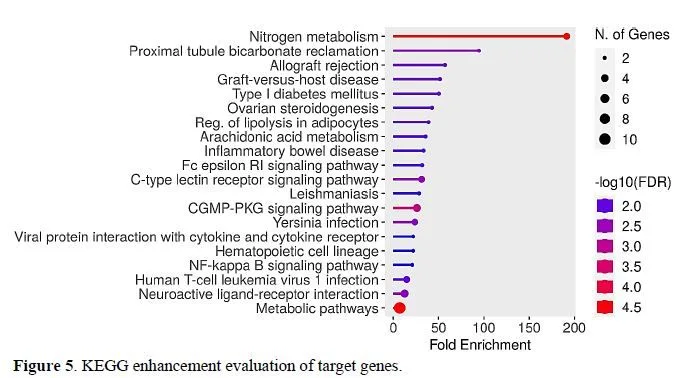
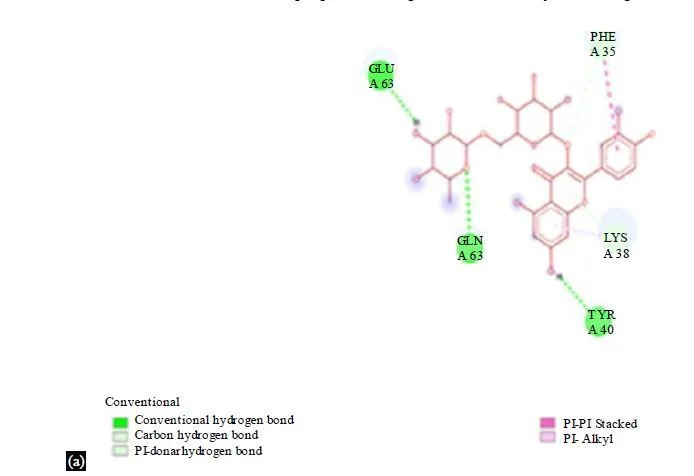
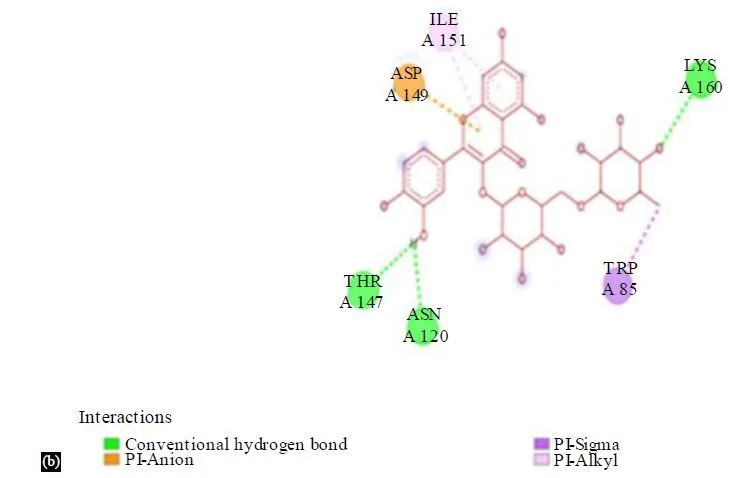
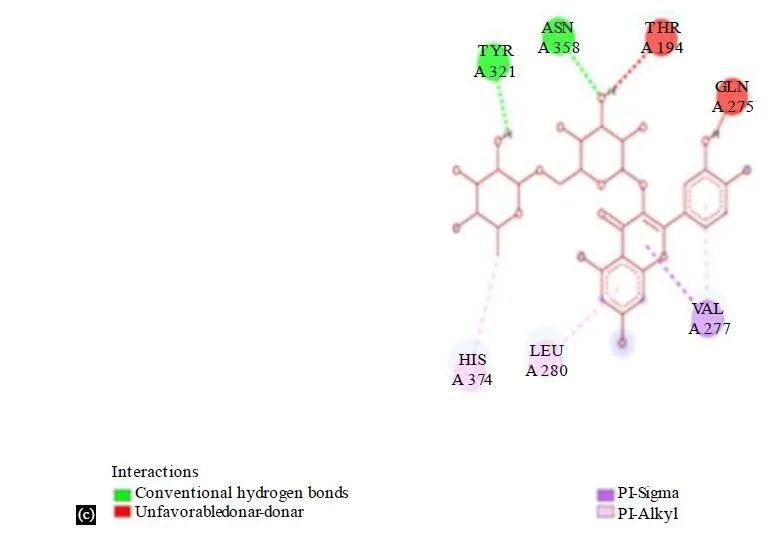
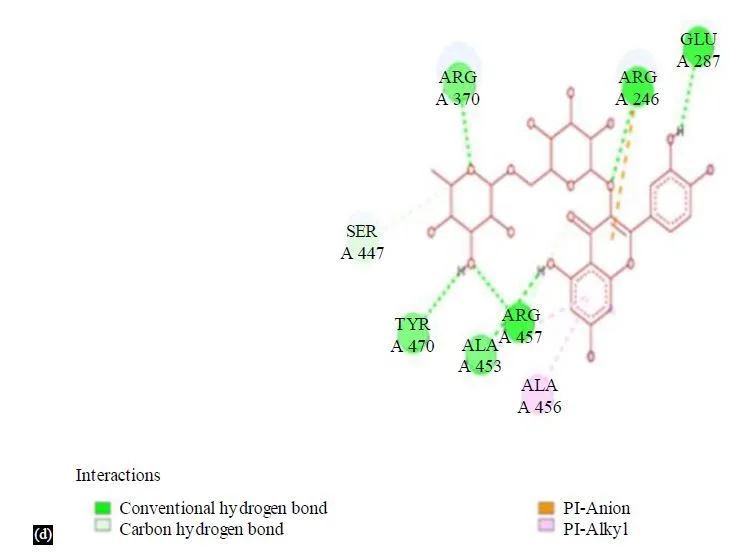
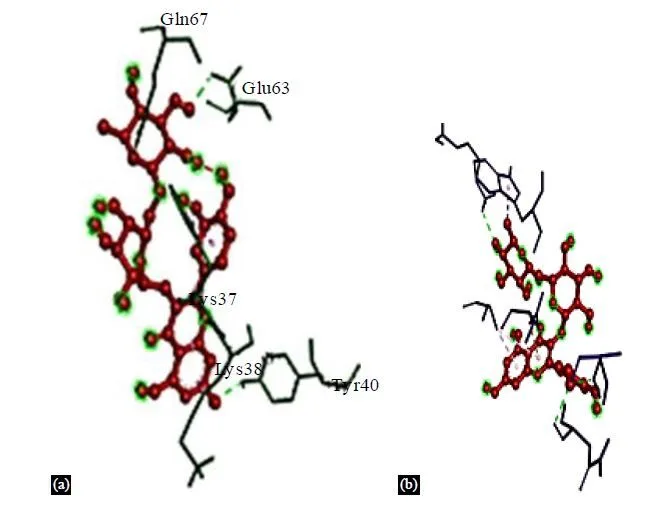
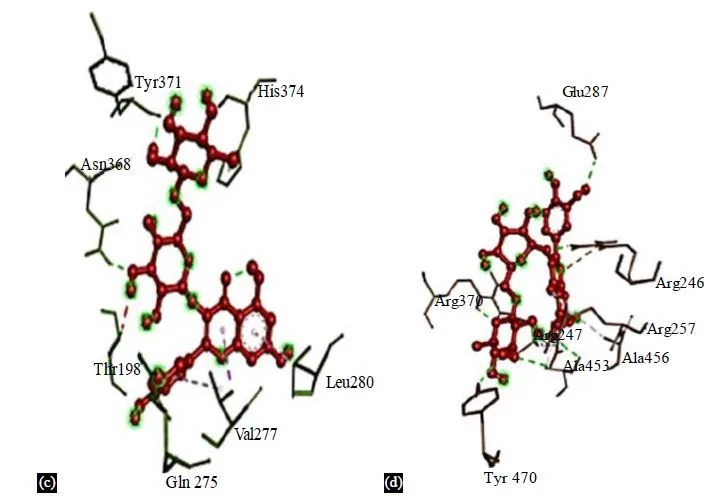
Objectives: In the present research, the network pharmacology process was applied to determine the underlying mechanism of the pharmacological properties of Rutin. Network pharmacology was utilized to reveal the interactions between medications and the targets of illnesses, and it is capable of completely articulating the complexity between diseases and medications. The identification of diverse drug-target interactions using network pharmacology may be utilized to discover novel medications for difficult conditions like Parkinson’s and Alzheimer’s diseases. Rutin’s considerable antioxidant capabilities have led to a broad range of pharmaceutical uses. Methods: In this research, the binding affinity of Rutin corresponding to the targeted proteins was analyzed (TNF, ALOX5, PTGS2, IL2 and TERT). Pathway evaluation for these targets showed a nitrogen metabolism pathway. An online tool called PyRx was used to perform molecular docking. The study was done virtually using input and structure of protein and phytocompounds from UniProtKB and PubChem. With the help of BIOVIA Discovery Studio software, the protein structure was analyzed. ADMET screening was used to evaluate the Rutin’s pharmacological properties. Results: The results from this research showed that the proteins ALOX5 and PTGS2 had the best binding affinity to Rutin in performing molecular docking. Conclusion: According to the results of molecular docking, these target proteins have appropriate pharmacological effects, which offers a theoretical foundation and a hint for the investigation of the pharmacological mechanism of Rutin.
Keywords: Parkinson’s and Alzheimer’s disorders, network pharmacology, molecular docking, nitrogen metabolism pathway
[This article belongs to International Journal of Molecular Biotechnological Research ]



References
- Atanassova M, Bagdassarian V. Rutin content in plant products. J Univ Chem Technol Metall. 2009;44(2):201–3.
- Patel K, Patel DK. The beneficial role of rutin, a naturally occurring flavonoid in health promotion and disease prevention: a systematic review and update. Bioact Food Diet Interv Arthritis Relat Inflam Dis. 2019:457–79.
- Kim S, Thiessen PA, Bolton EE, Chen J, Fu G, Gindulyte A, et al. PubChem substance and compound databases. Nucleic Acids Res. 2016;44(D1):D1202–13. doi: 10.1093/nar/gkv951, PMID 26400175.
- Daina A, Michielin O, Zoete V. SwissTargetPrediction: updated data and new features for efficient prediction of protein targets of small molecules. Nucleic Acids Res. 2019;47(W1):W357–64. doi: 10.1093/nar/gkz382, PMID 31106366.
- Szklarczyk D, Kirsch R, Koutrouli M, Nastou K, Mehryary F, Hachilif R et al. The STRING database in 2023: protein-protein association networks and functional enrichment analyses for any sequenced genome of interest. Nucleic acids research, gkac1000; 2022.
- Ge SX, Jung D, Yao R. ShinyGO: a graphical gene-set enrichment tool for animals and plants. Bioinformatics. 2020;36(8):2628–9. doi: 10.1093/bioinformatics/btz931, PMID 31882993.
- Jacob RB, Andersen T, McDougal OM. Accessible high-throughput virtual screening molecular docking software for students and educators. PLoS Comput Biol. 2012;8(5):e1002499. doi: 10.1371/journal.pcbi.1002499, PMID 22693435.
- Pawar SS, Rohane SH. Review on Discovery Studio: an important tool for molecular docking. Asian J Res Chem. 2021;14(1):1–3. doi: 10.5958/0974–4150.2021.00014.6.
- Dong J, Wang NN, Yao ZJ, Zhang L, Cheng Y, Ouyang D et al. ADMETlab: a platform for systematic ADMET evaluation based on a comprehensively collected ADMET database. J Cheminform. 2018;10(1):29. doi: 10.1186/s13321–018–0283-x, PMID 29943074.
- Chandran U, Mehendale N, Patil S, Chaguturu R, Patwardhan B. Network pharmacology. Innov Approaches Drug Discov. 2017:127–64. doi: 10.1016/B978–0–12–801814–9.00005–2.
- A review on extraction, identification and purification methods, biological activities and approaches to enhance its bioavailability.
- Lee D, Hong JH. The fundamental role of bicarbonate transporters and associated carbonic anhydrase enzymes in maintaining ion and pH homeostasis in non-secretory organs. Int J Mol Sci. 2020;21(1):339. doi: 10.3390/ijms21010339.
- Pittman RN. Chapter 2, The Circulatory System and Oxygen Transport. Available from: https://www.ncbi.nlm.nih.gov/books/NBK54112/. Regulation of tissue oxygenation. San Rafael, (CA): Morgan & Claypool Life Sciences; 2011.
- CHEM; n.d. Available from: https://www.chem.udel.edu/.
- Flores E, Herrero A. Assimilatory nitrogen metabolism and its regulation. In: The molecular biology of cyanobacteria. Dordrecht: Springer; 1994. p. 487–517.
- Alzarea SI, Qasim S, Uttra AM, Khan YH, Aljoufi FA, Ahmed SR, et al. Network pharmacology and molecular docking based prediction of mechanism of pharmacological attributes of Glutinol. Processes. 2022;10(8):1492. doi: 10.3390/pr10081492.

| Volume | 01 | |
| Issue | 01 | |
| Received | 02/03/2023 | |
| Accepted | 15/03/2023 | |
| Published | 30/03/2023 | |
| Publication Time | 28 Days |