
📢 Latest Update: UGC Discontinues CARE Journal Listing: New Guidelines for Selecting Peer-Reviewed Journals View Now

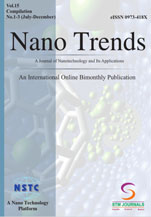
Nano Trends – A Journal of Nano Technology & Its Applications Cover

Nano Trends – A Journal of Nano Technology & Its Applications

E-ISSN: 0973-418X | Peer-Reviewed Journal (Refereed Journal) | Hybrid Open Access

About the Journal

Nano Trends – A Journal of Nano Technology & Its Applications  [0973-418X(e)] is a peer-reviewed hybrid open-access journal launched in 2006 that attracts scholarly contributions that fall under the broad tag of Nanoscience and technology. The coverage in general encompasses synthesis, characterization, studying properties, processing, fabrication, and applications of the nanomaterials in the fields of Electronics, Medicine, Healthcare, Energy, Biotechnology, and Environmental studies.

View full focus & scope More

Journal Information

Title: Nano Trends – A Journal of Nano Technology & Its Applications
Abbreviation: nts
Issues Per Year: 3 Issues
E-ISSN: 0973-418X
Publisher: STM Journals, An imprint of Consortium e-Learning Network Pvt. Ltd.
DOI: 10.37591/NTs
Starting Year: 2006
Subject: Nano Technology & Its Applications
Publication Format: Hybrid Open Access
Language: English
Copyright Policy: CC BY-NC-ND
Type: Peer-reviewed Journal (Refereed Journal)

Address:

STM Journals, An imprint of Consortium e-Learning Network Pvt. Ltd. A-118, 1st Floor, Sector-63, Noida, U.P. India, Pin - 201301

Editorial Board

View Full Editorial Board

nts maintains an Editorial Board of practicing researchers from around the world, to ensure manuscripts are handled by editors who are experts in the field of study.

Editor in Chief

Editor

Prof. Rakesh Kumar, Professor

Central University of Bihar Gaya, Bihar, India, 823001

Email :

Latest Articles

Ahead of Print

Synthesis, characterizations, and challenges of magnetic Zn x Fe 2-x O 3 nanoparticles

Diluted magnetic semiconductors comprising magnetic nanoparticles are a driving force in a variety of applications, including biomedicine, bioelectronics, photocatalytic activities, and nanosensors.

Magnetic nanoparticles, synthesis route, characterization methods, rheological conditions, biosensors, therapeutic agent, hyperthermia, diagnosis.

Gold Nanoparticle Size, Biodistribution, and Toxicity: Insights from DualEnergy CT

Dual-energy and spectral computed tomography (CT) have emerged as powerful platforms for noninvasive, quantitative mapping of nanoparticle biodistribution in vivo.

Gold nanoparticles, Dual-energy CT, Spectral CT, Photon-counting CT, Biodistribution, Nanoparticle size, Toxicity, Molecular imaging.

Comparative Assessment of Methylparaben concentration in Cosmetic product, analyzed using Enzyme Biosensor and ultra-high-pressure liquid chromatography (UPLC): An approach towards detection of the environmental toxicant with higher accuracy and sensitivity

Methylparaben (MP) is one of the most widely used preservatives and is associated with a catalog of recently identified health hazards.

Parabens, Methylparaben, electrochemical, biosensor, voltammetry, chromatography

"Entropy Analysis of Unsteady MHD Bioconvective Nanofluid between Parallel Disks under Squeezing Motion and Multiple Slip Conditions."

This research offers valuable insights for improving heat transfer and minimizing entropy generation in engineering systems that involve nanofluids and microorganisms. It investigates the unsteady squeezing bioconvection flow of a nanofluid between two parallel disks, with a focus on entropy generation, flow dynamics, heat transfer, and the concentration of both nanoparticles and microorganisms.

Entropy analysis, Heat transfer enhancement, Bioconvection, Nanofluid, MHD, Squeezing flow, Slip condition, Thermal efficiency

Nano‑Enabled CT for Cancer Imaging: From Molecular Targeting to Image‑Guided Therapy

Nano‑enabled computed tomography (CT) exploits high‑atomic‑number (high‑Z) nanomaterials engineered with targeting ligands and therapeutic payloads to enhance contrast, enable molecular imaging, and support image‑guided interventions in oncology.

Nano-enabled Computed Tomography (CT) High-Z Nanomaterials Tumor-Targeted Nanoprobes Theranostics Image-Guided Cancer Therapy.

Digital Enablers of Nanomedicine: Pharmaceutical Software Across the Lifecycle of Nanotechnology‑Based Drug Products

Nanotechnology‑based drug products have rapidly evolved from laboratory concepts to clinically relevant therapies, yet their development is constrained by complex design variables, stringent quality requirements, and emerging regulatory expectations specific to nanomaterials.

Keywords: nanomedicine, pharmaceutical software, nano‑drug delivery, nanomaterials, quality by design, process analytical technology, digital twins, pharmacovigilance, regulatory compliance.