[email protected] (+91) 9218093691

Research & Reviews : Journal of Space Science & Technology

rrjosst | E-ISSN: 2321-2837 | Peer-Reviewed | Hybrid Open Access

About the Journal

Research & Reviews : Journal of Space Science & Technology Research & Reviews: Journal of Space Science & Technology [2321-2837(e)] is a peer-reviewed hybrid open-access journal launched in 2012 focused on the publication of current research work carried out under Space Science and Technology. This journal covers all major fields of applications in Space Science and Technology

View full focus & scope More

Research & Reviews : Journal of Space Science & Technology (RRJOSST): 2321-6506(e) is a peer-reviewed hybrid open-access journal launched in 2012 focused on the publication of current 

Journal Information

Title:
Research & Reviews : Journal of Space Science & Technology
Abbreviation:
RRJOSST
Issues Per Year:
3 Issues (Jan-April,May-August,Sept-Dec)
P-ISSN:
2321-6506
Publisher:
116314
DOI:
10.37591/RRJoSST
Starting Year:
2012
Subject:
Language:
English
Publication Format:
Hybrid Open Access
Copyright Policy:
CC BY-NC-ND
Type:
Peer-reviewed Journal (Refereed Journal)
Address:

Editorial Board

View Full Editorial Board

rrjosst maintains an Editorial Board of practicing researchers from around the world, to ensure manuscripts are handled by editors who are experts in the field of study.

Editor in Chief

Editor

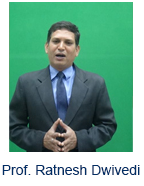
Dr. Ratnesh Dwivedi, Interdisciplinary Scientist

Member of American Astronomical Society, , ,

Email :

Latest Articles

The Tech That Makes Space Travel Possible: From Earth to Orbit

Space flight was once only a dream, but it has now become one of the most important achievements of modern science and engineering.

Technology for Space • Rocket propulsion • Launch systems that can be used again • Designing Spacecraft • Communication via satellites • Mechanics of Orbits • Navigation without help

The Tech That Makes Space Travel Possible: From Earth to Orbit

Space flight was once only a dream, but it has now become one of the most important achievements of modern science and engineering.

Technology for Space • Rocket propulsion • Launch systems that can be used again • Designing Spacecraft • Communication via satellites • Mechanics of Orbits • Navigation without help

An Overview on Harnessing Microwave Frequencies for Next-Generation Satellite Communication and Earth Observation

In the vacuum of space, where traditional cables cannot reach, humanity has woven an invisible, high-speed infrastructure made of oscillating electromagnetic waves.

Microwave Propagation, Satellite Communication (SatCom), Synthetic Aperture Radar (SAR), Ka-Band, Atmospheric Attenuation, LEO Constellations, Remote Sensing

An Overview on Microwave Remote Sensing for Earth Observation

To understand the Earth from space, one must look beyond the visible eye. While optical satellites rely on the Sun’s reflection much like the human eye they are frequently blinded by the curtain of cloud cover, smoke, or the dark veil of night.

Synthetic Aperture Radar (SAR), Microwave Radiometry, Backscatter, Earth Observation, Remote Sensing, Dielectric Constant.

A COMPREHENSIVE SURVEY OF ROBUST IMAGE QUALITY METRICS FOR SATELLITE IMAGERY

Satellite imagery is essential for applications like environmental monitoring, urban development, precision agriculture, defence surveillance, and disaster response. The reliability of these applications is closely tied to the quality of the captured images, which may be compromised by atmospheric effects, sensor imperfections, compression artifacts, and transmission noise.

Satellite imagery, Image Quality Assessment (IQA), Remote sensing, Robust metrics, Full-reference metrics, No-reference metrics, Deep learning, Multispectral imaging, Hyperspectral imaging.

SPACE EXPLORATION BY SAMPATI-JATAYU BROTHERS IN ANCIENT INDIA

In this paper a scientific investigation on the space exploration, done in the ancient India, is being presented based on the evidences of the same available in one of the most ancient and revered Indian epics the Ramayana, written by the great seer, researcher and astronomer sage Maharshi Valmiki, in which one can find descriptions of two vulture brothers namely Sampati and Jatayu who made that journey in space and they had described egocentrically their observations about the Earth from space.

Space Exploration, Ancient India, Earth’s Surface, Planets, Research Programs

Login

Quick Actions

Current Issue

Volume 14, Issue 03, 2025

September-December

APID Initiative

Academic Profile ID

Create your unique researcher identity with comprehensive academic profiling

Global Network
Track Impact

Learn More →

Submissions Open

NEW

Manuscript Submissions

December 2025

Virtual & Delhi, India

March 15-17, 2025

View All Events →