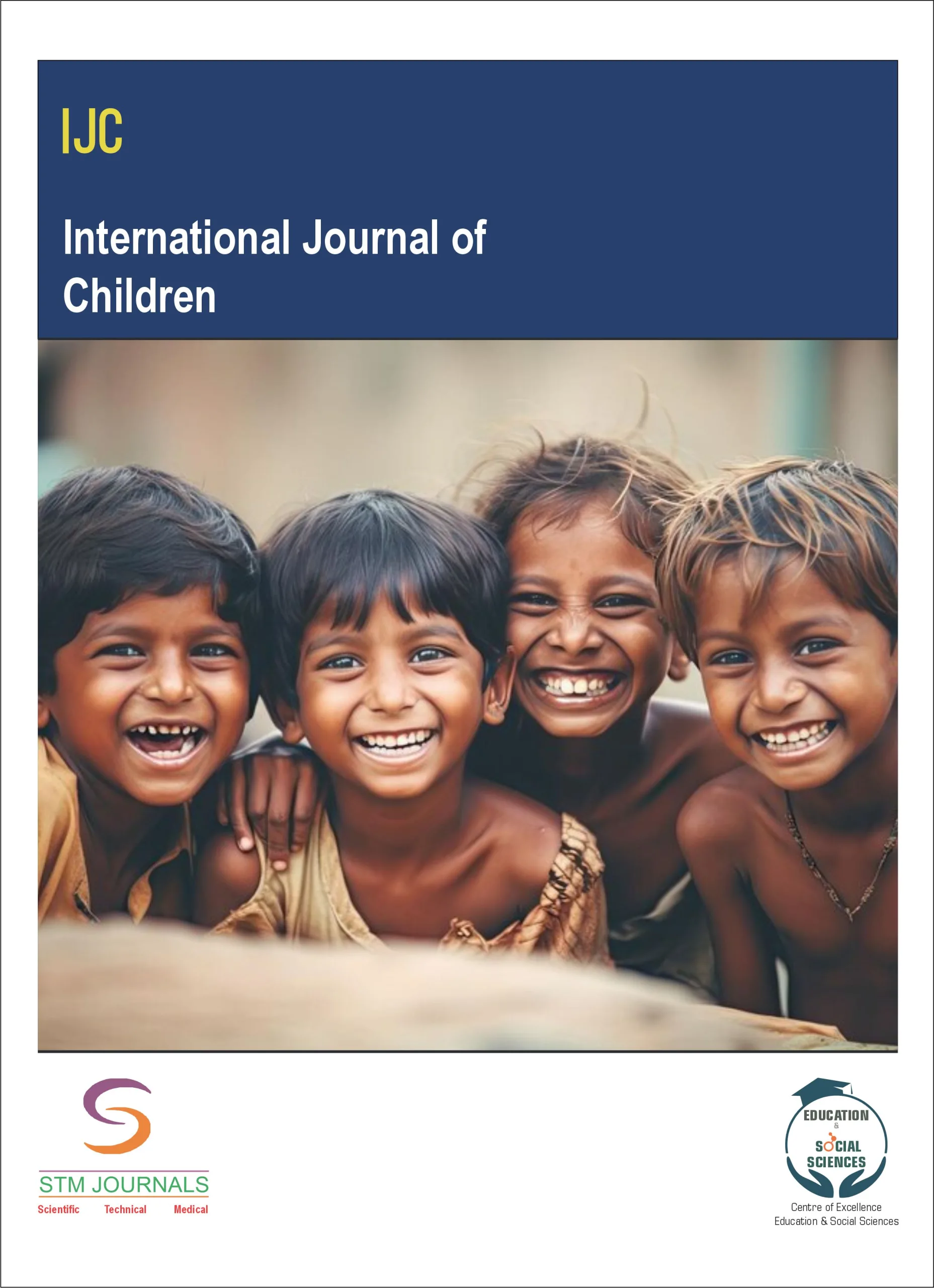
About the Journal
International Journal of Children International Journal of Children is a peer-reviewed Online Journal launched in 2024 that aims to advance research and promote the dissemination of knowledge related to the well-being, development, and rights of children worldwide. The focus and scope of the IJC cover a wide range of topics related to children.
The IJC welcomes original research articles, literature reviews, case studies, and theoretical papers that contribute to the understanding of the issues and challenges faced by children worldwide. The target audience of the IJC includes researchers, educators, practitioners, policymakers, and advocates working to improve the lives of children globally. The journal is published biannually, and all articles undergo a rigorous peer-review process to ensure the quality and relevance of the published research.
Focus & Scope
- Child Development and Developmental Psychology: Cognitive, emotional, social, physical, linguistic, moral, and behavioral development; developmental milestones; temperament; attachment; resilience; self-esteem; self-regulation; play; learning; motor development; brain development; and developmental trajectories.
- Early Childhood Development and Care: Infant development, early childhood education, preschool learning, early stimulation, school readiness, childcare, parenting practices, caregiver-child interaction, early intervention, and early childhood policy.
- Child Health and Pediatrics: Child and adolescent health, pediatric care, growth and development, childhood diseases, vaccination, infectious diseases, chronic illness, disability, preventive healthcare, health services, morbidity, mortality, and child health policy.
- Child Nutrition and Physical Well-being: Infant and child nutrition, breastfeeding, malnutrition, micronutrient deficiencies, childhood obesity, physical activity, growth monitoring, food security, nutrition education, and healthy lifestyle behavior.
- Child and Adolescent Mental Health: Emotional well-being, anxiety, depression, stress, trauma, behavioral disorders, neurodevelopmental conditions, resilience, coping, psychological assessment, counseling, psychosocial interventions, and mental-health promotion.
- Child Education and Learning: Early childhood, primary and secondary education, literacy, numeracy, learning outcomes, educational psychology, curriculum, pedagogy, classroom practices, assessment, academic achievement, school readiness, and educational innovation.
- Inclusive and Special Education: Special educational needs, disability and education, inclusive classrooms, accessibility, learning difficulties, gifted education, individualized education, assistive technologies, and universal design for learning.
- Educational Equity and Access: Educational inequality, school access, dropout, socioeconomic barriers, rural and urban disparities, gender equity, marginalized children, digital divide, school participation, and education policy.
- Child Protection and Safeguarding: Child abuse, neglect, exploitation, trafficking, violence, online abuse, bullying, cyberbullying, child safety, safeguarding systems, prevention strategies, reporting mechanisms, rehabilitation, and protection services.
- Child Rights and Advocacy: Children’s rights, the UN Convention on the Rights of the Child, child participation, child advocacy, child empowerment, child-friendly governance, rights-based policy, access to justice, discrimination, and monitoring of children’s rights.
- Child Labour, Trafficking and Exploitation: Child labour, forced labour, commercial exploitation, trafficking, sexual exploitation, hazardous work, prevention programs, rehabilitation, policy responses, and legal protection.
- Children, Family and Parenting: Parenting styles, family relationships, family structure, parental involvement, family stress, divorce and separation, foster care, adoption, caregiving, sibling relationships, and family-based interventions.
- Children and Society: Childhood studies, sociology of childhood, socialization, poverty, inequality, migration, displacement, homelessness, community participation, social exclusion, cultural influences, and children’s lived experiences.
- Children, Media and Digital Technology: Digital childhood, social media use, screen exposure, online learning, digital literacy, gaming, internet safety, cyber risks, technology-mediated communication, and effects of emerging technologies on children.
- Childhood Disability and Rehabilitation: Developmental disabilities, physical and intellectual disabilities, rehabilitation, assistive technologies, accessibility, family support, participation, inclusion, and community-based rehabilitation.
- Adolescence and Youth Development: Adolescent development, identity formation, peer relationships, risk-taking, puberty, sexuality education, life skills, academic transitions, mental health, social participation, and youth empowerment.
- Child-Friendly Justice and Legal Studies: Juvenile justice, children in conflict with the law, child victims and witnesses, custody, adoption law, legal protection, child-friendly courts, restorative justice, and children’s access to justice.
- Children in Emergencies and Humanitarian Settings: Children affected by conflict, disasters, displacement, refugee situations, humanitarian crises, family separation, psychosocial support, education in emergencies, and child protection in crisis settings.
- Public Policy and Child Welfare: Child welfare systems, social protection, public policy, child-focused programs, social services, welfare administration, program evaluation, evidence-based interventions, and comparative child policy.
- Research Methods in Childhood Studies: Child-centered research methods, participatory research, longitudinal studies, qualitative and quantitative methods, developmental assessment, ethical research with children, population studies, and mixed-method approaches.
Keywords
Child Development, Child Health, Child Education, Child Protection, Child Rights, Child Psychology, Child Welfare, Early Childhood Development, Adolescent Development, Child Mental Health